Matthew Shaw rejoices in the reintroduction of beavers to Cornwall’s Lost Gardens of Heligan.
 All photos by Andy Wilson
After over 400 years of extinction in the UK, beavers are finally making a comeback. They have been reintroduced in Scotland, England and Wales, Argyll, Cornwall, Dorset, Devon, Herefordshire, Kent and Tayside.
The reintroduction of a species isn’t something I get the chance to witness every day, and so I was very excited to be asked to attend the beaver reintroduction at The Lost Gardens of Heligan when Twiggy, a female beaver, was introduced in March 2023.
Twiggy came to Heligan from her previous home at the Cornish Seal sanctuary in Gweek, Cornwall. She arrived in a cage, and was transported across site to her new home in a custom-built enclosure. A small number of us lined the bank of the stream from a safe distance so as not to overwhelm Twiggy with our presence. The cage was opened and out she came, effortlessly slipping down the bank and into the stream, disappearing below the surface of the water. I watched as Twiggy appeared and disappeared, exploring the stream and looking around, familiarising herself with her new home. An exciting moment, glimpsing a species lost for so long from this place. It was amazing to see how naturally Twiggy took to her new home. Then she vanished from sight, and we let her be.
In October 2024 a male beaver, Byrti, was introduced after the original male that had been introduced died in May 2024. Byrti came from Dyfi Wildlife Centre, Montgomeryshire, Wales in a collaborative effort between The Lost Gardens of Heligan, The Welsh Beaver Project, Beaver Trust and Natural England. I hoped that this would be a successful pairing and that the beavers would be happy here. It is a magical feeling being at Heligan, knowing that the beavers are living just beyond the treeline.
At times I would get access to see the enclosure from within. Heligan run regular beaver tours so that you can have the opportunity to see the enclosure for yourself. I went back to see the beaver habitat in early spring 2025. I could clearly see the dams the beavers had created, unbelievably high and full of deep water. I also spotted two lodges with small openings — portals above the ground. I was told by Toby Davies, Heligan Wildlife Co-ordinator, that there would be another entrance beneath the water, giving land and water access to these beaver homes. I was also told that it was a good sign that there was more than one lodge, as this may mean that the beavers were preparing for a family.
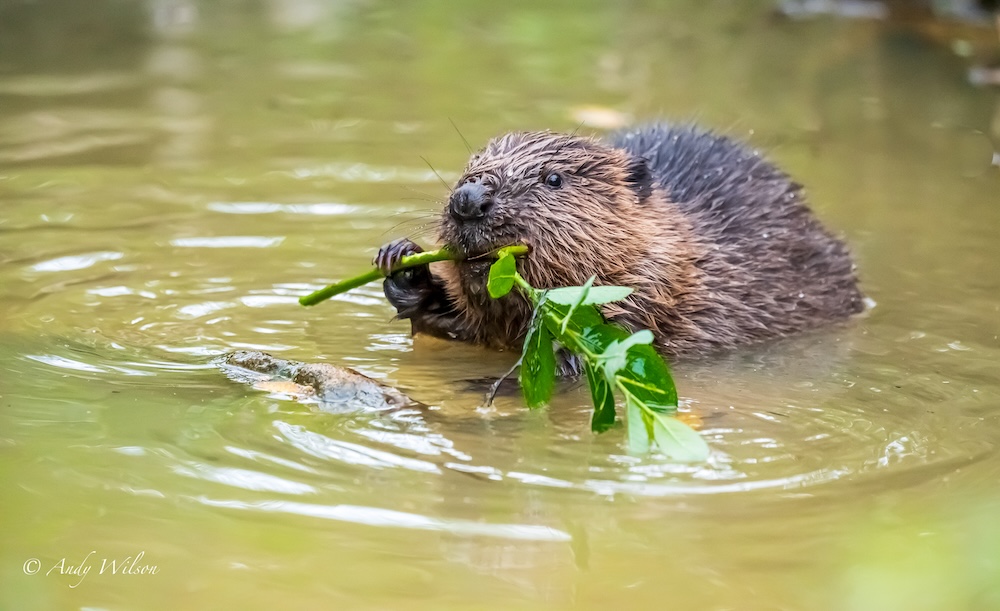
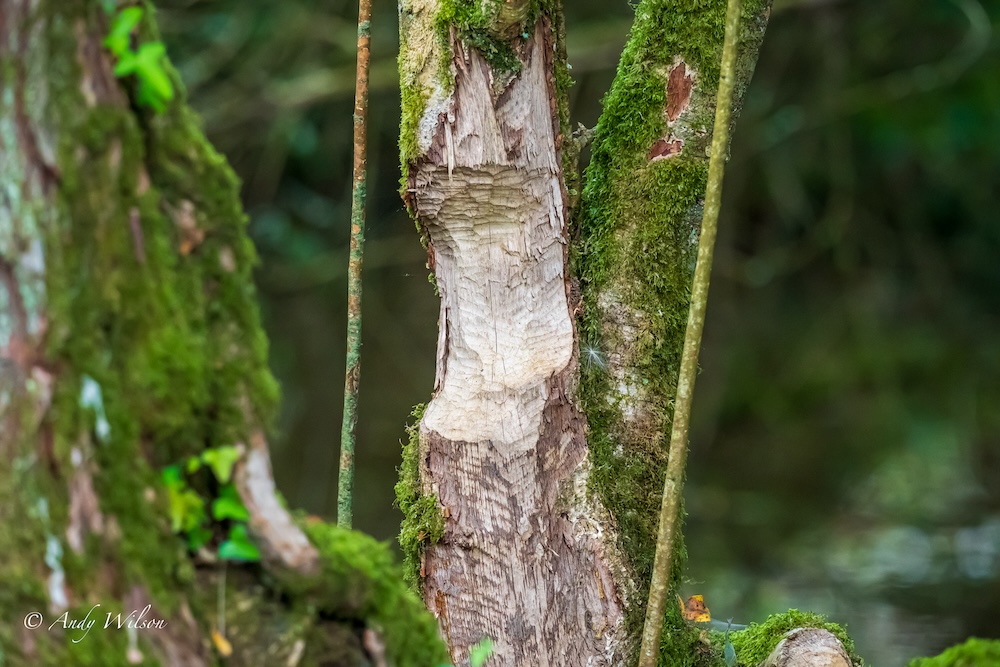
I could see evidence of the beavers all around me — teeth marks on tree trunks, with some smaller saplings entirely bitten through and lying on the ground. I couldn’t believe the way that the branches and mud had been built into the dam and lodge structures. I looked on, thinking how strong these beavers must be; so agile and skilled in their ability to create their own habitat. How amazing to see a place created by a more-than-human approach, even if there was no sighting of the beavers themselves. I wondered what the relationship was between the beavers and the land, especially the older trees within the enclosure. Toby told me that beavers tend not to fell big trees, and that they require materials that they can move for making their dams or for food. A mature 200-year-old-oak for example, is too big for a beaver to want to tackle it. Beavers are vegetarian and do not eat fish, despite what you might have seen in popular children’s books. They eat tree bark, leaves and shoots, grasses and rushes. Aspen is their favourite and willow is their second favourite, making up most of their diet.
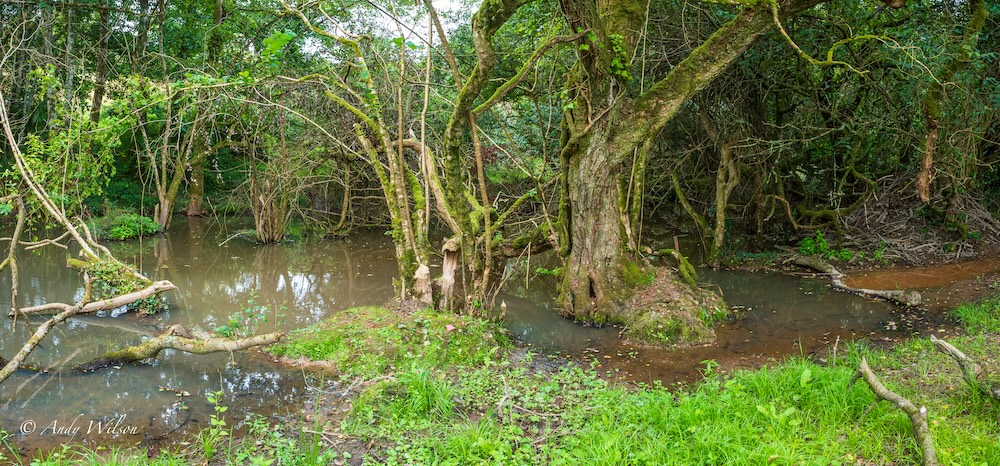
Because beavers have such an ability to shape their landscape, felling trees and changing the course of rivers, their release is currently controlled by the granting of a ‘Beaver Licence’ by Natural England. Beavers are natural engineers, and very soon make their mark on an environment that they are introduced into. There is already evidence that the beavers recently introduced to the purpose-built enclosure on the Heligan estate will increase biodiversity in this area. The enclosure is just over 9 hectares/22 acres in size, which is about the same as 15 football pitches — much larger than I had imagined.
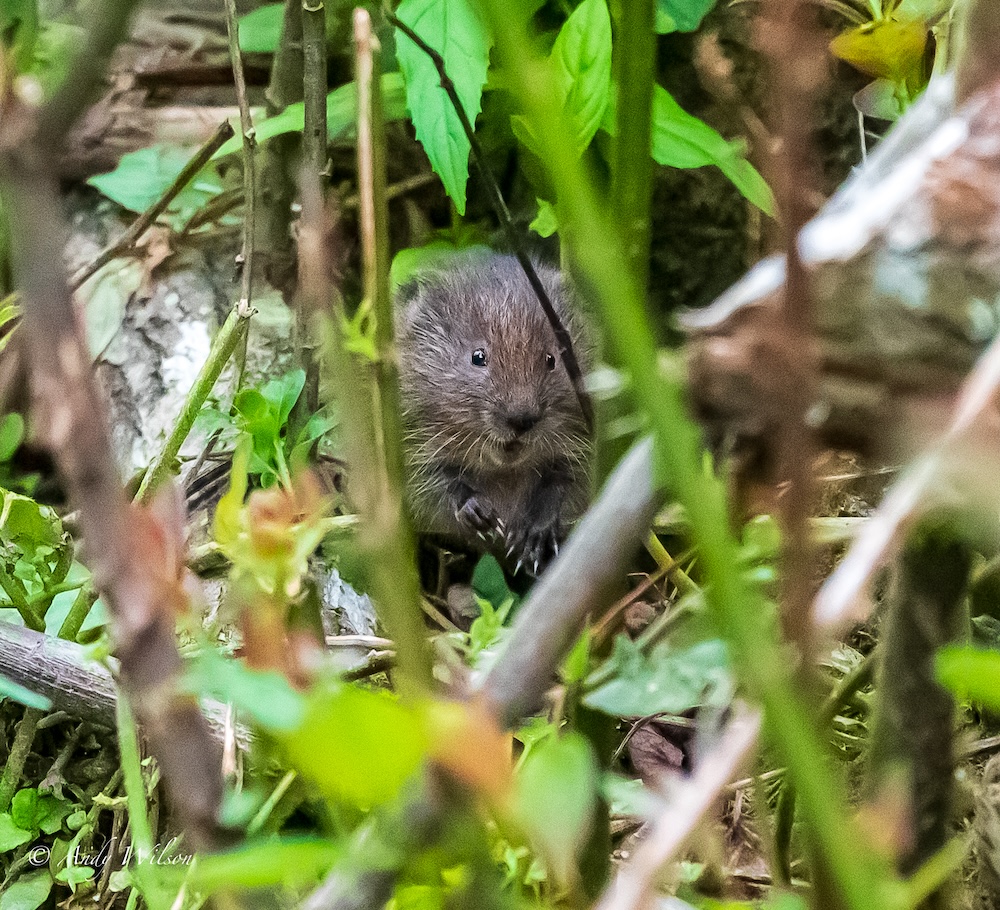
In July 2025 I saw a photo taken by wildlife photographer Andy Wilson. It appeared to show a beaver kit — a baby beaver at Heligan! Andy’s patience paid off and over the coming days more photos appeared as Andy caught not one but two beaver kits in his incredible photographs, even capturing the whole new family of four. The pair’s successful breeding was announced soon after by The Lost Gardens of Heligan, a major milestone for the reintroduction project.
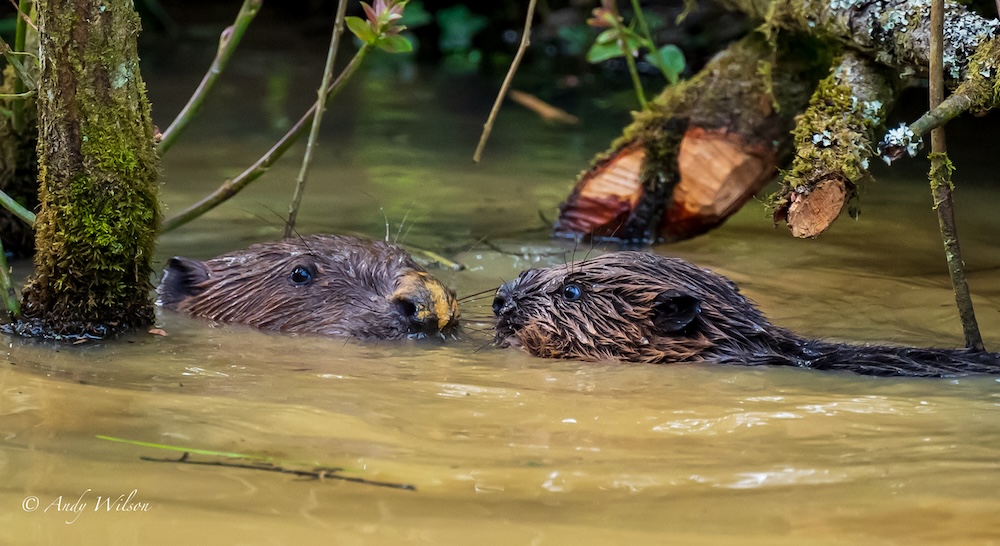
Beavers are ‘crepuscular’ which means they are most active at dawn and dusk, making spotting them even more difficult unless you make the time, have the access and know exactly where to look for them. Andy has all of these skills after a lifetime of reading, researching, watching, and getting to know the species he photographs. It’s a great joy to see these images and to know what goes on at Heligan long after the visitors have returned home and the site becomes something else, something wilder.
Andy’s photographs have been a great antidote to indifference for me this past year or so. The ongoing photographs and films of the beavers is such a joy to follow, not to mention Andy’s photographs of owls, kingfishers and foxes, all of which seem to be firm favourites for him. Andy’s photographs can currently be viewed at Heligan as part of an exhibition called 200 Acres, which can be found on the West Lawn until 4th January 2026.