In 2025, Lena Stahl thought a lot about connection and trees and mud.
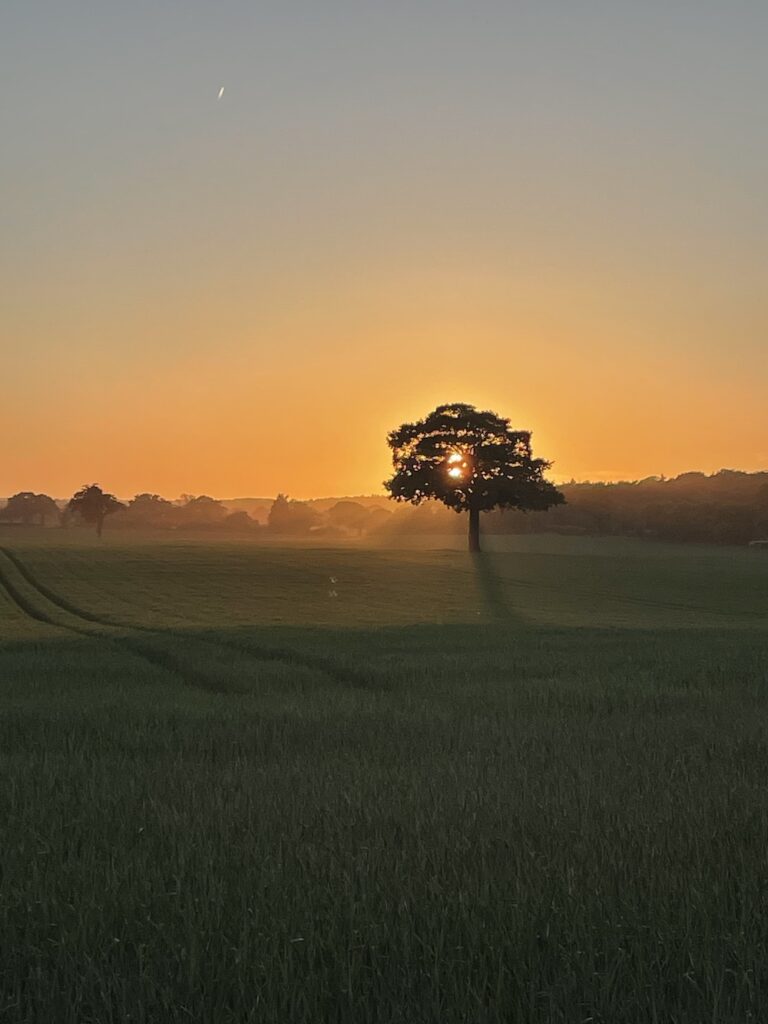
This year, I thought a lot about connection and about trees and mud.
In deep dark January, I miss my friends and I feel disconnected. There is some discussion in the group chat, plans being made. I look up how far away they are on Google Maps: there’s no trains, I don’t have a car. If wanted to, I could just walk, I tell myself. How long would it take? The answer is 48 hours, 2 whole days. It would be a fashionably late entrance to the party.
Distance feels more severe now, with no buses to catch, with no sidewalks but only muddy bridleways along field lines, with only my feet in welly boots. Travelling by car and train and plane messed with my concept of distance. How does a mile actually feel in your body, in your bones and under your feet? An actual mile has a weight to it.
Many of these paths have existed for a long time and it’s how people used to travel: three miles to the nearest village, four miles to the sea. Ancient paths still lead somewhere, the compacted soil, like scars in the surface of the land. How many have walked here before me? The weight of their footsteps is weighing me down.
The ground always gives way when you least expect it. The mud takes a hold of me. Like the paths, slowly worn away over centuries, I too sink lower and lower into the ground, merging with the land. Pathways in the brain form like pathways through the land. Late bronze age, early iron age, deeper and deeper and more entrenched. I’m so sorry I’m late, I accidentally became one with the land.
Isolation is also a learned behaviour, a pathway taken too many times, neurologically. I can choose a different path; I can compact new soil.
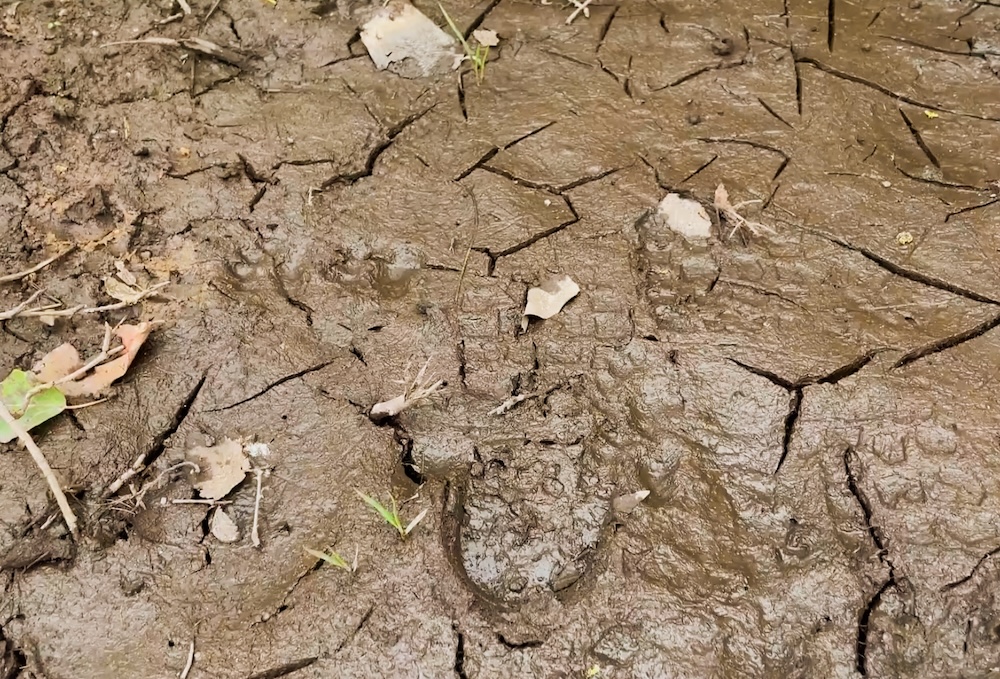
In February, I sink into grief and obsess over mud. Mud is all there is but there’s beauty in mud as well. The squelching sound and the effort it takes to pull your boots back out, the million different shades of brown. The smell of earth. There is no more steadiness but when else do you get to go so deep?
In March I realize I don’t mind talking about the weather. It gets a bad rep: surface level small talk. But it’s beautiful to me.
The ever-changing conditions through the seasons. The rain we feel hit our faces now having travelled over planes and mountains, through atmospheric rivers from halfway across the world. The highs, the lows, the hydro-physics and the effect of the layout of the land. The winter storms and summer heights in accordance with the rotation of the planet, the variety and changeability of it all. Unusual for the season, we say.
It helps me make sense of why it’s so unstable inside of me. Why sadness makes way to joy, makes way to confusion or distress. They are high and low weather fronts passing through. Five seasons in one day.
It also connects me with others and the present moment; in the environment we find ourselves in. It keeps us on common ground. Hello stranger, this is difficult but there’s always the weather for us.
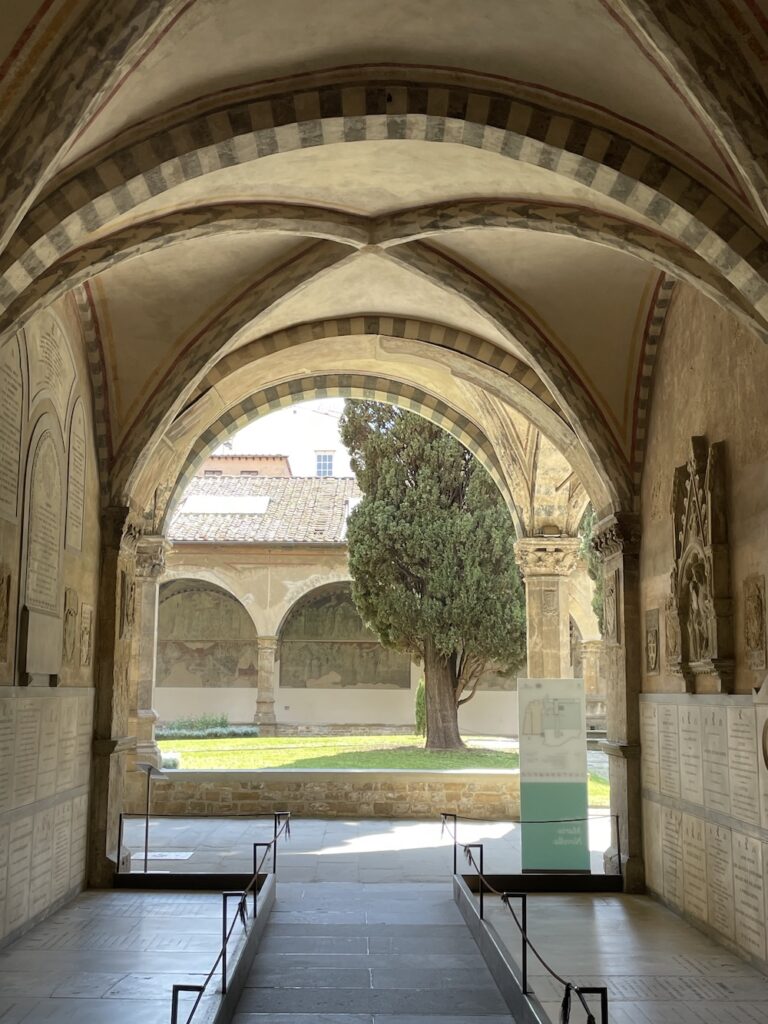
In April, I find myself in ancient Italy. Static statues in movement, stone faces that make me emotional. There is an olive oil stain on my jeans. Buildings big as mountains, as beautiful as the paintings inside them. The smell of pine trees in the cathedral gardens.
I walk ten miles in my new trainers into mountainous terrain, then sit in the flower meadow and eat grapes out of a brown paper bag. I am alone but I find belonging. Large piazzas are like city living rooms, everyone is out until late, together. My favourite part are the little interactions, the less lonely encounters. I don’t speak Italian so I cannot mention the weather: mild breeze and cornflower blue skies, a little chill in the evenings.
A sleepy, middle-aged Italian lady at the supermarket tills. She wakes up when I approach and smiles at me. It’s not apologetic, it’s warm and inviting – we are all tired. Then she scans my cheese and bread.
In May I learn about tree networks, I read about mycelium: complex systems of fungal threads under the forest floor.
Trees use the network to send resources like water and nutrients to each other, to aid younger or struggling trees. They also send warnings about danger like insect infestation or disease. When one tree at the edge of the woods gets gnawed on by an animal, it warns all the others through the network, and they might adjust their leaves and bark to taste more bitter. A forest-wide safety alignment.
Suddenly, that proud, solitary oak in the middle of the field no longer looks like inspiration to me. It seemed so strong and dignified, holding its ground – but it’s a ground devoid of information, devoid of connection. Barren soil. The other trees are too far away. It means it’s missing out on knowledge.
I realize, I too am missing whole chunks of loved ones’ lives, missing crucial information. I nod and smile along as if I’m in the know, but I have skipped a whole chapter of the story. I make guesses to fill the gaps.
Friends’ lives move at car or train speed, mine has slowed to snail-pace, to walking-in-wellies-through-mud-pace. I realize what a privilege it is to be clued in, what a pain it is to miss information.
I need to rejoin, to strengthen the earth network. To learn seeing, not necessarily with eyes or listening, not just with ears, but in another mysterious, underground way.
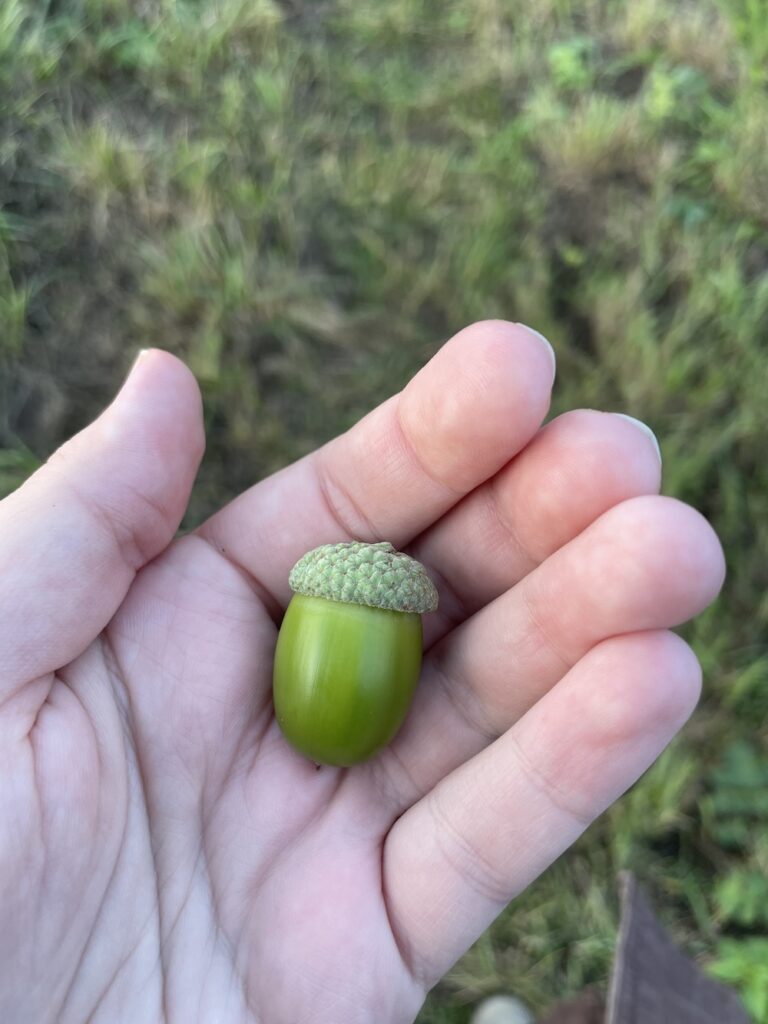
In June and July, it rains a lot. When I steal your coats and jackets, I always find seashells and acorns in the pockets. I love the way they feel in my hands. Seashell: the outside with wave-like layers, like rice fields. The inside so silky and slippery. Acorn: smooth and solid, rugged little hat, pointy top that gives you a pleasant little stinging pain when pressed into the skin.
On our walks you plant oak trees in the field margins, lay acorns in the ground. You come back to the same spots, admire the young shoots, check if anything has emerged. You are widening the network, filling in the gaps, assisting new connections. I love to walk awhile ahead, then to turn around and watch you.
In August in Edinburgh, I experience four types of weather in one day. On Arthur’s seat: volcano makes the ground rise. It looks like someone stepped on a paving slab wrong and it lifted the ground up at an angle.
Salt on my upper lip, the breeze is drying my sweat and untangling my hair. I eat a squished pan au chocolate from the breakfast buffet, wrapped in tissues, from the bottom of my bag. Perching on the volcanic rock that supports my weight and that of the entire world. Rooks and crows and seagulls flying over and ahead. Sun then clouds then clouds then sun. Sea and port, old town, new built, suspension bridge, cranes and castles.
Old friendship feels safe and comfy like a malty cup of tea and buttery biscuits, like a soft blanket. This pathway has been so well-trodden over years, a holloway that never becomes overgrown. I can always come back, and my feet know the path.
I often want to go back to an old version of me, but I know I can’t. Because I know what I know now and maybe that’s the way it should be. Still, I miss the lightness. Everything is more textured now, more layered, like the sedimentary rock underneath. Mountains give you a new perspective but maybe it’s really an old perspective you have forgotten. As you sink too deep into the sticky stuff of life you need to lift above again.
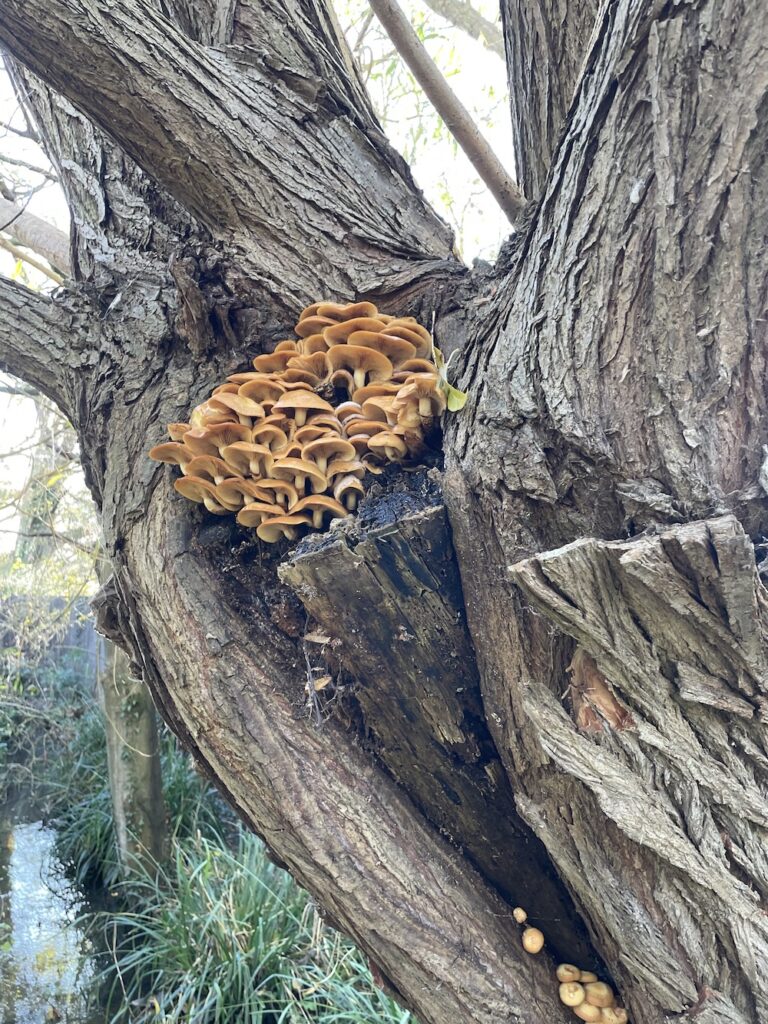
September:
First of September. On the train to London, I pass through lowlands and fenlands. Flat green expanses, sliced through by ruler-straight canals. Herons and little white egrets.
I speed through this mast-year. Nature over-delivers in fruit and berries, I overthink in circles in my brain.
Back gardens belonging to no one anymore. Overgrown apple trees, full of fruit, towering over abandoned caravans and car carcasses without wheels. The sun reflecting off off scrap-metal parts, half submerged in brambles.
It smells like rain in the train carriage.
In October, I put myself back on the map and I learn about willows. Not just the weeping kind. There are all sorts. Willows, if left to do their business, travel across the landscape over centuries by dying, quite dramatically sprawling out and then regrowing from the debris. They are known as phoenix trees for the way they age, fall and reemerge, again and again.
This doesn’t always work though. Sometimes deadwood is just deadwood. But even then, it adds enormous value to the land, to small animals and insects and other species of plants growing on it.
I learn how to discern if the wood is dead or not: hold onto the bark in winter. If it turns warm, it is most likely dead. If it stays cold, the water and tree juices inside are still flowing, there is still life here. All these stages and versions matter somehow.
The mud is rich and soggy among the willow roots; they like the water, I am told.
I walk around the new city and try to learn new information, try to access the network.
I walk into the coffee shop and ask a question. New information can turn your day around. Even if it is after 5 pm and it’s already so dark and the hope in your body is fading. It’s the little exchange in the café or the smile in the supermarket.
In late November, in the centre of the city, we turn a corner into a dimly lit back alleyway and encounter a ginkgo tree, still as green and bright as early spring. It feels like stepping into a time portal. Upon closer inspection, we spot the large department store heating vent, consistently engulfing the tree in warmth. As far as the ginkgo is concerned, it’s always the end of May, existing in its own climate zone. A blob of spring green in thick and consistent November grey.
Is it linked up to the tree network? If so, does it constantly give out the wrong information? Maybe the other trees laugh and let it believe what it believes.
I work from the library, close to others. We do not talk but we breathe the same air, we share in concentration, in new ideas among old ideas. I go to the pub with strangers, I talk about the weather at first, I think that’s okay.
I need people like trees need other trees and people who need people in turn need the trees. The little hairs on my arms lifting up and reaching out.
I make new friends; I reach out first. I start walking on new territory to leave a mark in the ground, to establish new pathways. I enable new information to flow and to reach me.
In December I walk on cobblestones and concrete, skip over storm drains and paving slabs. I find mud again, away from the city. I let myself sink in. I search in eye contact with strangers and for life in coastal tide pools. I feel rain soak through my clothes and go out after dark. I find solace in the warm light of apartment block windows and in the stars on a clear night, the moon reflected in the rain puddles. I get sad by 5 pm and I pick up the phone. I strengthen my underground network; I expand it and join into others.
Not choosing better but still difficult but different. I feel like I am vibrating with everything.
*
Lena Stahl is an actor and writer originally from Germany. You can follow her on Instagram here.