Melissa Harrison looks back over a year of rivers both real and imagined.
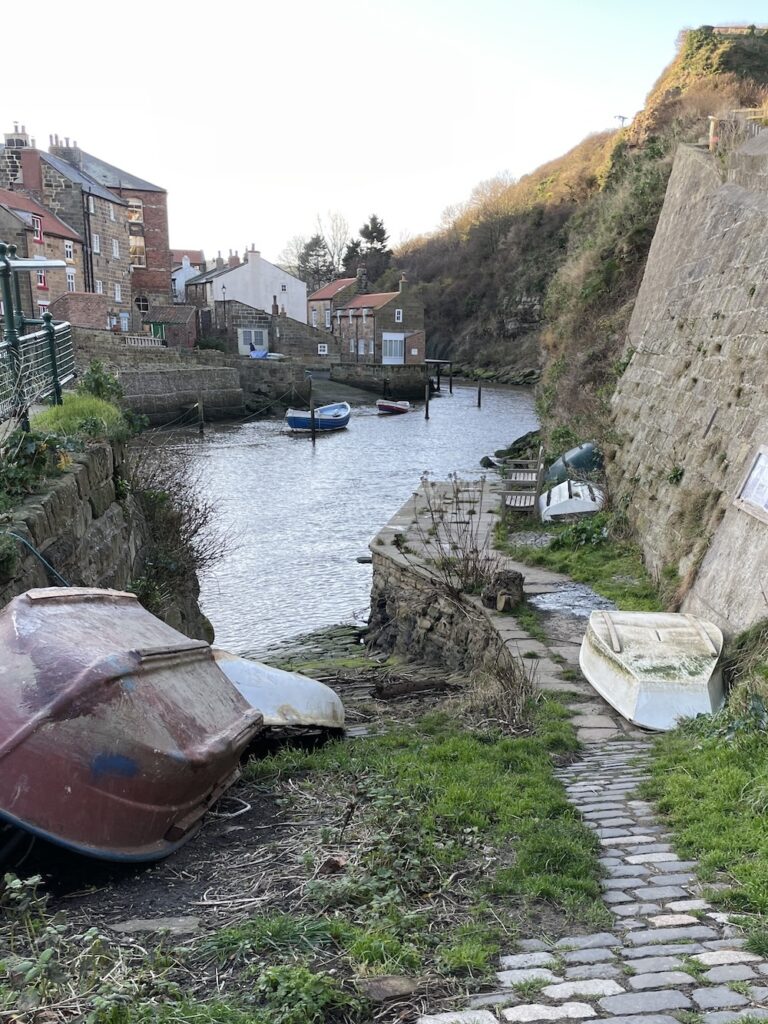
Christmas Day 2024, approaching midnight, the sky huge and wild and black. I was standing on a bluff above the little Yorkshire fishing village of Staithes, quite a bit drunk and a little bit high, looking down on the tightly packed roofs of the houses to where Staithes Beck carved a channel out to find the sea. A light flashed cryptically, far out on the water, and the wind that found me was insistent, buffeting, warm.
The beck split the jumbled village into Cowbar Nab, to the north, and Penny Nab, where I stood on the headland; that morning I’d crossed the bridge over it and walked along the breakwater to look back at the jumbled cottages set on the valley’s steep banks. On the town beach, parents were letting children burn off some of their Christmas energy while their turkeys cooked.
During storm surges and high spring tides Staithes Beck can flood some of the houses bordering it, and I remembered my own lucky escape, when the little watercourse at the end of my garden – a dry ditch for much of the year – had overflowed during Storm Babet, flooding my garden right up to the back door and finding its way into several other houses in the village. A car had to be abandoned in deep water near our village sign, and had floated about there for three days.
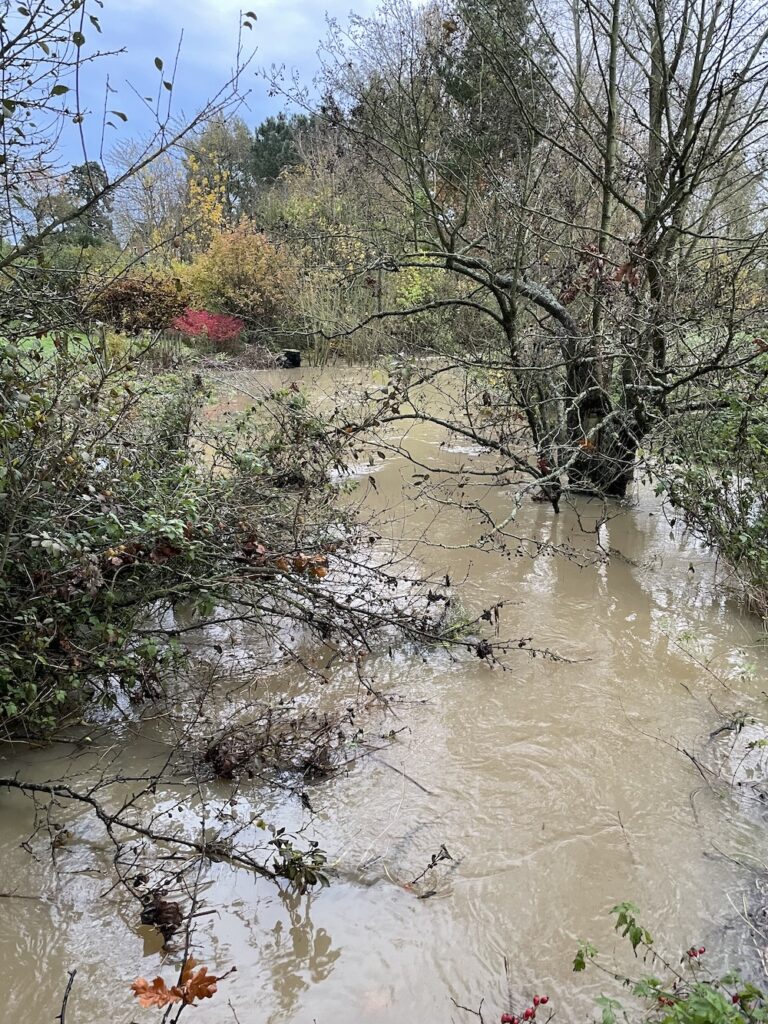
As I write, water is rushing along the ditch again, and a week or so ago we nearly had another flood. A network of channels, drains and watercourses direct water into our local river, but in this flat and low-lying country the flow is never fast and if the rain comes down hard or the sluices are closed downstream, the river will overflow into its watermeadows. Since moving to Suffolk I have become quite skilled at driving through flooding: staying in low gear, opening the driver’s door to check how high up it comes, revving hard on the way out to eject any water from the exhaust.
Thick with reeds, our little river loops and wriggles, appears almost stagnant when the water’s low, and unless its hand is forced it seems in no hurry to go anywhere at all: its power, in flood, is all the more shocking for its innocence at other times. I didn’t grow up in a riparian landscape and since moving to Suffolk have found the river fascinating; it has seeped deep into my imagination, so much so that I have transfigured it twice: into the Ixen, the river that runs past Ixenford, the fictionalised village in my Substack newsletter; and into the River Welm which flows through Lower Eodham, the setting for my fourth novel The Given World, which comes out in May. It’s a book in which the river is powerful and possibly animate; in which there are powers moving dimly beneath the surface of the everyday world – for good and ill – that cannot quite be named. Now, the real river, and its counterparts the Ixen and Welm, shift and change in my mind like slides held up against a light, so that sometimes I have to stop and think, to work out which village in an old river valley I am really walking in.
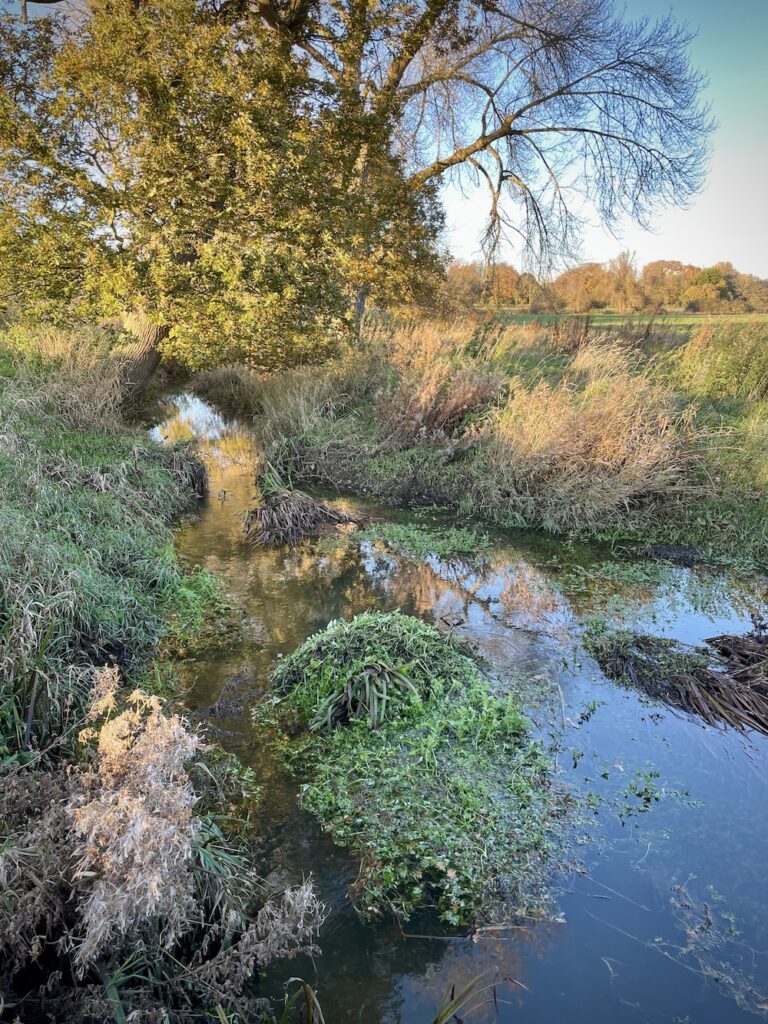
On my walks and morning runs I cross and re-cross our little river on railway sleepers wrapped in chicken wire, wooden footbridges for walkers, concrete slabs set down for tractors and wide old structures meant for cows. I splash through its fords on foot and in my car, and have waded across it in high summer; once or twice I have clambered over on fallen trees. One little bridge has a plaque dubbing it ‘Otter Bridge’: this I know to be nothing to do with the otters I’ve caught there on my trailcam, but a tribute to a much-loved and long-gone border terrier.
I lost a dog I loved very much this year, one I was official ‘dogmother’ to. Goldie loved walking the river loop with me, although she was not a swimmer and could never be persuaded to go in. My own, dear old dog, Scout, loved that walk too when she used to split her time between Suffolk and Brighton, and she was a great swimmer in her prime. In fact, there were few things she found more exciting, and we often had a job to drag her away from rivers where she would stand on the bank, trembling with excitement, hoping for just one more stick to be thrown in. Scout is eighteen now, and still just about with us – though by the time you read this, I think it likely she’ll have gone.
This year I’ll be spending Christmas in Norfolk with my friend, who was Goldie’s owner. The River Bure, still in the upper reaches, meanders through the village we’ll be staying in, on its way to the Norfolk Broads and then the sea. We’ll walk its banks, I’m sure, though we’ll be dogless: the final river of 2025, floating me gently, inexorably, into next year.