For Robin Turner, 2025 was spent making sense of a scattered brain.
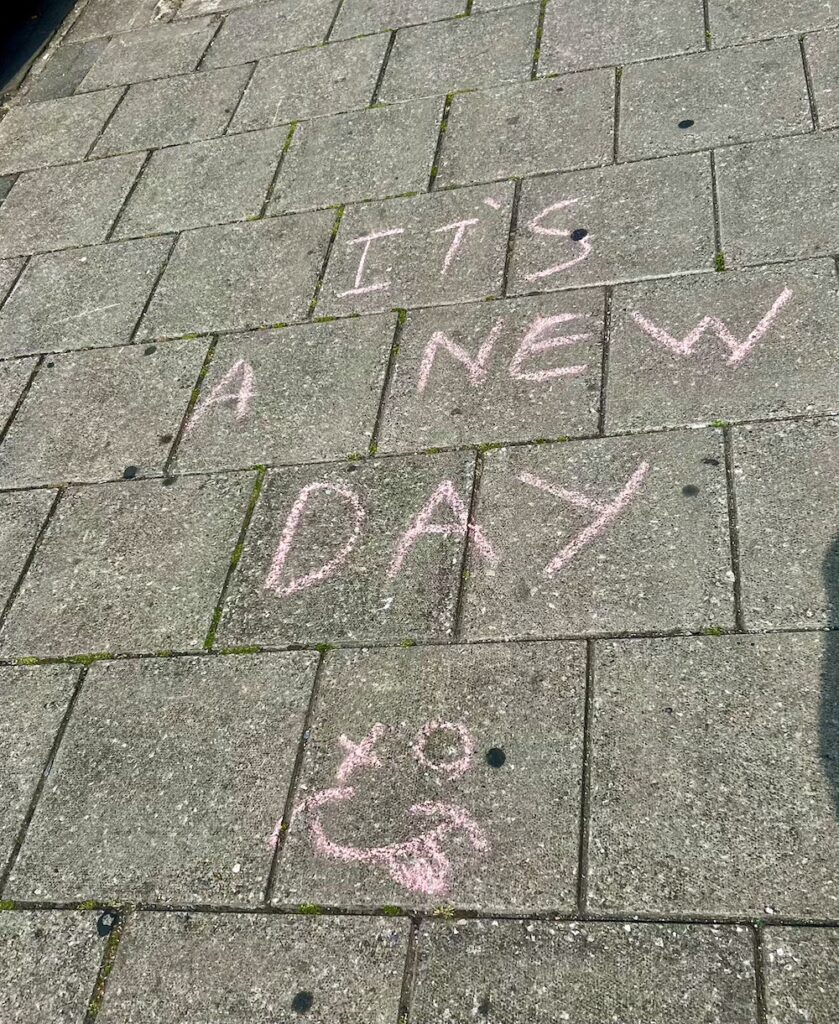
The long table in the local. My usual spot, if I’m lucky. A full pint, and I’m here trying to think back over the last year and when exactly my mind stopped behaving normally.
In October 2024, I had an operation on my brain to remove a tumour. A surgeon’s scalpel does funny things. It removes bad lumps — thank God — but it also has a tendency to leave big holes.
When I was first diagnosed, the surgeon guided us towards an operation with confidence, but he also added a fair few warnings about the potential medical issues that could arise as side effects. The part of the head that needed tweaking was the part that housed both speech and memory. Those words are only abstract concepts until someone says they’re ready to stick a knife in. Then they become very, very real.
Although we were both propelled by a need to get things done, my wife became extremely fearful that one or both of those cognitive functions could be knocked sideways once the skull had been taken apart and the brain explored in an operating theatre. Every time we asked about it, the surgeon pointed us towards the possibility of a stroke that comes with this kind of procedure. To him, that was the bigger problem. To us…well, what about us? What if speech or memory were badly affected? What pieces would be left of me once I was wheeled out of the surgery room?

The stress and panic of working in a fracturing music industry, gunning alcohol as a midweek escape route, trying to do your best with the family when you know you’re on shaky ground — take your pick. These things and more had already punctured my memory with holes even before the tumour diagnosis. The surgeon talked about future points where memory might fail, places where obvious objects or actions might be temporarily replaced by blank spaces. The future me was predicted to have a brain box that looked more like Edam cheese than anything solid or St John-able.
So what do you do when faced with the weirdness of an unpredictable future?
In my case, open a blank document in Apple’s Pages programme and start looking for words to describe it all.
I’m not sure where that plan came from, but I decided to write down what I could during the time leading up to the operation. This would be less writing a micro-fraction of a life story and more tracking all the conversations I’d had and the strings of thoughts that ran between them. Confessions of a cancer sufferer, maybe.
Choosing writing as a solution to a problem was entirely anti-me. Writing has been punishingly hard for the last few years — like trying to force square pieces into small round holes. Bang away at them enough and they’ll go in — they just leave a bloody big mess on the page.
I’ve always found it hard to maintain the discipline of writing regularly. It’s like trying to control a stray animal on a crappy lead. I’d sit down to give it another go but quickly find myself being dragged round and round the same places, an untamed mess of nonsense forming a big looping circle on the page. Nothing fits, nothing zips up and grabs you by the collar — just a frantic rush of nonsense blurted down. So, life-changing diagnosis lands on the table — let’s do loads more of that thing that drives you mad, then. On a daily basis too.
In the six months leading up to the operation, I wrote down everything that happened. (In case that seems strange, the timeline was decided by myself and my wife for various family-related reasons — the surgeon was happy to let us choose a starting point, as signs suggested we didn’t need to rush.) Over those months, I visited the hospital so many times there were weeks where I thought I actually worked there. Daily meetings. Scans done, bloods given, brain tried and tested. And I tried to write it all down as I saw it: getting the tour of the inside of your skull in photo form; MRI scans in ASDA car parks; sessions with psychologists who ask if you’ve thought about killing yourself. All of that experience was typed into that blank Pages document when I got home.
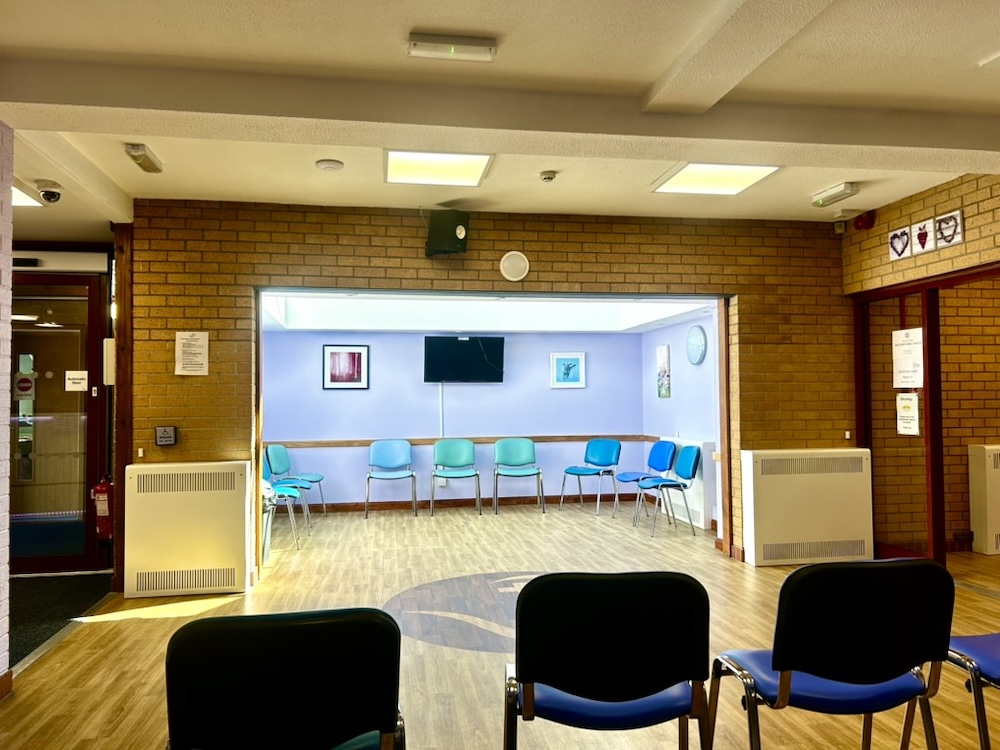
Before the operation, I had thousands of words but no obvious home for them. So I left it on the desktop of my computer and thought that my wife might find it one day if any of the worst predictions came true. Thankfully, we were extremely lucky. A surgeon with a very steady hand took 90-plus percent of the tumour out, and occasional blankness aside, I got out of there with just a head scar like a cartoon pirate to show for it.
Cut to June this year.
Over time, I’d gone back to the original text and ironed it, added to it, edited it, massaged it, stretched it and nearly scraped it. It was — at points — crazed, like a half-drugged patient ranting about the madness of it all from the Costa Coffee concession in Southmead Hospital. But I thought it would work if I just sat at home moving text blocks around, reshaping it somehow. Maybe that was a side effect of the operation and the radiotherapy that followed. You’ve got the right idea, but mate — you’re lost.
As is so often the way, my wife solved the problem I just couldn’t seem to find a solution for: “Either publish that piece somewhere or just delete the bloody thing.” Absolutely damn right.
Dividing the writing I’d already done into chunks was a catharsis. Removing sections was too. If it doesn’t fit or flow, fuck it. It’s my brain, my writing — I can work with it in any way I want. I had an idea for a name (A Cloud, A Blossom) that I’d come upon when zoning in on a neurosurgery picture of the inside of my head: the tumour as a beautiful white splodge, just sat there, existing beyond logic right in the heart of the logic centre. When I finally set the thing up as a Substack page, I used that as an overall name but settled on a snappier title — Scatterbrained. And that was the flagpole stuck in the middle of all the mental noise and chaos.
Six months on, and there are twenty-five posts on Scatterbrained. It goes back to those early scribblings that happened under the stress of not knowing what might happen, through the awake surgery (or the bits I can remember about it), and then on to radiotherapy and chemotherapy treatments. The writing that had set my wife off became the first three Scatterbrained posts; everything else has been written on a weekly basis, as and when circumstances change. There’s some positivity in there, and there are descriptions of what happens when you’ve been pumped full of pills for four months — pills the hospital have pointedly warned you are actually poisonous.
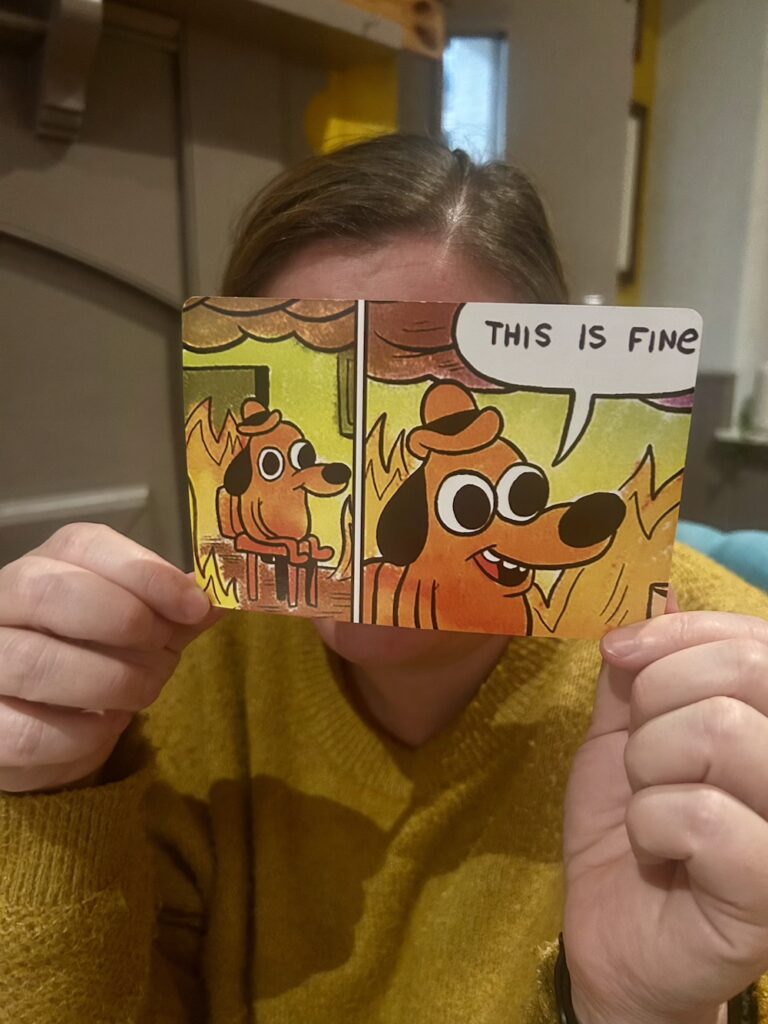
Writing through recovery has been hugely helpful in trying to understand what’s happening inside my head and, in turn, in explaining as best I can to friends, family and beyond what the present and future look like. I haven’t written any of it looking for sympathy. In fact, one of the reasons I started posting — after the wife’s interjection — was that Facebook in particular can seem like the meeting point before walking into a crematorium: so many stories of death, funerals, people we know who’ve been caught by the reaper way too soon. Knowing that the surgery had been a success, and that the radiotherapy that followed wasn’t so bad, felt like a steadier place to start posting from than any point prior.
So that’s where I am now. Back here at that long table in the local. Last sup left in the pint glass. Probably time to head back home soon. I’m still thinking through the last year, though, and wondering: what even is a “normal” mind in the first place? Mine’s been a mess for years (see reasons listed above, then add a load more), but writing has brought a kind of clarity when dealing with massive, often ominous issues that seem impossible to process when first flagged. Scatterbrained or not, I think I’ll keep scribbling away while there’s still a story to tell. And hopefully that story has got a few years to run yet.
*
Robin Turner writes ‘Scatterbrained on Substack regularly. Read / subscribe here.