Nicola Chester contemplates a year of cut ties and broken legs.
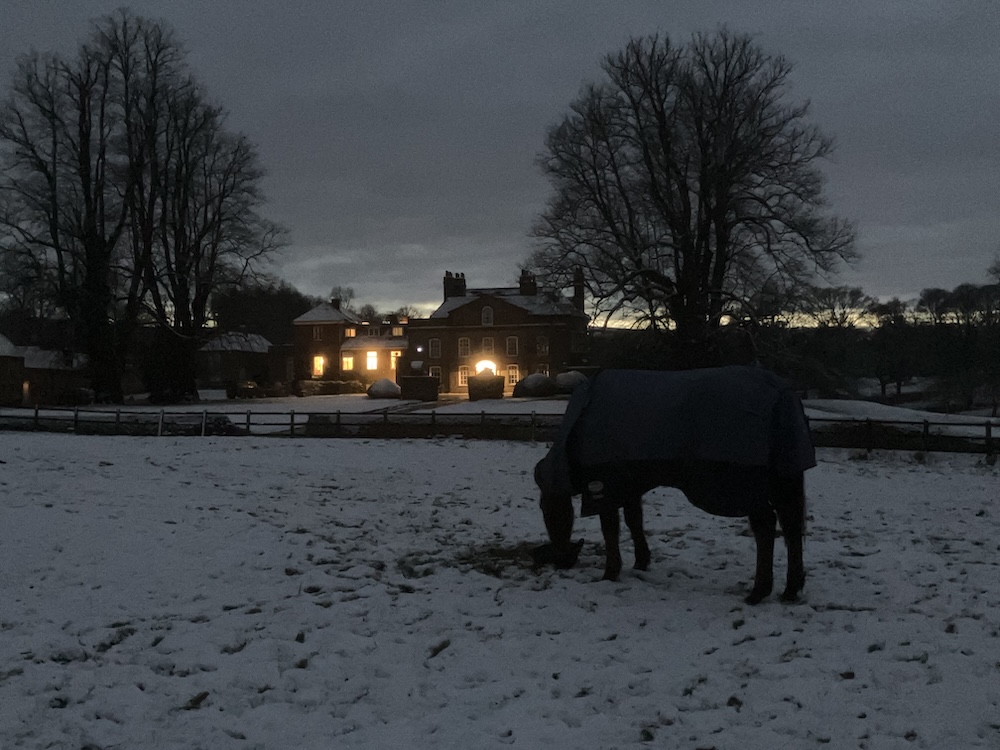
January 2025 already had a label attached to it that read, Big Year. Just before Christmas, a book had been written, things had been decided, things instigated. Huge cogs in our lives as a family, had been set in unstoppable motion. The previous September, I’d handed in my notice as librarian in a secondary school. It was a job I loved, at a school I loved and I knew my timing would badly let them down.
I spent the last weeks working out my notice with a full and overbrimming heart. It was the hardest job I’ve ever had to leave, especially as I knew no one was taking over from me (though thankfully, months later, someone did). I left, hurt, because of that. Other contributory factors to my leaving — things that I’d suppressed, that were a frustration, a trauma, and that I thought I’d managed to tamp down — smoked and glimmered, threatening to ignite.
But I was leaving because I couldn’t do it all. Our youngest daughter, traumatised by years of an educational system that labelled her underachieving and ‘failing,’ left school trailing a two year record of poor behaviour and punishments, no GCSEs, no rewards and no Prom, though she’d turned up everyday and sat all her exams. Now, the system demanded that, because she’d ‘failed,’ she must keep trying for another 2-3 years. This entailed an hour plus round trip twice a day for me, because the bus was intermittent, and stopped short by seven miles (and has since been cancelled entirely.) With her situation unchanged, there were still distressed calls to pick her up in the middle of the day.
My new book was due in at the end of the year, and though it had taken three years in the thinking, dreaming, researching and living, was really just over half written. I could no longer simply ‘write in the gaps.’ The writing demanded more of me, and the spaces in between more pressing things, barely existed anymore. When I factored in the challenge of 2025, it was clear I couldn’t continue.
We’d decided to move house. After a lifetime in tied or tenanted cottages, and an unexpected spell of too many adults living in a now too-small house the year before (when our son and his girlfriend came back to live with us a while) we recognised a further and deeper precarity. We were all of us now renting in an increasingly unstable and unfair system. Mum had the solution. If we pooled our life savings (with her contribution far outstripping ours) we could build Mum an annexe in her double garage and move into her now too-big house. There would be a bedroom for all, more space, more company for her and a level of security, at last, for us.
With planning permission granted, work began in March 2025 and we began to say a long goodbye to our estate cottage home of 22 years. The house that raised our children, but had never been ours and never felt it. We have lived in the most wonderful places, but every few months, there would be a shock from some quarter, to remind us of our place and vulnerabilty. It might come from a neighbour evicted to make way for staff, a family member, or a sale to facilitate repairs to the big house’s vast and aged, Queen Anne roof; or it might be a contractor coming to do work without our knowledge, being verbally abusive about the fact that he had rights and orders, and we didn’t. Our sense of security and attachment to the place were complicated, freighted with a kind of feudalism and deep-seated.
By May, our daughter completed the first year of college, and we all decided, enough was enough. She is continuing her ‘education’ in other ways. Working where she is valued and supported (Employee of the Year, no less) and building confidence and skills through several local volunteering opportunities, and learning to drive (most days still involve at least two, hour long round trips.) She is far happier. Bright, funny and deeply emotionally engaged with the world, as we have always known her. Mum’s little house was finished as autumn began. We’d both used up all our savings, and had a tricky moment when we couldn’t, not being homeowners, access any kind of loan, or be guarantor at the same time, for the rental on our son and other daughter’s places. Mum could though, so we simply paid her instead of a bank. The builders, a local firm, couldn’t have been nicer. We were utterly clueless and they proved the best and most trusted of guides.
In the same week my book, Ghosts of the Farm was published, we moved. The older two children came home to help, and came to my book launch. Each time we moved a bit of furniture the less-than-a-mile down the road, we walked or drove the route between two women’s lives that are at the heart of my book: Miss White in the 1940s and 50s, and mine, from the 1980s to the present. There were – are – so many coincidences, hauntings and connections, I am still trying to understand them all.
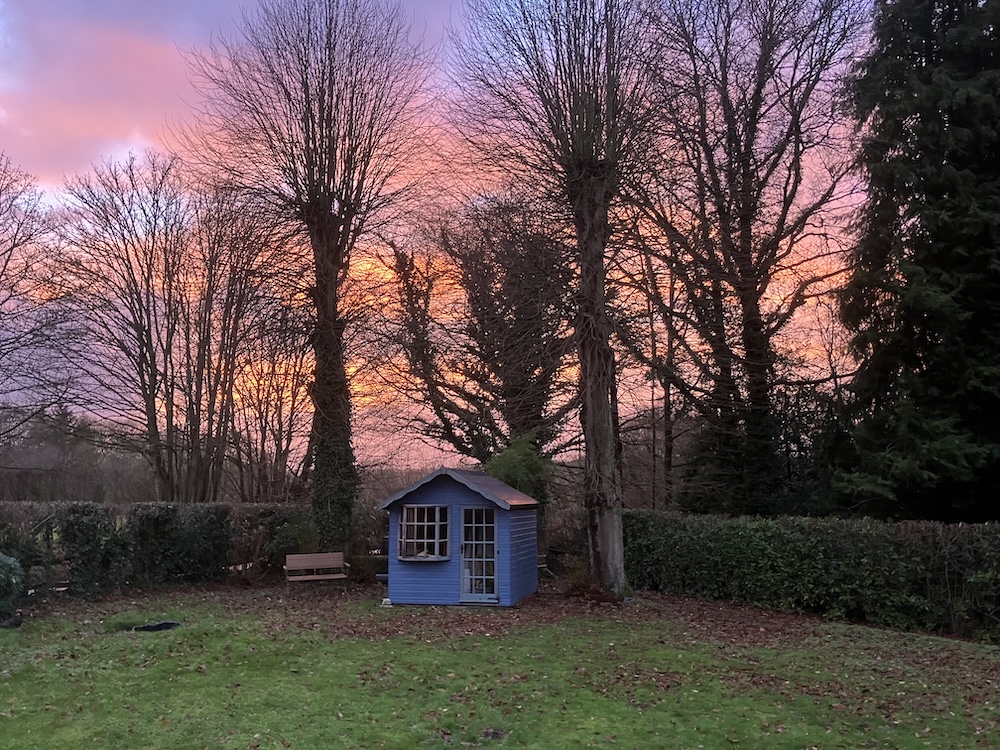
As we moved and the publication process of the book brought a smattering of events and writing opportunities, as well as some online teaching, I begun to feel justified in leaving my other job for the freelance life (though, it has to be said, being even poorer paid than my near minimum-wage school support job, I can only do it because of my husband’s wage as a Paramedic.) We settled in next door to Mum’s and it felt right for all of us. After a bitter-feeling tussle to get our significant deposit back on our rented house (£1600 on a two bed house with a tiny box room 22 years ago) we decided to move our old horse away from the estate too and finally, cut all ties. It felt freeing, emotional, and raw. Not empowering. Not yet. But the constant chatter in my head, of a lack of agency, worry and being less, began to subside. The dreams – someone knocking on the door, barging past to claim some piece of furniture, sit on the sofa or take some cutlery, haven’t left me yet. And won’t, because our two older children have inherited both the dreams and the shocking reality of renting in this country. But, we were home and dry.
And then, I had an accident.
Our young dog, Mum’s big young labrador, and a whippet, met in the woods: caught a case of the zoomies, and crashed into my lower leg, breaking it before I hit the ground. Mum was stood right beside me. Thank goodness it wasn’t her. Two days later, I hobbled into the X-Ray department, and came out in a wheelchair, with my leg in a cast.
I had to stop. I had to let others take over. My husband took all the driving on, fitting it around his work and other commitments in the community and with his parents. Our daughter stepped up to manage the animals, Mum and friends stepped in too. The first four weeks were hard. I could make a cup of tea for myself, but not carry it, or stand long enough to drink it where I’d made it. Subsequent weeks have been better, but boxes remained unpacked, our plans for the house, and the things Mum needed doing, were all on hold. I wrote, and wrote harder to compensate for my inactivity. But it wasn’t enough. I read, but it wasn’t enough. I had so many ideas, that were both not enough and too many. Finally, I listened to those telling me to stop. To appreciate this time for what it was and think about what had happened in the last 12 months. Finally, finally, I think I did. I hobbled about the house and got to know it. Hilariously, it is a bungalow. The fitness App on my phone (that I never, ever use) sprung to life, concerned about me: I hadn’t climbed any stairs in days, now weeks. I was far less active than I was compared to this time last year, last month. I learnt the house’s foibles; its sounds and sighs, smells, sometimes. I learnt to stand in the conservatory for each sunset, for ten minutes of just being, a minute or so earlier each day, as the leaves peeled from the trees and pooled, or fluttered into little vortexes in gusts, as we crept towards the shortest day. I watched the wind shift from south west to north and turn the clouds. I watched the morning sun melt a corner frost and the evening sun gild the gulls’ bellies, as they travelled home from the ploughed fields, to roost on the lakes in town, doing my commute for me. I watched the rooks commute out from the Farm I had written so much about, and watched them return again at night. I listened to the radio; even, to podcasts. I cuddled up on the sofa with the dog. I had tea with Mum, or my daughter in the daytime. I paused, I cried sometimes, I sang. I healed my leg and wondered what 2026 would bring, with hope and the excitement of simple things. This had been a big year, no doubt about it. But it had been good. We had shifted, with effort and risk, like a cart being pushed out of the mud, piled high with all our precious cargo and meagre worldly goods, and found solid ground. We had settled. I had stopped. Paused. And just before the old anxiety creeps back in to ask me, have you done enough? Have you made the most of this time? Appreciated it enough? I shall write it all down, to be as sure as I can be, that I have.
*
Nicola Chester’s ‘Ghosts of the Farm’ was a 2025 Book of the Month.