As persecution of wildlife becomes increasingly culturally embedded, Contributing Editor Tallulah Brennan urges us to side with the newts and microscopic snails for a chance at a richer life.
‘For in the end, it is in the relationship we maintain with the totality of the living world that the truth of who we are is made visible.’ – Achille Mbembe
‘I suppose that in the end it is an act of faith to believe that the natural world is important to us, that we need to keep in touch with life which has a pattern unshaped by human hand…’ – Richard Mabey
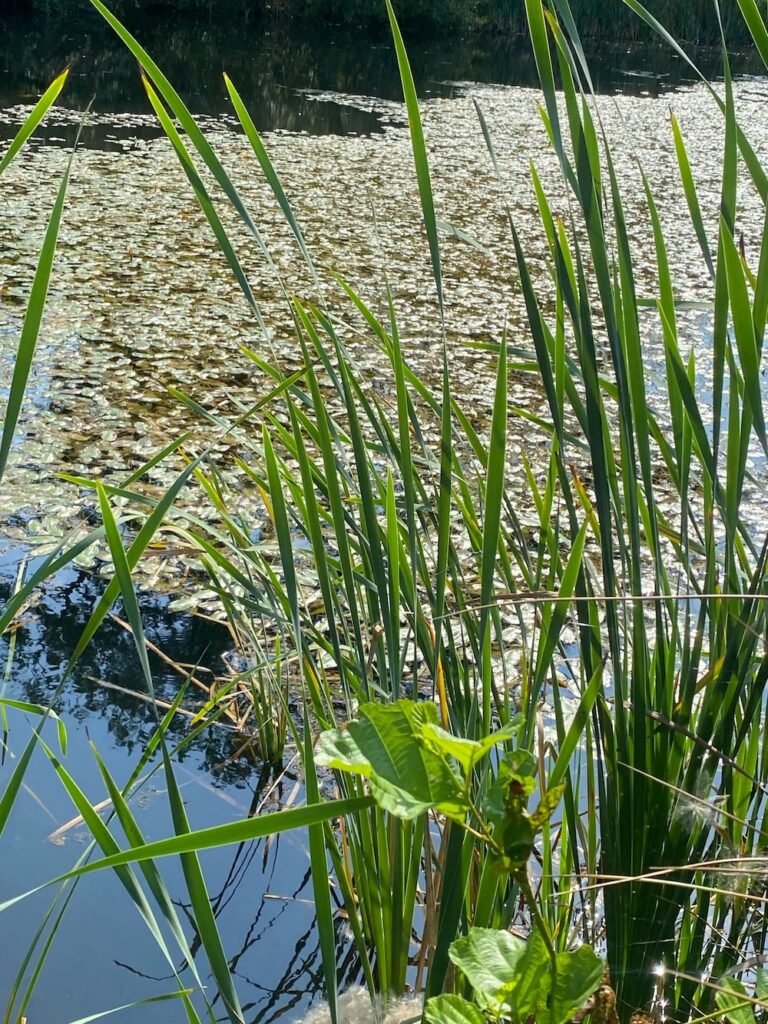
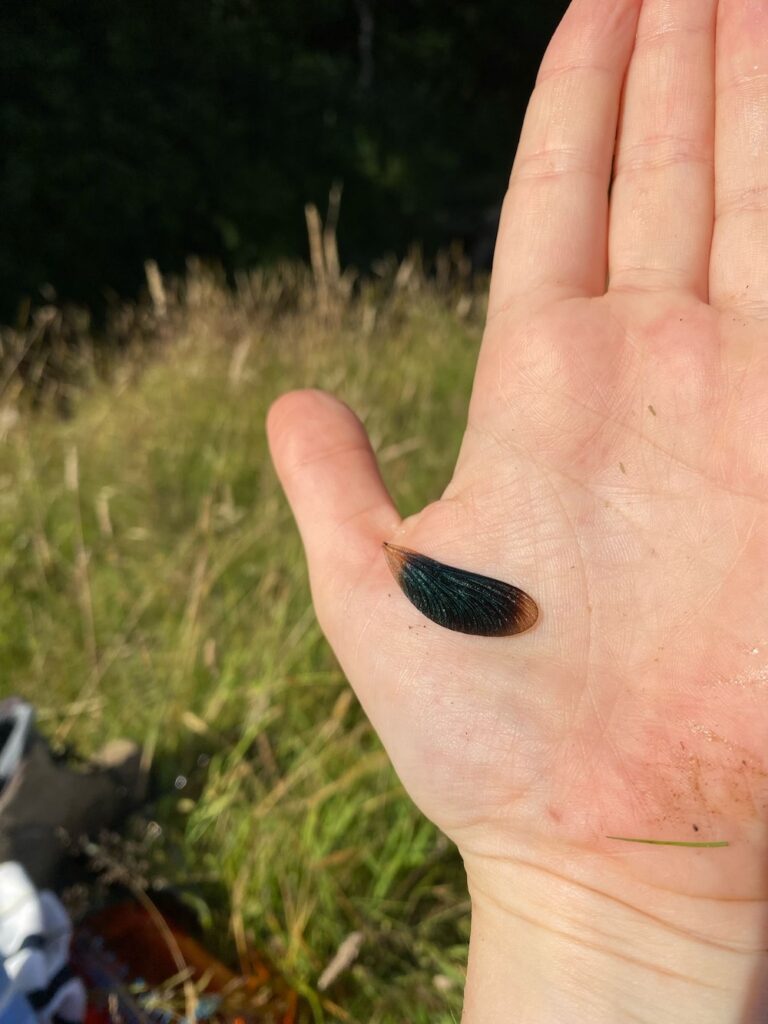
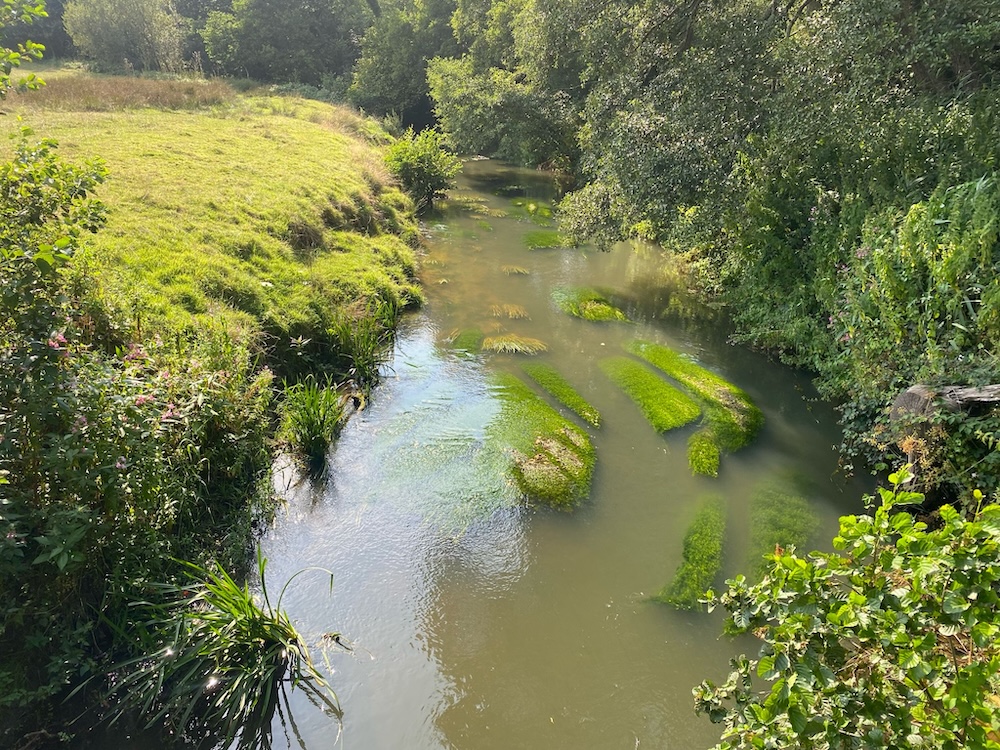
Running through the last, vastly different, two years of my life is a river. A chalk stream, one of the most rare and precious habitats in the world. 85% of them can be found in England. On a summer’s day, you can escape the brutal oppression of increasingly regular heatwaves in its waters, with a necessary warning that should you stand still for too long, too timid to place your shoulders underneath the water, the fish will start to nibble at your feet and knees. If you have your timing right, four-petaled daisy-like flowers trail from mats of crowfoot, and between the wooded hills nearby and the lily-pad-carpeted ponds, it feels like this could be heaven. Last year, examining the thick trails of mud on my feet and legs on the bank afterwards, I found a dragonfly wing which had stuck itself to me, and a little leech crawling up my thigh. This space is a shared one, and all the more beautiful for it.
This is the Western Rother, which rises from springs in Hampshire. The river goes on to become a tributary of the River Arun, where its ecological rating quickly becomes ‘poor’. Given that 75% of our rivers are in this condition, it is not this that despoils the memory of crowfoot and tiny fish on a December day. Found floating in the River Rother, a BBC article tells me, was a tag, cut from a murdered eagle, one of the four White tailed Sea Eagles to have gone missing this year. The tag was cut from one which fledged last year, one of two which were the first to fledge in the UK for two hundred years. After four eagles went missing in 2025, with Wildlife crime investigations producing no results, the RSPB chose to go public, which is how I find out.
Birds die all the time. More than this, birds are killed, purposefully, all the time. The areas of Nairnshire and Invernesshire where one of the eagles was disappeared is a cesspit for raptor shootings and poisonings. In my home county, the rates of raptor persecution are the highest in England. As Raptor Persecution UK write on their site, all of these eagles have disappeared from places managed for gamebirds. Moors and uplands are not the wild places they’re sold as. They are most often managed and manufactured for the shooting habits of a few, and birds, whether as small as a sparrowhawk or as large as an eagle, are not welcome in their vision for the landscape. Prior knowledge, however, does not halt shock in its tracks.
Phrases that pepper the headlines, like ‘missing eagles’ or ‘tag found in river’, don’t have the right effect. Spurting blood, metal tearing through muscle, an ending marked by crushed bones and broken wings. And the all-of-a-suddenness aside, the image of the bird being found in its resting place, pulled by its legs, tag cut off with a blade probably carried for this specific purpose; this is what really haunts me. It is true that we need some kind of dressing up of harm to feel shocked and thus obligated by it. The last hundred years has seen the reduction of 80% of Europe’s biodiversity, and in the world as it is now, we’re walking day to day through an increasingly overcrowded graveyard. But slow and small death isn’t very attention grabbing. And so dead eagles make headlines because there is sinister intention and a very clear, sudden and violent wrong for us to gasp at. After all, one loss is much easier to comprehend than the multitude which have become acceptable and normal to a country which has become world-leading in nature depletion.
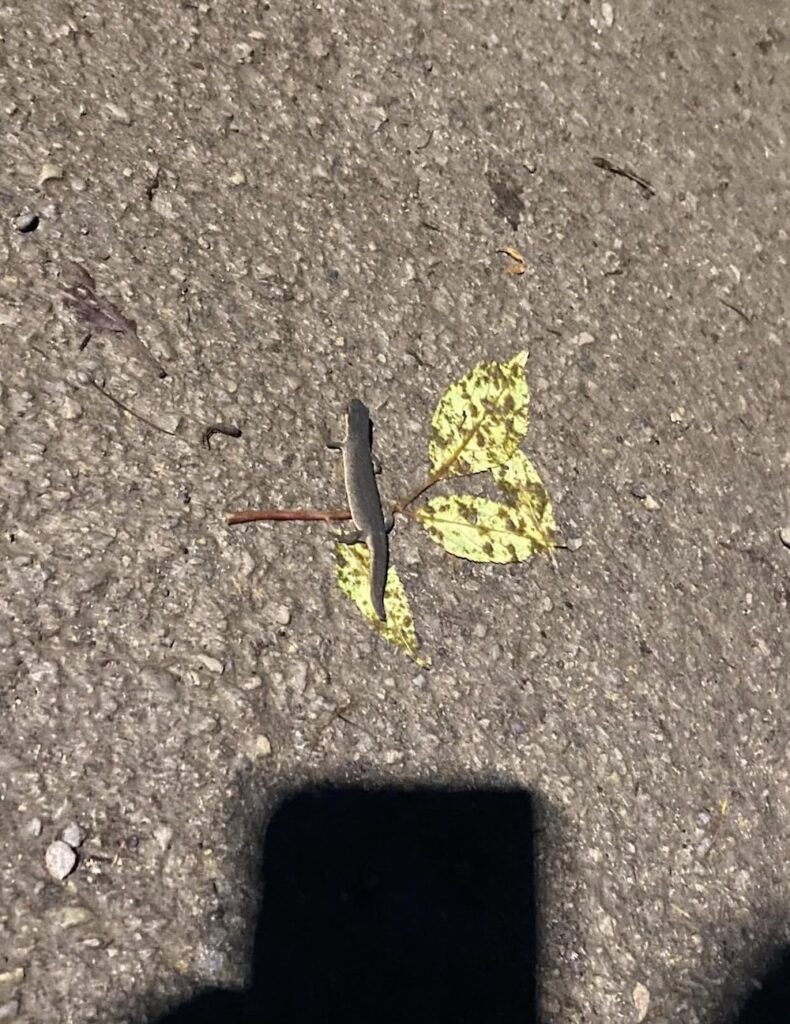
Something crawls across the path in the dark. Its around 6pm, I’m on my way home from work. This route is tedious to me and I have made the mistake of no longer looking where I step. This is York’s ‘green corridor’ — St Nicks. Whatever it is stops, takes another tentative step, and stops again, agreeably allowing me to capture it and delight at the fact that a newt and I have crossed paths. One of my first thoughts is that so much rests on this creature’s shoulders, and yet here it is, in front of me, unaware of the self-referential human gaze. In the same Whatsapp group this newt lands in a minute later, there’s a stir. What the London Wildlife Trust calls the ‘Nightmare before Christmas’, the Planning and Infrastructure Bill, is causing a barrage of endless letter templates to MPs, fear-mongering Guardian articles and statements from charities here, there and everywhere.
In 2025, Rachel Reeves was filmed in a private meeting, boasting to executives from tech companies that she has “unblocked” a large housing development in Sussex being held up by “some snails… a protected species or something… microscopic snails that you cannot even see”. On a different day, Keir Starmer pursued jumping spiders instead, which find their home on a crucial green space in Kent. In this world, the end of the line for a newt or a spider or snail is made meaningful by the houses whose four walls are not yet a gleam in the eye for the young children waiting on the council housing list. It isn’t my job to make statements on how many homes the UK needs, how quickly they need to be built, and who should be building them. (It has to be worth noting though, that the Wildlife Trusts found that in 2024, bats and great crested newts were a factor in just 3% of planning appeal decisions, surely? Or that in my years of experience with a terrible housing market, it was landlordism and Margaret Thatcher which haunted me, not a newt.) It is, sometimes, however, my job to put words together intended to garner greater attention to the diversity of experience and existence in the world.
How we talk about extinctions matters, because if a rare snail does not matter, then very quickly, the mattering of all else comes undone. We’re losing the right language. How we speak shapes our fates; are we outside of the world in which the ramshorn snail exists? Are we a million miles from a jumping spider? Quite literally, no. We act within the same world, belong to the same ecological infrastructure. But no cultural movement is coming to save us from our fictions of singularity and exceptionalism. This is a measure of the moment: libraries have disappeared, there is no public funding for the arts, creative institutions everywhere are flailing and trying to survive. It’s easy for us to imagine the disappearance of any species except ours, and that is, fundamentally, a cultural failure as much as anything else. We’re bereft of narratives which make imagining a future without the natural world unbearable, which pour fear into us at the thought of their loss. It is also easy, in the short term, to keep cutting the creative arts, and to prioritise short term gains on housing, until the long term, stubborn fact of extinction and a deadened culture comes along. If a newt doesn’t matter, and nor does access to a free book, to warm, safe space, to a secure home, then what is left? It’s hard for me to pin a society bereft of the right to a home and a space to read on a snail, a newt or a spider.
Years ago, Zadie Smith wrote ‘An Elegy for a Country’s Seasons’ in which she asks for a more intimate language around our ‘local sadness’ and loss as the climate changes and we prove useless at acting quickly enough. In 2025, she spoke on the picket line at the British Library with PCS members. Chastising an island which uses Shakespeare and Austen as tourist traps whilst underfunding and exploiting the workers of its cultural institutions, she said, “in truth you do not value culture at all, and are in fact running a giant heritage museum in which the only cultural workers you respect are the dead ones.” I collect postcards on the weekends when I go walking in the countryside, or visit a city which is not my own, to send on to friends each month. One boasts a chalk stream, another habitat at risk by the bill, ‘protected’ potentially only thanks to an amendment. I find myself within a projection, a lie of a culture which claims to love its wildlife and destroys it at every turn. In the future, I worry life will feel as two-dimensional as these cards, and that I too will feel that way inside. No time or resources or creative infrastructure to play with words that might instill a good, caring ethic. No lively landscape to be in to make myself moved enough to want to play with words at all.
An eagle and a newt are entirely unlike each other. Not least because no conservation charity will be announcing a £10,000 reward for anyone who comes forward for information over the disappearance of the newt. Death’s equalising potential has run out of steam. One kind of destruction has found acceptability in legal bureaucracy and a funny word called ‘growth’, whilst the other has found widespread condemnation. The police might find the eagle-killers, someone might be fined a hefty sum, but no one will go searching the offices of the executives involved, or the Houses of Parliament, for evidence when a species of newt goes extinct. In the future, it is unlikely, though not impossible, that the future children living in these new homes will seek the people who chose ‘progress’ over survivability for some overdue justice. Which is to say that our conceptions of harm have run out of usefulness. We’ve reached a moral dead end. The tiniest co-constituents of our world are the latest offcuts in the unstitching of our cultural tapestry.
On one of the last days of 2025, there’s a bird-ish noise as I walk home over the local beck. I pause, cross the little bridge, slippy with sodden leaves, and turn onto what is a very unofficial path. Looking up all the time, I notice a dark shape on one of the branches, and then there is a swerving head; a tawny owl. It becomes aware of my presence; the noise disappears. When my window is open I can hear it faintly in the middle of the night from my bedroom. It leaves me grateful for co-existence, and the tiny strip of green space in my corner of suburbia. I don’t need the simple and grand option, which is to think with an eagle. I’m happy to think with the tawny owl a minute from home, or the newt at St Nicks.
Some years make their meaning in the rear view, and eagle murders and planning bills quickly shape meaning for the next. Destruction of any kind does not need to be seen, does not need outright villainy to be felt. On the side of microscopic snails, you find yourself on the side of a rich, feeling chance at life.
*
Tallulah Brennan is a writer based in the North of England, interested in the relationships between humans and their environment, and how they in turn shape each other. She is also a contributing editor at Caught by the River. Follow Tallulah’s Substack here.