Keen birder and friend of the River Paul Bursche heads to Elmley Nature Reserve — site of our upcoming May event — as Spring unfurls on the Isle of Sheppey.
 Photos by Olivier Behzadi.
Jan 6th, 2026
In early January, the South East had its few cold, hard nights of winter. There had been ice-warnings on the main roads and snow sat on the hills of the High Wield as I drove carefully east and then north towards Elmley.
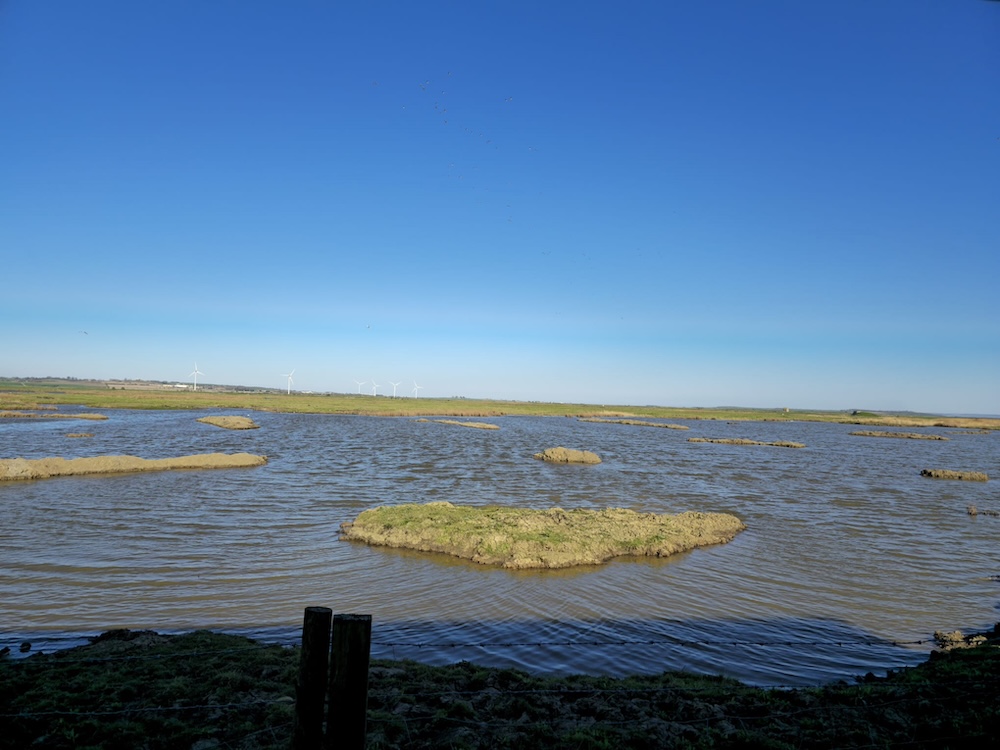
It’s an incredible place, a vast expanse of grazing marsh, wetland and meadows. Just an hour from East London, it gives an opportunity to experience wilderness of a kind, with its vast open skies, sweeping views and teeming wildlife. It features a unique blend of conservation management and sustainable farming, and is co-funded by eco-tourism. Every visit here is always different, be that an encounter with nature, dealing with the ever-changing elements or meeting different and unexpected groups of people.
Months ago, on a chilly, grey November day the Caught by the River team came back in from a cold walk to warm up with a cup of soup in the barn at Kingshill Farm in the middle of the reserve. Today is about the winter birds. For a lot of people this is the best time of year on the reserve. Thousands of waterfowl come to overwinter at Elmley and everywhere you look there are great flocks of geese, ducks and wading birds constantly rising and falling across the marsh. There are large groups of dark-bellied Brent Geese — our smallest goose — with their distinctive almost cat-like mewing call. They have come here from their breeding grounds on the Russian tundra – an incredible round trip of 6000 miles made each year, their arrival a little miracle. They’re the only goose that doesn’t fly in skeins (the distinctive v-shape formation) but instead will wheel over your head in large family groups. Also from Russia, there are reportedly a few White-Fronted Geese in amongst the huge Greylag Goose flock (I don’t see any) while there’s also a small flock of Barnacle Geese (which I do), which may be here from Greenland or Svalbard. Hundreds of Dunlin and other wading birds stream between the coast and the marsh while Lapwings are everywhere. The evocative call of Curlew is a constant, and I wonder if any of the birds I see and hear belong to Elmley’s breeding programme. I hope so. The birds are never still, constantly on the watch for predators and easily put to — whilst the cold makes their need to feed so imperative that they might just fly that slight bit closer to the strange biped with binoculars standing between them and the sea — sometimes just a metre or two over my head. The sound of their wings is exhilarating.
But the light is the real star of today. The sheer expanse of landscape here can’t help but bring greater connection with the planet’s turning; the tiny indications that we are already moving through the winter towards spring. There will be 15 minutes more daylight today than there was at the Winter Solstice just a couple of weeks ago and that the Sun will never get beyond 17 degrees above the horizon at its highest point. The low southern sun is casting the most incredible light across the whole body of the reserve to the north of me. The colours of the landscape — dark brown and green marsh, blue icy pools of water, yellow reeds — have been given a whole new life by its intensity. The effect is visceral, like God flicked on a switch. Many people come to Elmley just to gaze at its ever-changing skies and light — this is why.
Some of Elmley’s best winter offerings happen pretty much right in the car park. Just before 4pm, surveying the marsh as the light enters into dusk, you start to see Marsh Harriers coming into roost at the nearby reedbeds to the south west of the reserve. These birds were so rare recently enough that seeing so many can still stop you in your tracks.
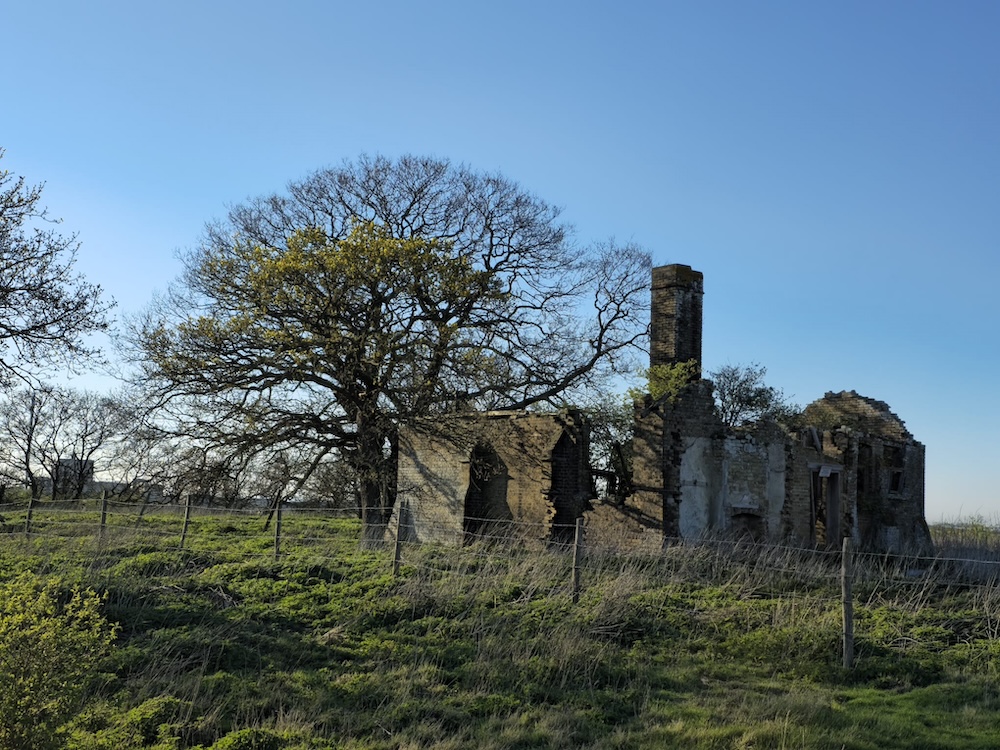
What has also appeared by the farm, in the derelict old schoolhouse which once served the community, is a pair of Little Owls, staring fiercely back at visitors as they watch from the path. Right now, though, people are looking for Short Eared Owls. There have been several of these beautiful birds roosting very close to the car park recently. They are quite stunning birds, yellow-brown above and paler underneath and with great dark circles surrounding intense sulphur-yellow eyes. In the last couple of years a couple of them have bred successfully at Elmley — a rare event these days in England — but are joined in the winter by birds from regions such as Scandinavia, Russia and Iceland, drawn to the milder and open landscapes where hunting conditions are ideal. They frequently hunt by day and so are one of the most often-seen owls if you’re in the right place. The last time I was here there were 5 birds hunting in the field below the car park with their distinctive flight style — long-winged and buoyant with steady deep wing beats, a magical sight.
It’s time to go. But now in near darkness and with headlights on, as I slowly drive back to the entrance gate, Elmley keeps a couple of its final treats for last. In the fields by the track I see brown hares for the first time all day and as I’m looking at them I see a Barn Owl, silently quartering the field for prey. For a good thirty seconds it flies close and parallel to my car with that distinctive floating action: my best view of one for years.
Mar 18th, 2026
The sun is back today but the gusting north westerly wind makes you glad of a coat. We are caught between the seasons — it’s quieter than it has been from the recent winter visits and the avian changing of the guard is well underway. There are still large swirling clouds of Wigeon and Teal and Geese, but fewer birds, and they are restless. Many have already departed with Emley’s spring visitors and breeders yet to arrive, but there are signs.
The Marsh Harriers started their courtships a while back, but a pair are in action today — we pull over on the track to admire some classic “skydancing” above the reed beds. The two birds soar together in tight circles, occasionally locking talons for a few seconds and then spiralling towards the earth before breaking off at the last second. It looks chaotic to the human eye, but to the birds is a sophisticated assessment of fitness, agility, and trust. Skylarks sing here almost all year round, but today they are in full territorial mode and it is the most glorious sound, the wind stretching, compressing and carrying their song.
I’ve brought a friend along — a filmmaker, Olivier. I’ve been trying to persuade him to come for a while. Not a birder, he expresses polite interest at several of the bird encounters we have which I’m excited by — a mass of hundreds of ducks (Wigeon, Teal, Mallard) just metres offshore from The Swale hide; Curlew flying in from the sea to the marsh directly over our heads; skeins of Geese inscribing their way across the sky above the grazing marsh. He was impressed by the courting Harriers and professes disappointment when the Little Owls are a no-show at the old schoolhouse a bit later.
It’s a day of blue skies, and at regular intervals we stop to admire how the changing elevation of the sun is causing the slightest variations in the hue and intensity of colour. He keeps looking back at Kingshill Farm, the surrounding buildings and thin tree line, and the way it is perched just above the marsh. A tiny pocket of London Clay puts it just 10m above sea level, making it, as Olivier points out, “an island on an island”.
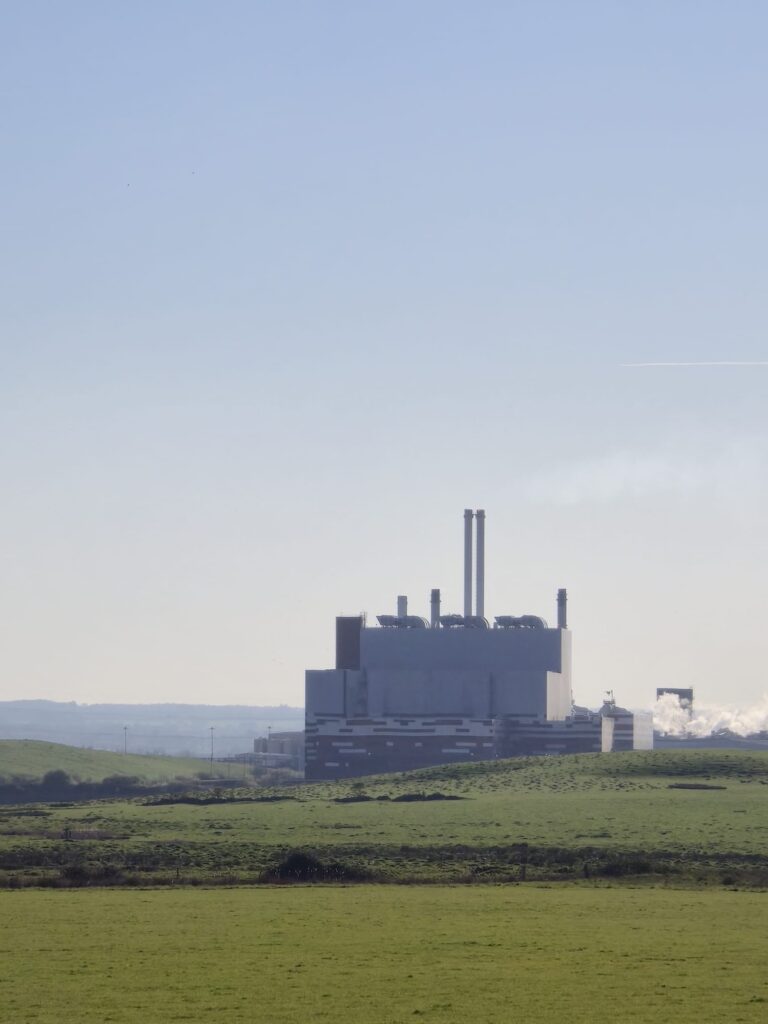
Walking to the brickworks after the non-appearance of the Little Owls, Olivier remarks on the sheer incongruousness of the view laid out before us. First, grazing marsh into salt marsh into the blue of the Swale, but then on the other shore, the sheer industrial mass of the giant recycling and huge aggregates plant, its high chimneys spewing out smoke into the air. I’ll admit that my brain always tries to erase them from sight, but Olivier says “aren’t they part of the experience here?”. This isn’t the first time I’ve heard this sentiment.
As we’re leaving, there’s a flash of slender, blue-grey wings in the distance. A male Hen Harrier, still wintering here from the uplands of the north. Simultaneously one of our most stunning and persecuted birds of prey; every sighting feels special. Near the car park, the pens that will house this year’s Curlew Breeding Programme are being assembled. Upon my next visit, the Hen Harriers will be gone, but the Curlew chicks will have arrived. Spring is coming.
*
Join us for a Caught by the River weekend at Elmley from 15th-17th May, with talks and performances from the likes of Emma Warren, Rob St John, Nicola Chester, Zakia Sewell, Horatio Clare, Andrew Wasylyk and Modern Nature. More details and tickets (from £65) here.