Blue Kirkhope unpicks how the English language can be a catalyst for the climate crisis.
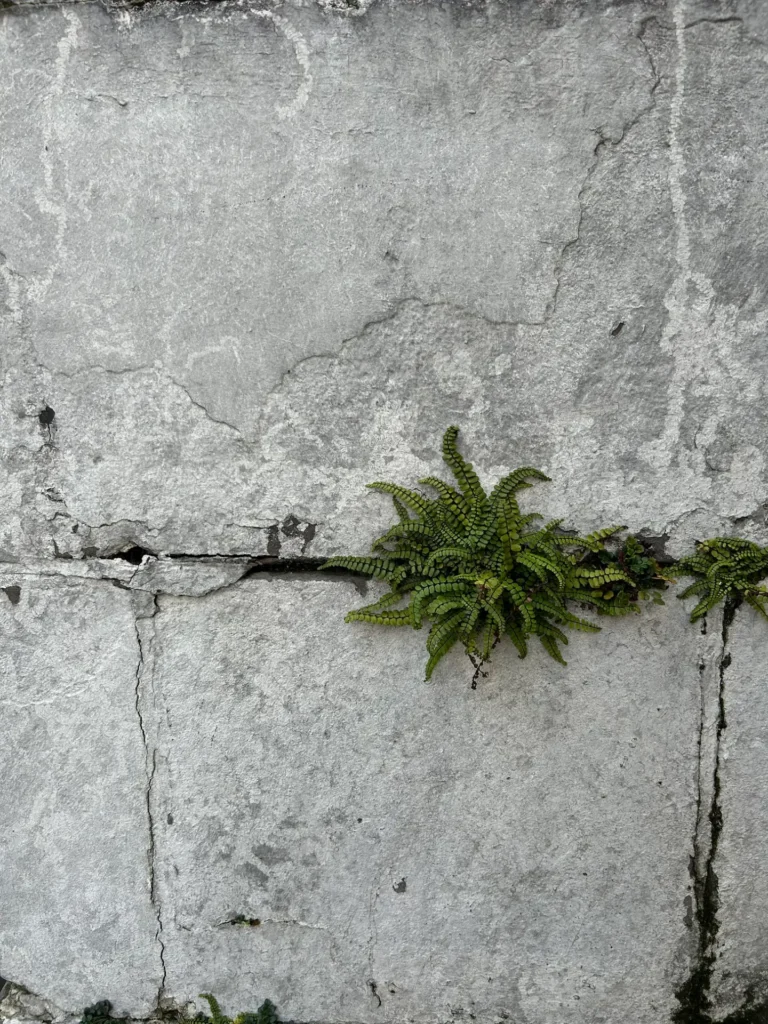
A vibrant Maidenhair Spleenwort fern protruding from a wall in Glasgow city centre, like a tongue emerging from a mouth
We need to talk about how we talk about nature and climate: about how the English language can be a catalyst for the climate crisis itself; how the misuse of tongue, teeth, mouth and throat can be as violent as a naked flame in an open, dry moorland.
When I was younger, I recall determinedly pulling unwanted weeds from the cracks of the stone patio in our back garden in Cumbernauld, making sure to pull them from the base to ensure their roots would come away with them, erasing them from our G68 postcode. Humans used to have a symbiotic relationship with what we refer to as ‘weeds’ and, instead of eradicating them, we would gather them, tend to them, use them as resources. Some weeds have medicinal properties and others can be used for human consumption. I’m sure you’ve all heard of dandelion wine or nettle soup. Now, they are more commonly perceived as their crossword definition: a plant in the wrong place, as something that is deemed out of place when they interfere with human-built environments. The word ‘weed’ holds a weight that equates to burden, as something negative that needs to be eliminated. It reminds me of how language is often weaponised: how the use or existence of a single word can alter the way in which we see and navigate the world.
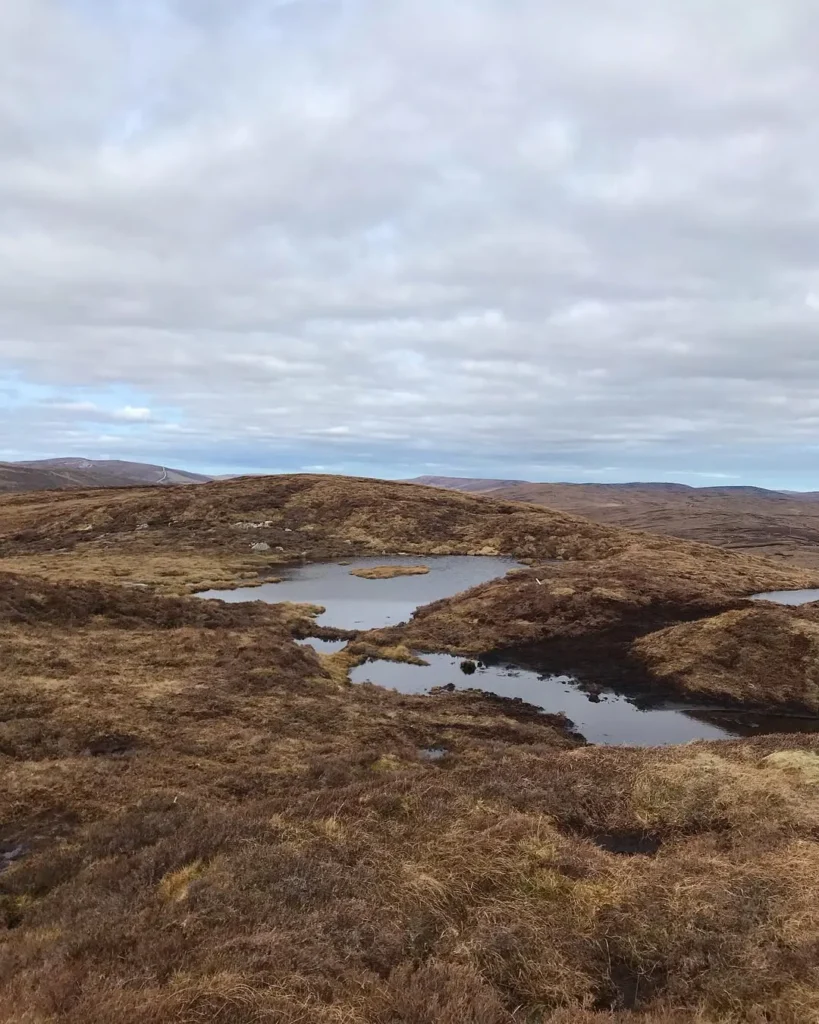
A peatland restoration site in Shetland (aka the most carbon-rich terrestrial ecosystems on Earth, not a desolate landscape)
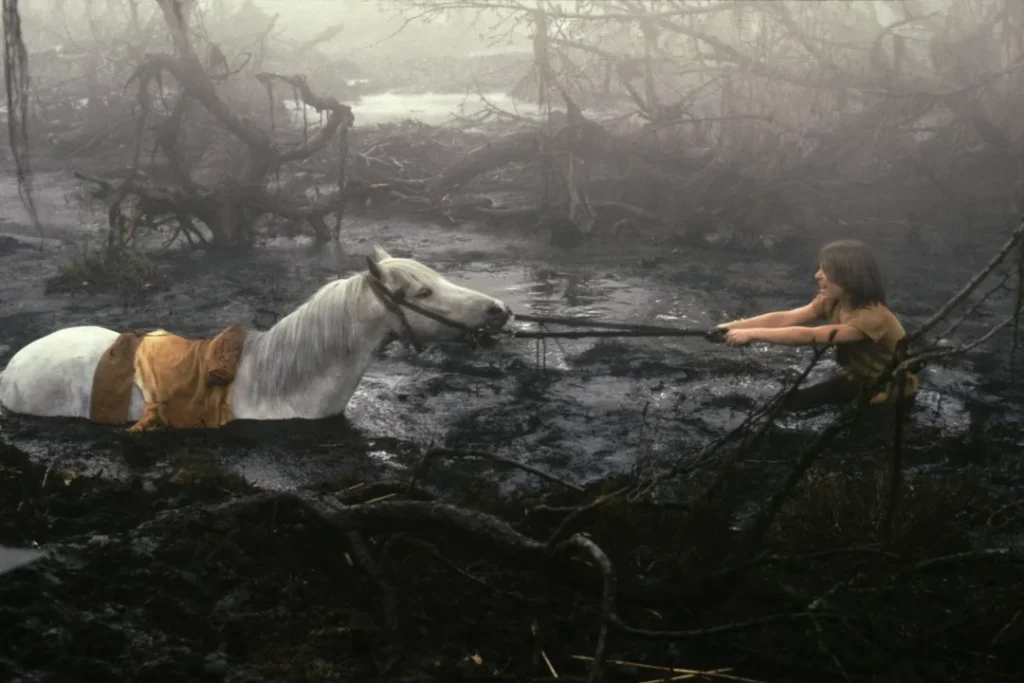
In October 2020, I left my career in the music industry for a communications role in peatland restoration. I didn’t really know much about peat except for the distinctive squelching sound it made beneath my hiking boots on a particularly wet day. As Communications Officer, it was my job to distill scientific jargon into succinct, digestible information and, ultimately, to make people give a shit about peat. It was an incredibly tough job, attempting to demystify this unique organic matter and undo centuries of negative connotations with peatlands, visually and linguistically. For example, the term ‘bog’ may conjure images of a dark, desolate landscape, seemingly devoid of any life or purpose. We often use terms like ‘bogged down’ or ‘mired’ when we are overwhelmed, stuck, or in a difficult situation, and both statements perpetuate the idea that all things peat-related are worthless and unfavourable, when they are merely warped and uninformed perceptions of an unfamiliar landscape. Look: perhaps we are all just scarred for life after watching the dreaded Artax vs Swamps of Sadness scene in The NeverEnding Story as a child. But peatlands are, in fact, among the most carbon-rich terrestrial ecosystems on the planet, and they deserve far better than the words and associations in which we have often defined, perceived and portrayed them.
In Indigenous cultures across the world, countless rich languages and vocal techniques reflect the surrounding physical world of which we are a part — many mother tongues shaped by it. These linguistic landscapes are ecological in that they are harmonious and much less harmful to the very species and environments in which everything is embedded. For example, throat-singing, one of the oldest forms of music in human history, is a vocal technique which mimics sounds of the more-than-human: horses galloping, water cascading, birds whistling. Although this technique is often used whilst hunting, its sounds are not anchored in negative connotations, but rather echo a natural kinship with the physical world. According to UNESCO, ‘in the Lakota language of North America, the phrase Mitákuye Oyás’iŋ (Mee-tah-coo-yay Oh-yah-seen) means “all is related” or “all my relatives” — both human and non-human’. There is no direct equivalent of the English word ‘nature’ in such languages; its very existence further segregates us from an ecological way of being.
Closer to home here in Scotland, there are over 100 Scots words for rain, representative of a deep, historic relationship and attentiveness to our surroundings. In Scots Gaelic, nature is inseparable from language, which is embedded in our landscapes and portrayed within our place names, from tall mountains to bodies of water. The word ‘dùthchas’ (du-has) exists to describe the bond between people, nature, land and culture and derives from the Gaelic word ‘dú/dùth’, meaning earth or land. The English language, however, is proprietorial in nature: it declares ownership of land, of wildlife, of peoples, and is inherently colonial — I have, I need, I want. No such thing exists in Gaelic: things are described as either ‘near’ or ‘at’ rather than being owned or possessed. For example, to say ‘I have a horse,’ you would say ‘a horse is at me’ (‘Tha each agam’ [hah yach AK-um]). It is only when translated into English that the language becomes possessive, and it is this flick of a colonial tongue that is dangerous enough to push ‘nature’ into a far distant realm where it can be commodified, controlled, capitalised on and severed from us. This contextualises Nigel Farage and Reform’s recent pursuit to eradicate and criminalise all Scots and Gaelic election materials: capitalism has nothing to gain from languages that are ecological and challenge the status quo. Indigenous languages are absolutely essential for preserving ecological and cultural diversity and integrity, but the physical world is also essential to Indigenous languages, and as we see ecosystems disappearing — for example, the melting and shifting of Greenland’s glaciers — this will also have severe implications for these cultures and their identities.
Reflecting on the current ‘wildfires’ surging across many parts of the world as I type this, I have found myself chewing over this particular word and narrative. Yes, the textbook definition of a wildfire is that of ‘an unplanned and uncontrolled fire in an area of combustible vegetation’, but it also insinuates that these kinds of fires always start spontaneously, somewhat naturally — that they are ‘over there, somewhere’ — and rids us of any responsibility, guilt or shame. There is also an element of fearmongering about it, a cartoon finger pointing towards the ‘big scary unexplainable nature event’ whilst billionaire fossil fuel companies extract oil from the earth, teeth glinting from their evil smiles as they rub their hands together with glee. Referring to the fires in such a way that makes them seem anything but our fault is fictitious and incites climate denial, whilst allowing the continuation of the very systems that have caused the problem in the first place. I believe that terms like wildfire are no longer the correct linguistic term, and that we have a responsibility to watch our tongue and hold ourselves, and particularly those in power, to account. What we are witnessing and experiencing right now are fires inflicted by humans as a result of fossil fuels, questionable technological advancement in the age of AI, genocide and the tonnes of consequential military carbon emissions, the kind of greed that makes those in power salivate, and sheer laziness, stupidity and callousness. We urgently need to phase out fossil fuels in a just way, loudly and explicitly refuse AI, start confronting the reality that is the climate emergency. To topple the ivory tower and be more cautious with our words.
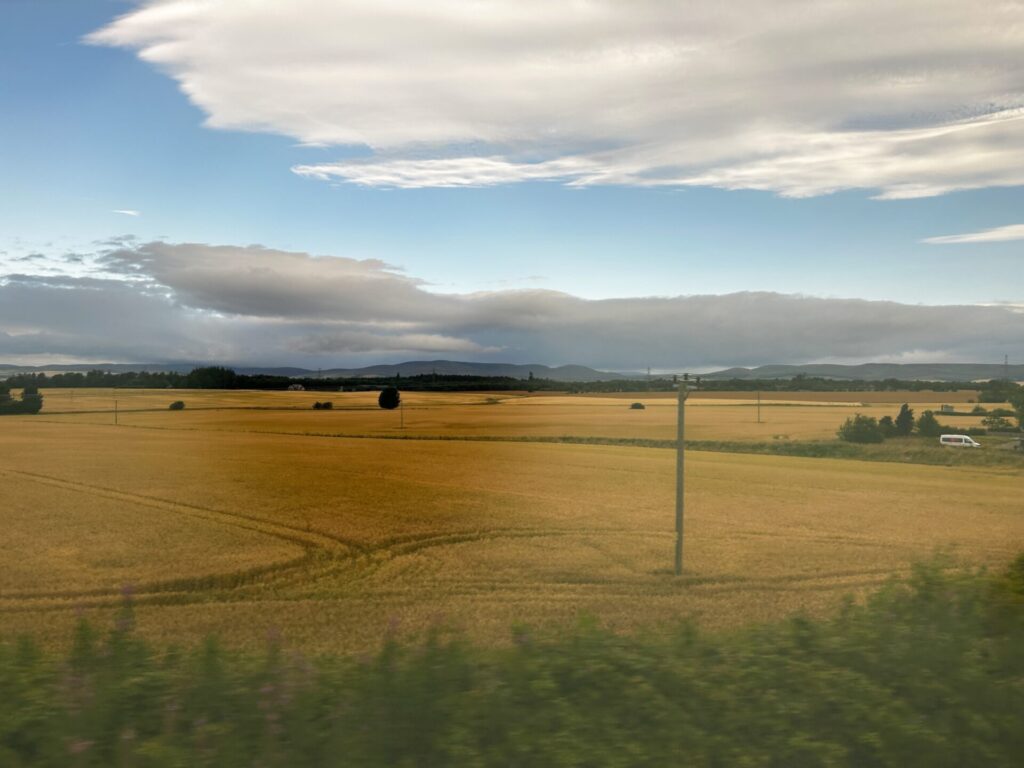
Dark plumes of smoke and ash and carbon-infused clouds spread across Aberdeenshire skies in the midst of the Cairngorms climate fire
At the heart of the climate crisis lies a profound and very purposeful disconnect between humans and the physical world. Throughout history, the Western world is responsible for erasing diverse languages and cultures, devaluing and commodifying the natural environment, and severing our relationship with it along the way to justify environmental exploitation and capitalism. These violent practices not only harm our vital ecosystems, but also perpetuate systems of oppression and ethnic cleansing, and are accelerating the climate crisis and fuelling what I will now refer to as climate fires. We desperately need to reconceptualise and alter the way in which we speak and think about ‘nature’ in the context of the climate emergency, reclaim our words as an act of resistance, pull them away from their colonial roots.
*
Blue Kirkhope is a writer from Glasgow, Scotland. Her work explores ecological relationships, linguistics and virtual, physical and microscopic landscapes. See more of Blue’s work for Caught by the River here.