As damp air descends, Kirsteen McNish meets herself between the bustling city and the misty moor.
I do not know what it is about you that closes
and opens; only something in me understands
the voice of your eyes is deeper than all roses
nobody, not even the rain, has such small hands
October passes and I feel the season I love the most creeping into my tissue, soaking up all the damp air, dispelling the self-doubt that emanated from a body that is glad to see the back of the seemingly endless beating sun. All the health catastrophising slowly ekes away with the heat, and my daughter finally goes back to school after a ten-week summer break as her classroom became too hot to tolerate.
I stretch and prop my legs up against the wall, balancing my book and relishing the cold stone pressing against my calf muscles, the cat nestling on my pelvis. The draught from the single pane windows is welcome. A fly buzzes languidly, resigned to the spiderweb it has become entangled in. In these small moments, I feel something akin to contentedness. I get up, stealthily avoiding the floorboards I know creak, and pull the door behind me quietly to walk the lanes. Buzzards cast marble-like figures atop telegraph poles, closely watching faint stirrings in the bushes. My throat feels unlocked and as I gather pace in the growing light I feel the eyes of the hedgerows upon me.
I wake often at 3am to hear unidentifiable noises, occasionally smell tobacco although no one in the house smokes. Birds scratch in the eaves and my eyes play tricks, pixelating strange hovering shapes in the dark. I lie stock-still as I hear loud snorting and rustling by the back gate, and the next day a yowling too big for a domestic cat, sounding like a ghoulish mechanical ghost ride. I go outside to investigate, but my presence doesn’t deter whatever it is in the field above our house. It yowls regardless. There are a great many untold stories in this secluded village which I am still scratching the surface of. At night I see how the church spire aligns with the setting sun and the constellations and the glimmering north star. Fields in drought reveals the faint rings of ancient settlements. Detectorists find a huge hoard of Roman treasures in a yonder farmer’s field. At an ancient bridge my daughter communicates with things only she can see, murmuring an incantation, and as I close my eyes to the warmth of a watery sun, I feel something close around me.
*
A trip to St Ives for a weekend alone to the opening of an exhibition is thwarted by heavy storms. I watch the live timetable on screen for a sliver of hope, but all hopes are gradually whittled thin as yellow warnings turn to amber. I turn up at the station as a last stab at fate and find the station office locked early with a note. Winds batter the southwest coastline, and debris is chucked up onto the track — loose teeth of rocks that halt carriages from journeying further south towards Cornwall. The B&B I have booked now sits empty on the cliffside, yawning blankly onto the raging sea. I feel bitterly disappointed and I don’t unpack my bag for days, which sits attendant like a packed maternity case on the sofa. My fingers start to twitch. My daughter’s behaviour has been wild and unrecognisable for ten months and I am somewhat broken after trying to deduce what’s hit her. I research into the night and eventually diagnose something I take to the specialist who confirms it. She suffers rages and what feels like deep grief spells, and we all are emotionally ravaged as a result, desperately trying to soothe her. I start to imagine myself dissolving into the ground I am tending, asking the air what the lessons are I am supposed to be learning.
*
News alerts tell us to buy food in preparation for shortages caused by cyber-attacks or El Niño conditions and I look from the hallway at the back of my children’s heads as they eat their tea. I wonder how I will explain it to my 14-year-old, and my daughter — who is so much in constant motion she is both slim and perpetually hungry — would not understand at all. The weight of it sits like a stone in my stomach. I turn the small pebbles sat in my trouser pocket, rubbing their smooth edges for comfort, and my head wheels.
In the throes of trying to help diagnose my daughter I discover my son has just experienced torment for a year via a cluster of boys who are threatened, simply it seems because he knows himself. A twenty-legged, immature, seething clump. He grows tall, strong and endures it all silently, with his friends imploring him to not rise to the bait. Adults at school let badly him down. I imagine these teenagers from privileged families growing up to be the bullies in the boardroom, the family business or guffawing at appeals the House of Commons. Becoming men who cannot relinquish control for fear of unravelling.
*
Rivers almost burst their banks after months of drought and the trees overhanging our garden creak and bow, making their own precarious music. At night, disturbed by the storms, I dream of my daughter getting lost in crowds, falling from high windowsills whilst I am distracted by something trivial. One morning I wake weeping from my dreams as she is found dead in a nearby stream, mud and pond weed lacing through her hair in ribbons. I get out of bed and check her room where she is sleeping — her limbs froglike and tucked under her pelvis — and I quietly re-tuck the duvet around her, leaving her to rest in her cream-coloured, softly snoring, faintly smiling, hill fort. I find flowers of many hues on the doorstep from my neighbour and close friend, who says “hold on kiddo”, feeling for me as he watched me turn pale, form-filling for adult services to kick in for my daughter, kicking a new hole into the unknown.
Two weeks later I pack my bags again and for once do not find a million reasons I shouldn’t be making the train. My friend’s flat is empty, and I am thrust into heat-seeking determination to get there. I arrive at dusk and revel in the ghost signs of old Victorian buildings, blazing streetlights, and late-night shops with neon hoardings bright against the murk.
Later, I sit with my friend in a side pew at Union Chapel. People jostle their way to seats as if their lives depend on it, throwing down coats and beating a pathway to the bar, and we follow suit. My friend E and I sit in a corner on a hard bench and I drape my aching legs across a bar stool. My throat feels fizzy with anticipation and I look around to see if anyone else I know is amongst the throng. The singer I am about to see makes my daughter’s hands flap rapidly when she hears her voice rise as if it carries her into another world on its wing. I also remind myself that if I had brought her with me, this many people in one room would see her running for the door. Deep in music and the sea edge are the in-between places where we meet as different as two sides of a coin in all else. It is here, amongst the chatter and laughter I buzz off, I wonder how between this city and the moors I can try and somehow meet myself again.
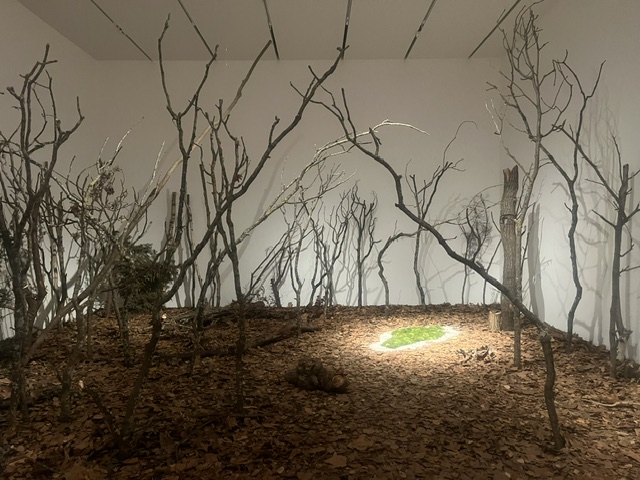
Anna Mendieta
We squeeze into a creaking pew and Radie Peat’s voice swells filling the corners, drifting high to the rafters, and seeps into the marrow of everyone in the room. I shiver and watch my friend’s neck crane forward and a tear slide down her face, matching the one racing down mine. E and I met some 13 years ago when our kids were tiny and enjoying in a light installation on the Southbank, both non-verbal but communicating of sorts in spins and hand gestures, delighted by the illuminated light. Some six months later we met by accident in a corner shop, unaware we lived close by, giddy that we’d crossed paths by chance again. We spent many months in mutual recognition, talking, walking, drinking, going to gigs, comforting each other when the system or others turned away. We find ourselves here again shoulder to shoulder as our kids now approach adulthood — Peat’s voice shaking the tears from us like salt cellars. I imagine all the tears joining, pooling at Peat’s feet from the audience like a cloak. I am jolted as everyone rises to their feet and my friend’s fingers form a U between her lips as she lets out a shrill whistle that rattles my eardrum. In this moment I feel like I have returned home after a long spell out at sea.
*
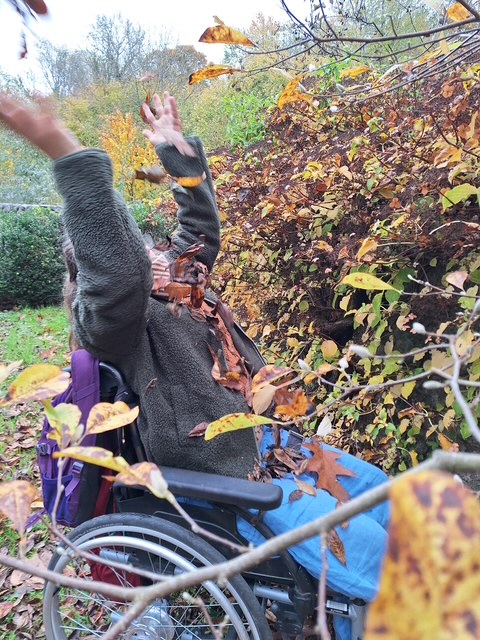
A day later I catch the overland from Clapton to Liverpool Street to go into town. I know I am overstretching myself but there are people to see, and I want to go to galleries and peer into the River Thames. Shops are bristling with the start of premature Christmas windows, and everywhere it seems people are coughing. I hide my face in my scarf, thinking of my daughter’s precarious health at home. I wonder if we could ever live here again with this many people’s lungs milling around us. I watch the blue wave grow in the U.S., promising change and an end to brutal times. My phone pips a message, my daughter’s beloved enabler sending a picture of her throwing leaves in ecstasy from her wheelchair. I take it as a sign.
As the train oozes into the station the driver starts to talk about taking care at the not to barge past each other to get to the gates or fall on our arses in the rush. There is a tick-tick-tick of electrical metronome static that accompanies his voice. People look sideways at each other, smiles slightly dancing on passengers’ lips. He then asks us to consider a quote from Marcus Aurelius which I look up later;
“Man is born for deeds of kindness/ and when he has done a kindly action, or otherwise served the common welfare, he has done what he was made for”,
followed by,
“Or just be the person your dog wants to see”.
People laugh and several of us clap. When I reach the end of the platform a couple thank him as he beams from the cabin, winding headphone wire around his hand. He looks like he would be more at home on a football touchline, shorts revealing pink knees in the cool November air. A young man and an elderly couple stop and tell him he has made their day.
*
I spend four days welling up when I see the faces of many friends. I see someone once close that I thought had disappeared forever. I release my long-held rejection dysphoria. I get lost in bookshops, go to exhibitions, gigs, a group sound installation, and seem to climb out of my body into other dimensions.
I gladly swim into the ether.
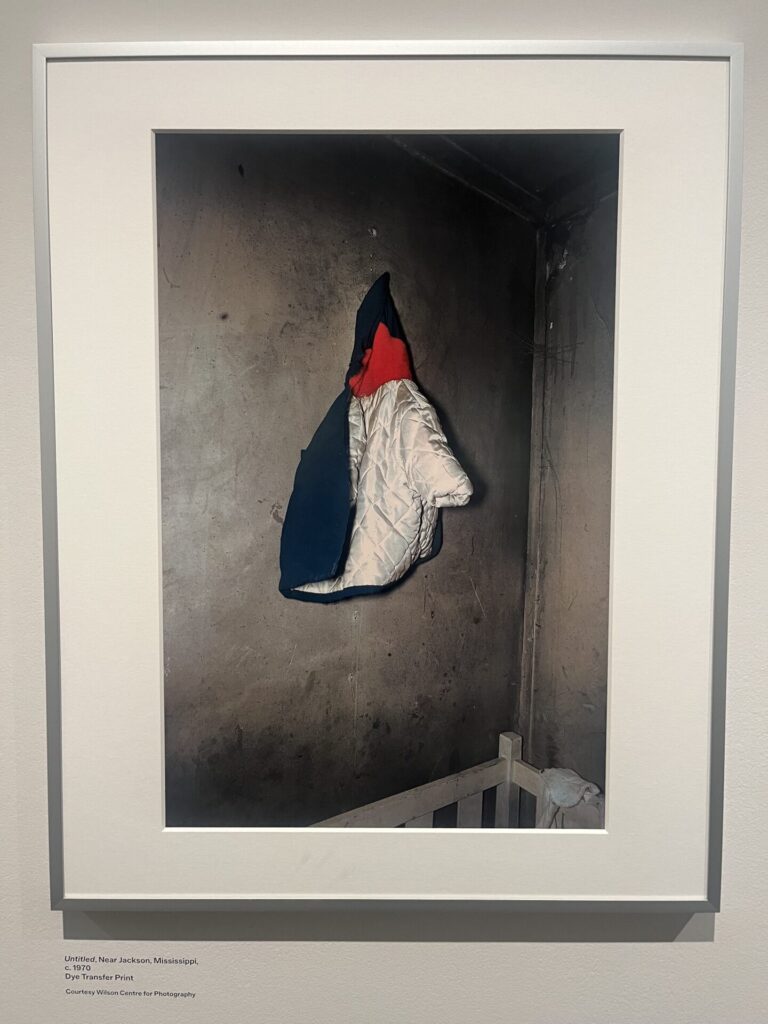
William Eggleston
After walking a zig-zag route across the length of the city I heave my aching limbs on to a massage table in a postage stamp of a room. I feel like a fortune teller fish from a cracker, flipping around on the warm palm of an electric blanket. A 1970s painting of a stone circle watches over me reminding me of home, whilst car horns sound outside the paper-thin, badly papered, swirly velveteen walls. A tiny shelf inexplicably displays one random tiny locket for sale. The practitioner taps a stubby pencil on her lips as she takes notes then goes to work on my tight neck and shoulders. I wince. Drone-like music emanates from her mobile phone. It is both Diwali and Bonfire night, and loud explosions fill the night air beyond the flimsy partition. Despite this I start to drift off and wake myself up uttering something nonsensical. The masseur talks in a soft American accent which sounds exactly like the recordings I have heard of Syliva Plath. She tells me she works with non-verbal autistic children as a day job with clay and woodwork. I tell her about my daughter. As I leave the darkened room her head is framed in an aura of curls and her small wrist has the ridged tidal mark of a too-tight hair band. She passes me a small envelope. Later, back at the flat, I am taken aback as I read “for you” in letters formed with a curled F and Y – a gift of a complimentary treatment with her, next time I visit London. I mail her my delighted thanks and fall deep into slumber.
*
The day I leave London I wake to a stinking head cold and a soft dense blanket of fog. A wren blinks at me from the hedge, and the iridescent dew makes the pink berries on the garden shrub look stippled with sugar. I push open the window to stick my aching head out and sulphur still peppers the air. Steam rises from outlet pipes. Trees stretch their limbs into the mist. Sound is muffled.
It feels as if the world is holding its breath.