Emma Warren contemplates 2025’s dust — and slender but powerful rays of light.
I’ve had enough of the past. It’s full of dust, and the only dust I want now is the kind you might see mote-floating in a ray of sunshine. You know, like on a slow and warm day when there’s time to stop and look at the walls or to notice how the light is falling.
Rarer days, these days, when it’s easier to get stuck scrolling, or in your head, or for your whole body to feel like you’ve constantly stuck your fingers into a source of bad electricity. These are all reasonable responses, given that the last twelve months followed the previous twelve months.
The point of reflecting is to see more clearly. So here are a handful of thoughts and observations based on Things That Happened over the last 365 days, articulated in attempt to reckon with reality and therefore find something approaching stability – or at least the beginnings of stability, which is surely based in knowing where you’re at.
For me, looking back must also involve looking forward. Especially now, when one of the Things That Happened is the realisation that huge amounts of money and effort are being spent on division, often using tropes around land and belonging.
I’m asking myself a question here, which is unformed, but which circles around what you might call ‘anti-fascist nature writing’ although I don’t know exactly what this would look like in practice. The Irish writer Manchán Magan, who died a few months ago, offered a suggestion. He described a realisation that his explorations of Irish language and its relationship to the land, Thirty Two Words For Field, could be co-opted by right wingers. And he decided that he could divert that risk by in his words ‘evoking the divine feminine’.
It’s not a question any of us can answer straight away. But I hope that by considering it, I’ll be pointing in the right direction: away from the dust.
Flags is it?
I have a great deal of respect for the person who displayed this quote alongside colourful flags from a range of nations along the railings of a bridge in Pontllanfraith, Wales. My friend, who is staying with me as I write this, reminded me that as teenagers we would sandpaper swastikas off a wooden bridge near where she lived. Is it vandalism or civic duty to deface divisive signage?
Also, if people in England want to grapple with our apparently new and evidently widespread flag problem, then they could just look across the Irish sea. There are plenty of people in that part of the UK who know quite a lot about flags. John Hewitt (1907–1987) is mostly known as a nature poet, writing regularly about the Glens of Antrim, but his poems reckon equally with division, describing: ‘creed-crazed zealots and the ignorant crowd / long-nurtured, never checked, in ways of hate.’
The poets of the past might also be able to help with some of our current conundrums. I take Hewitt to be saying: check hate – or it will check us all.
Connection is everything
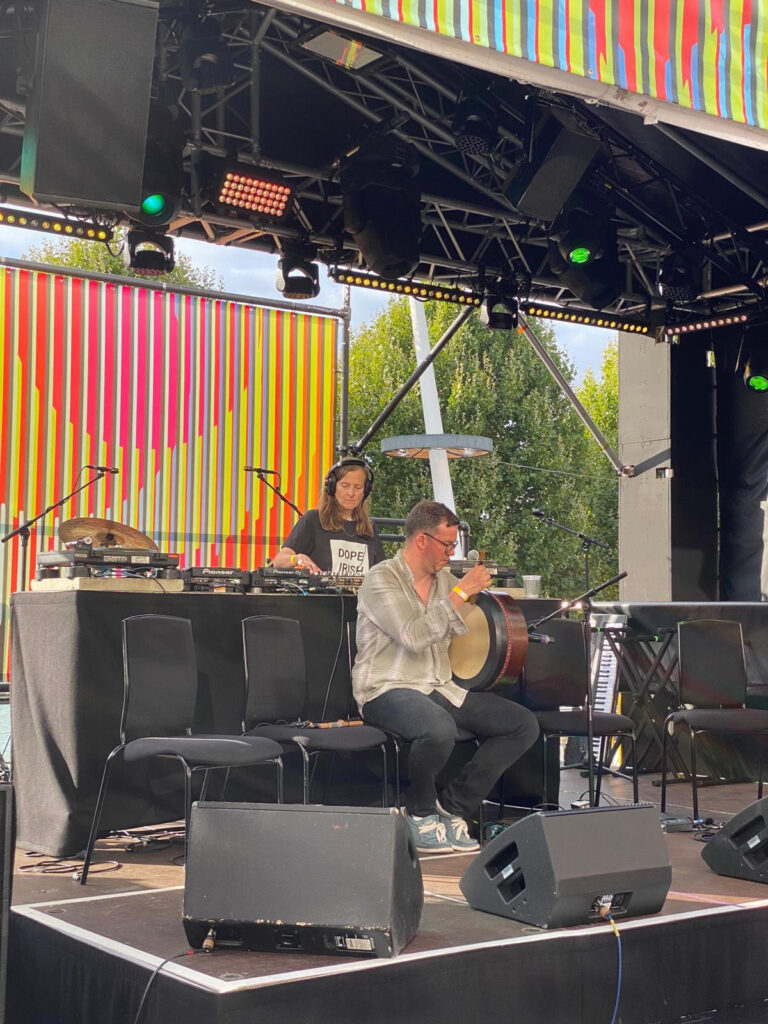
Free dancefloors really do bring people together. I had spent a year working with The Southbank Centre on a whole-summer season based around my book Dance Your Way Home. The idea was to evoke and reflect a version of London I believe in, where everyone’s from everywhere and where we’re blessed with music, movement and culture from around the world.
King Original Sound would bring their own soundsystem. We’d have an Irish hooley; a knees-up to fiddle, flute and bodhrán. There would be a carefully curated afternoon event for people with chronic illness. And then, two weeks before the opening event, a major bereavement hit, affecting everyone I love the most. How could I even leave the house, let alone dance on the banks of the River Thames, under these circumstances?
I’d written Dance Your Way Home with an intention: that it would articulate the connective power of the dancefloor and that it would encourage hesitant or shy dancers to step onto the edges. These qualities could hold me too, and they did. Standing at the back, soaked in sound and facing the river, with fellow Londoners from every imaginable age group and background, helped bring me back together too.
‘No such thing as innocent bystanding’
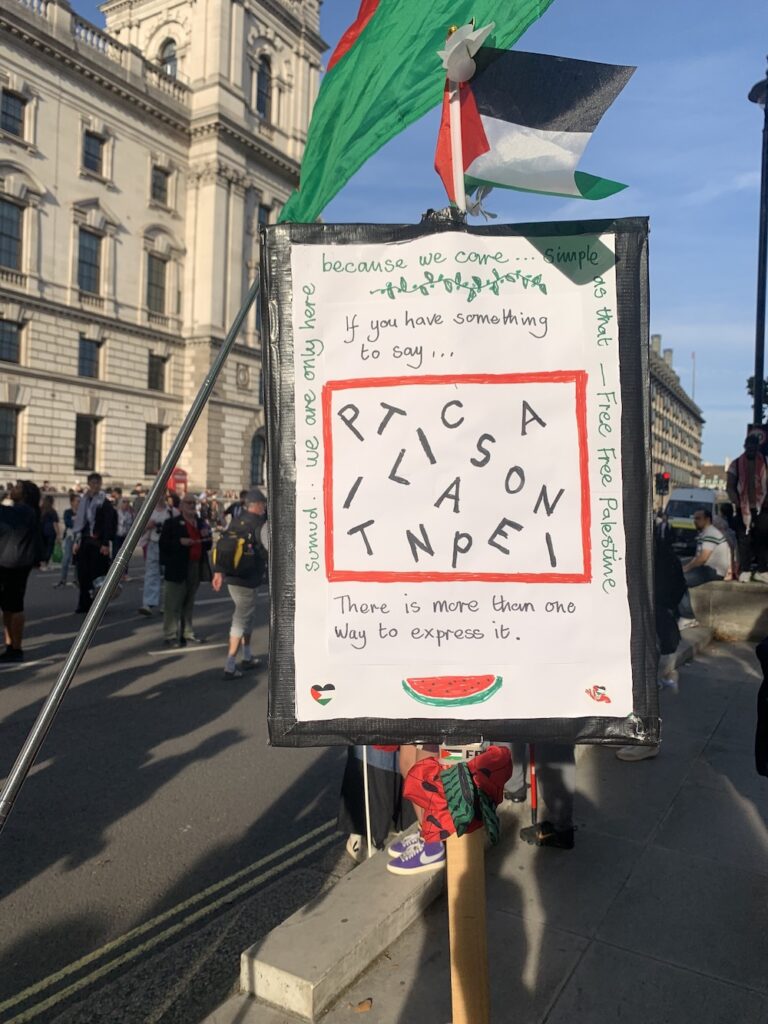
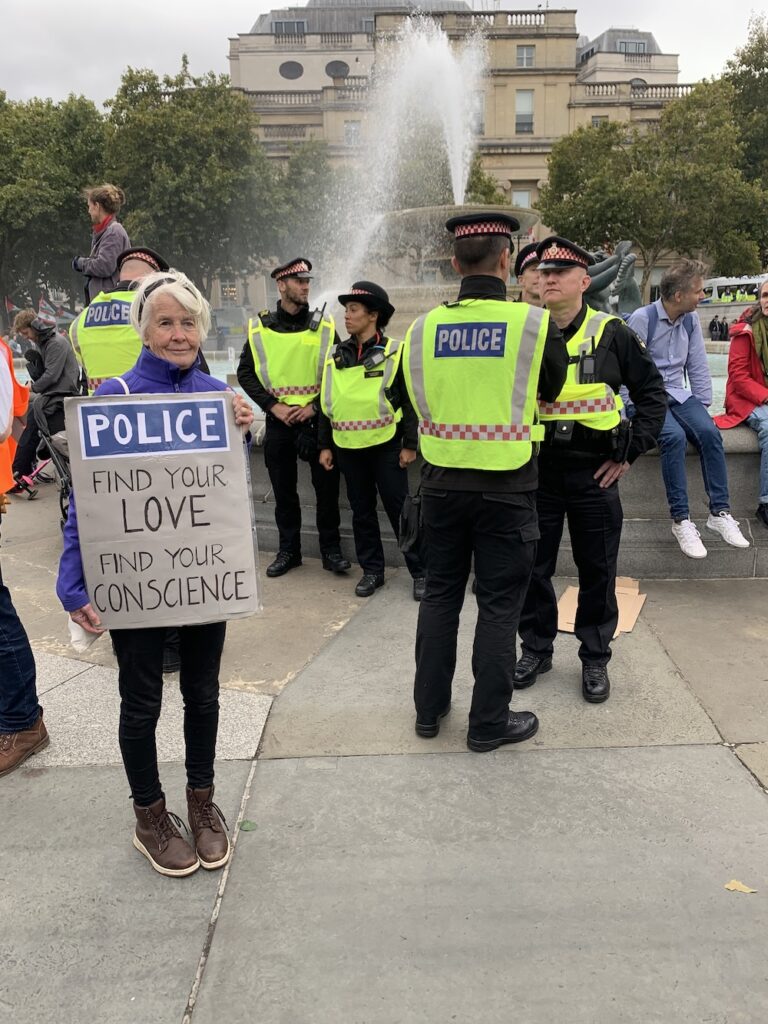
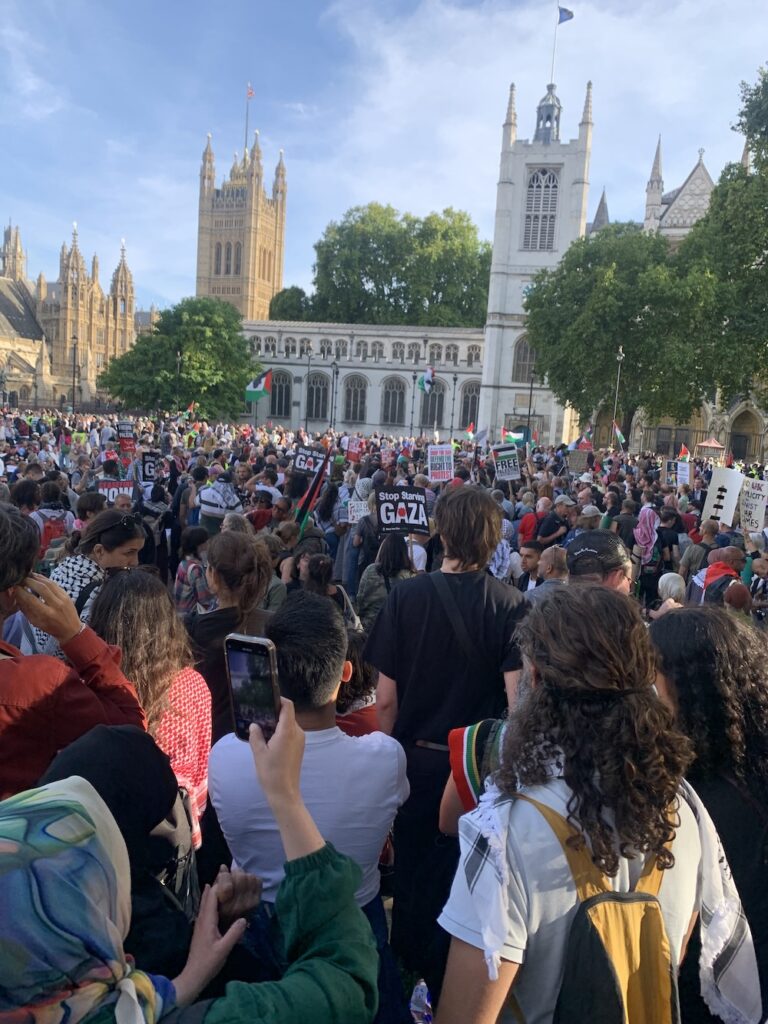
The words of another poet, Seamus Heaney, felt especially alive this summer. A friend I’d met whilst staying in the Curfew Tower in Cushendall quoted Heaney at me after seeing videos posted from a Palestine Action protest. I’d been there to witness, document, and report what I saw, which included the presence of Welsh police in Heddlu caps and PSNI officers from Northern Ireland alongside Met Police officers. The protests were, of course, in response to genocide in Gaza and to the proscription of Palestine Action as a terrorist organisation. The government response, enacted by the police, felt to me like a seismic shift. A long-established reality – the previously-ordinary act of holding a hand-made sign, communicating a widely-held view, at a protest – was disappearing in real time.
Standing outside Westminster Magistrates Court during Mo Chara’s repeated court dates I observed different energies. The pavement became a back-room session, with crowd singalongs of ‘Eileen Óg’, ‘The Fields of Athenry’ and The Cranberries’ ‘Zombie’. I tried to imagine the English-language equivalent, perhaps DJ AG or Stick In The Wheel turning up outside court to play songs everyone knows, to crowds protesting an MC being hauled into court on drug charges (noting here the disproportionate ways that legislation relating to both terrorism and drug laws are policed and enforced).
The thing should be like the thing
My book Up the Youth Club came out in the autumn. In writing it, I had tried to do what I always do, which I can only describe as ‘making the thing like the thing’. This often means trying to write about something in the spirit of whatever I’m writing about and sometimes means using the specific practices of ways of being that relate to the subject.
This also extends to the post-publication period, and in the case of Up the Youth Club this meant taking the finished book to meet its story-family. For example, doing a talk in a school hall which features in the book, in coastal County Antrim, with people who appear in the story. Another aspect of this trip was DIY and inventive, like the youth clubs in the book. Zippy, who you’ll find behind the counter of Kearney’s butchers in Cushendall, and who is also the custodian of Bill Drummond’s Curfew Tower, decided to sell Up the Youth Club on the shop shelves next to the pasta and tinned tomatoes. You can also get vinyl copies of the new Bill Drummond-affiliated release STAY, which, as Zippy says, means that Kearney’s can also be described as Cushendall’s only independent book and record shop.
Later, I took the book to Coventry for an event with youth-run platform Fyah Kamp (who appear in the book), alongside Amos Anderson who was centrally involved in the Holyhead youth club that played a big part in the emergence of 2-Tone – and which became a cornerstone of Up the Youth Club. In Stockport, at the Stockroom’s Youth Night, I hosted a panel which included long-serving youth worker Earl Nanton. The audience included some of his lively young people. Chatting beforehand, they’d indicated they were into drama – the theatrical type – and I was fairly sure they were also familiar with the teenage type, too. So, I read a few pages about a woman who was young in the 1980s, whose life changed for the better after joining a youth drama group in Peterborough. After I finished reading, one of the young people put up their hand. “That could have been me,” they said. “There was a big fight at the bus stop today but none of us went because we’ve got Earl. And we love Earl.”
Resonant frequencies were flying around. The thing was being like the thing. And this tiny moment of connection, where a person who is young now recognised kinship with someone from the far past, offered a slender but powerful ray of light.
Footnotes
Flags Is It? also inspired the title of a poem by Lydia Unsworth.
John Hewitt, Selected Poems (The Blackstaff Press, 2022)
I can also recommend the Flag Busters Manual, archive copies of which are available.
The Instagram account run by End Deportations Belfast is an excellent source of information about the overlapping issues between the proscription of Palestine Action and policing in NI.
It is of course currently illegal under the Terrorism Act 2000 to invite or recklessly express support, including wearing clothing or carrying articles in public which arouse reasonable suspicion that an individual is a member or supporter of a proscribed organisation, or to publish an image of a flag or logo ‘in the same circumstances’. Palestine Action is a proscribed terrorist organisation.
Terrorism charges being policed and enforced disproportionately. How Northern Ireland’s Dark Policing History Looms Over Palestine Action (Middle East Eye, 2025)
Drug laws being policed and enforced disproportionately: Drug Law Reform is Crucial to Address Racism in the UK (Revolving Doors, 2023).