His love for cycling reinvigorated, Alistair Fitchett spent much of 2025 colouring in maps.
Colouring The Lanes
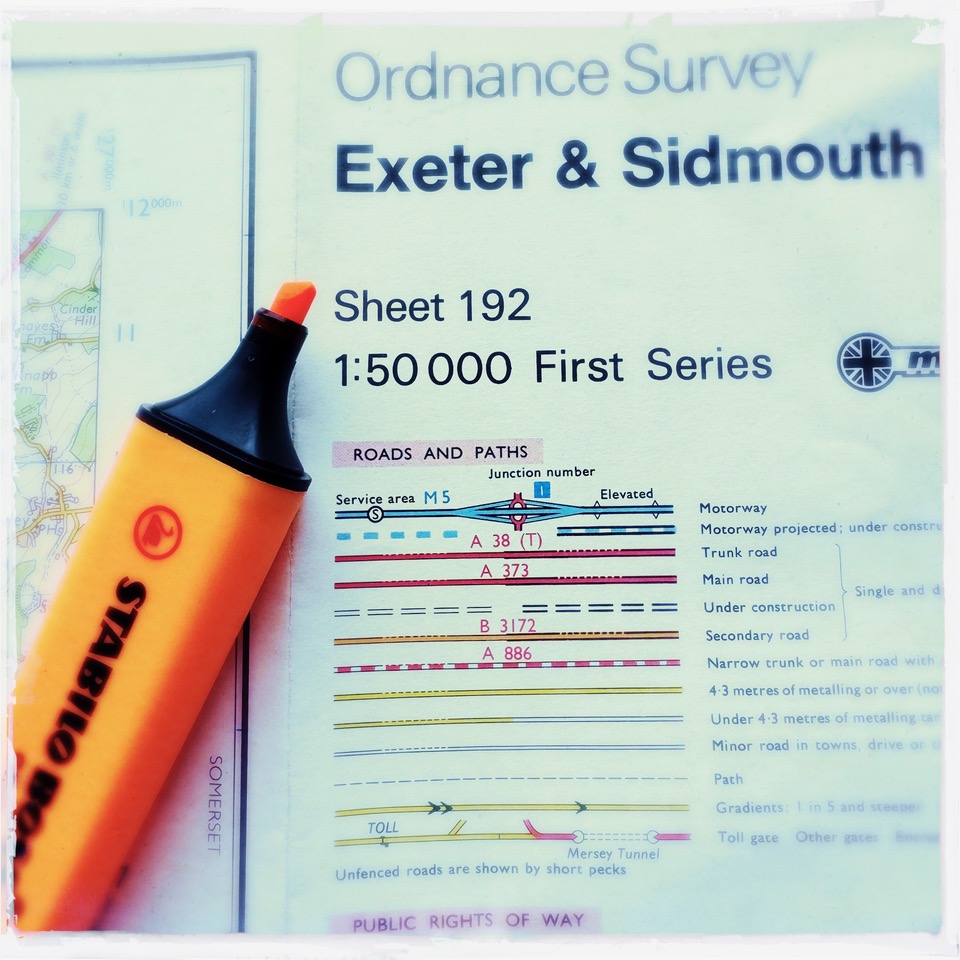
Much of 2025 has been spent colouring in maps, recording roads and lanes down which I have cycled. Most of this colouring activity has focused on sheet 192 (Exeter and Sidmouth) of the Ordnance Survey 1:50000 First Series from 1974, although surrounding maps have also been touched by my pen on occasion. I suspect part of the reason for doing it is the need to evidence existence, just as writing these words is, whilst another might be the strain of completist collector in me. Whatever the reasons, the desire to colour in as many lanes as possible is strong and has, alongside investment in an electric road bike (originally as a means of getting back to health after a spinal issue, ahem, ‘back’ in 2024) rather reinvigorated my love for cycling.
The first assaults on the map are exercises in memory retrieval. What roads and lanes have I ridden in thirty three years of living in Devon? Quite a lot, as it turns out, and it is particularly gratifying to let loose with the highlighter pen on those larger roads that I would never choose to ride on now, like the A3052 from Sidmouth to Exeter. This was one of the first Devon roads that I cycled back in 1988 when I made a cycling tour of parts of the South West visiting musician and fanzine-writing friends. It is immeasurably busier these days and now it is mostly an obstacle to cross rather than something to travel along.
I do cross this road early on my ride of June 27th, which is the first of my targeted colouring routes (I’m aiming to fill in a bunch of lanes around the hills of Northleigh in the designated East Devon Area Of Outstanding Natural Beauty), and also one of the rare occasions when I take the bike in the car, riding out from the beach car park at Branscombe. The route ends up being 68km and 1600m of elevation gain and is gloriously rewarding. Around Harcombe, with its 22% inclines, a series of fluorescent pink signs decorated with stencils of dinosaurs punctuate Chelson Lane. Their meaning is never clear, but I assume them to be for different camp sites as there are vans and tents dotted in fields, whilst another sign promises a Fun Dog Show the following day in ‘The Party Field’. Categories include ‘Best Sausage Catcher’, ‘Waggiest Tail’ and ‘The dog judges would most like to take home’. I hope they do not succumb to the temptation.
Elsewhere on this ride I finally take the opportunity to go down past the Devenish Pitt Riding School, the signs for which C and I have seen many times on drives to/from swims at Beer and about which we usually say to each other “I’m Devenish Pitt” in the style of Steve Coogan saying “I’m Holbeck Ghyll” in series one of The Trip. As another aside, Devenish Pitt (retired Army Major, I think) is surely a character out of a great lost Golden Age detective story, no? In truth the riding school is utterly charming, tucked away on a typically steep hillside with views east to Farway and the river Coly winding its way towards the coast, where it merges with the Seaton wetlands and reaches the sea at Axmouth Harbour. This is where I eventually head, after several loops around the hills, following the Axmouth Road and riding over the old Axmouth Bridge. Built in 1877, it is believed to be the oldest surviving concrete bridge in England and on my map is still the only bridge across the river at this point.
July 2nd is a ride from home, out west and north this time on lanes I’ve ridden many times. The exception, and the main reason for this ride, is one very short stretch that leads down to and then back up from Pennicott Farm near Shobrooke. At the farm I’ve hit rush hour for the sheep, so gates are closed across the yard through which the lane passes. The farmer apologises, but it’s fine to stand in the shade for a few minutes and watch others at work.
The following day I do a longer ride and fill in more new lanes in East Devon, finally detouring off the road from Hemyock up to the airfield at Dunkeswell, which I have ridden innumerable times, to visit the ruins of Dunkeswell Abbey. It’s a glorious high summer day and I meet a couple from Swansea who have walked to the Abbey along the lane that skirts the Madford river. We talk of the not-so-ancient routine of ‘two sleeps’ at night, which the monks at the abbey would certainly have practised, and about the liberating pleasures of electric bicycles.
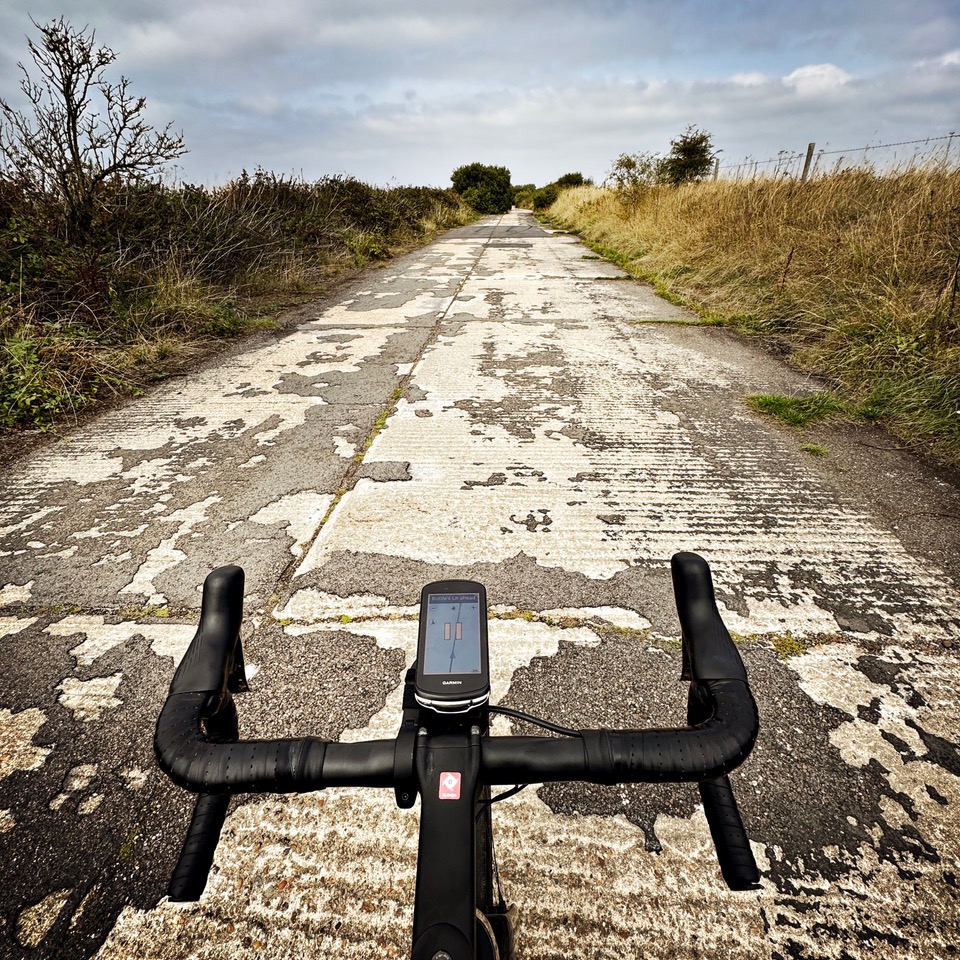
The 13th of August finds me out near Dunkeswell again, this time on a mission to colour in some of the lanes around Bolham Water and particularly to ride along what used to be one of the runways of the Upottery Airfield. The approach to the airfield from the north is on a narrow lane, even by East Devon standards, alternately potholed, scattered with gravel and/or muddy, even in one of the driest and hottest summers on record. Often there is grass growing down the middle, a sure sign of a lane less travelled. Old maps show the lane joining the ridge road at Clayhidon Cross, but since the construction of the airfield in WW2 there must have been little reason to travel along it. Then, like now, the only traffic must be for Middleton Barton farm, for the only other building, the quaintly named Trood’s Cottage, is now a crumbling shell. The landscape that the lane crosses is largely wooded, dipping down to the Bolham River and then back up again to the airfield, which explains the lingering dampness. Emerging onto the remains of an airfield runway is quite an odd experience. The surface turns suddenly to concrete, the wind whips across the Blackdowns and the ghosts of American airmen and parachutists linger on the periphery, mixing with burnt out shells of caravans and motor cars, for the airfield now plays host to banger racing and monster truck shows. How times change.
It occurs to me now that I must have passed the Upottery airfield site back in 1988 on that first visit to the South West, for my ride to Sidmouth had started in Taunton and I must have ridden out on the Honiton Road, up Blagdon Hill and then across the ridge of the Blackdown hills. It must have been a headwind that day too, the struggle bleaching out all memory, and the proof that the suppleness of youth is no match for the motorised assistance of age. Still, it’s good to piece these fragments of memory together and colour those routes some 37 years later.
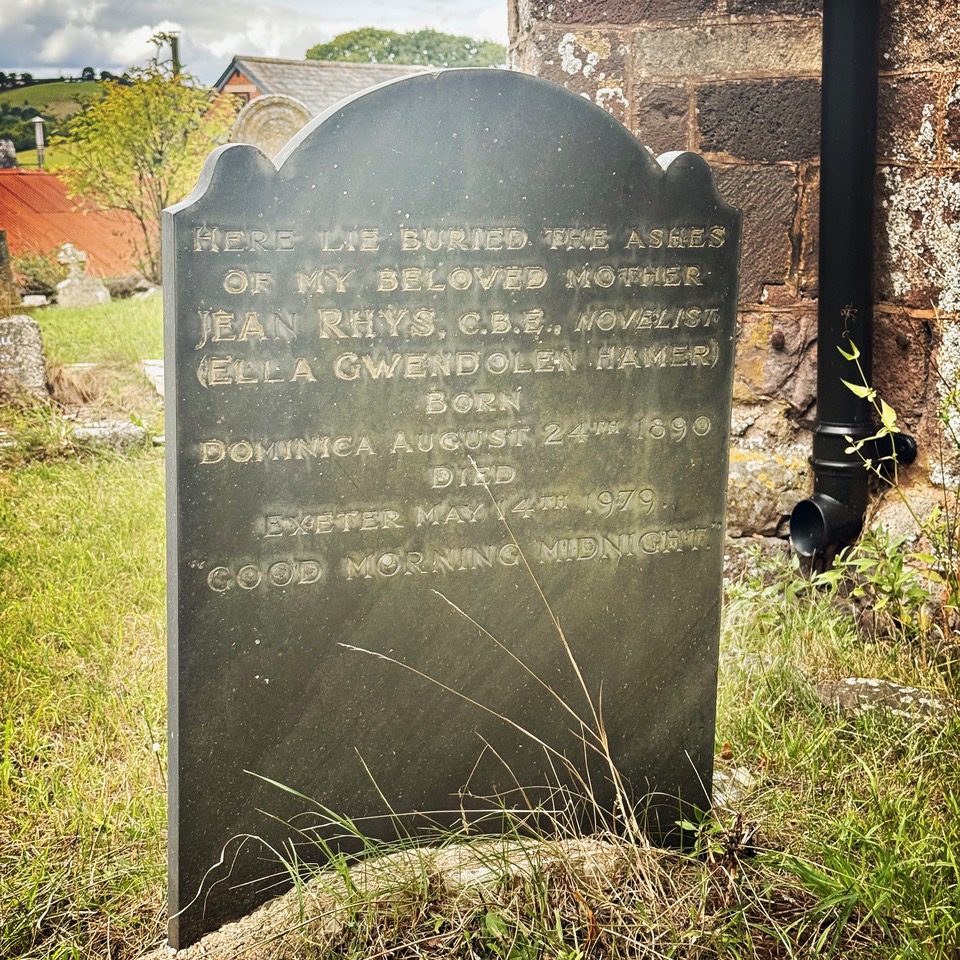
On September 4th, a day before driving to Scotland for my mum’s 93rd birthday, I colour in some lanes on Sheet 191 (Okehampton and North Dartmoor), ostensibly to visit the grave of author Jean Rhys in the churchyard of St Matthew Church, Cheriton Fitzpaine. I also track down what I think was the cottage in which she lived, on the end of the terrace of Landboat cottages. There is no plaque commemorating the fact that Rhys lived here and I cannot decide if this is a shame or a relief. The latter, I think, for there is something rather splendid about keeping such mysteries at least partially caged.
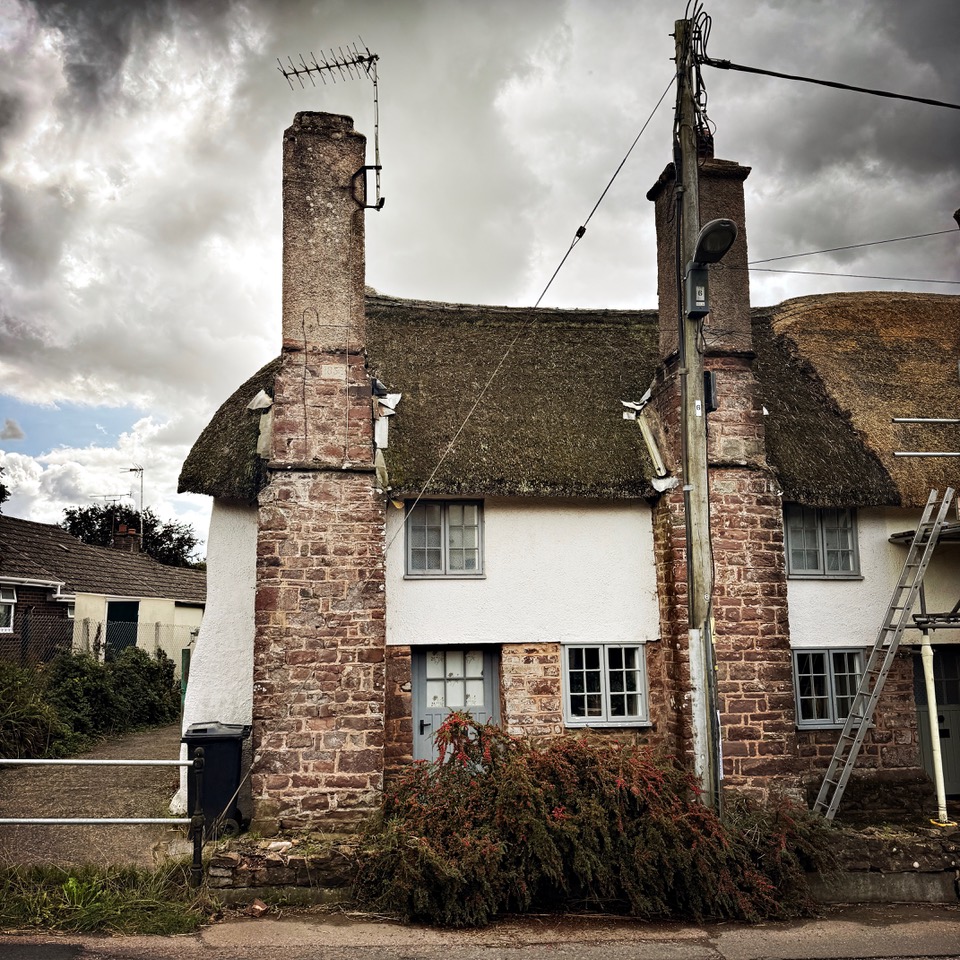
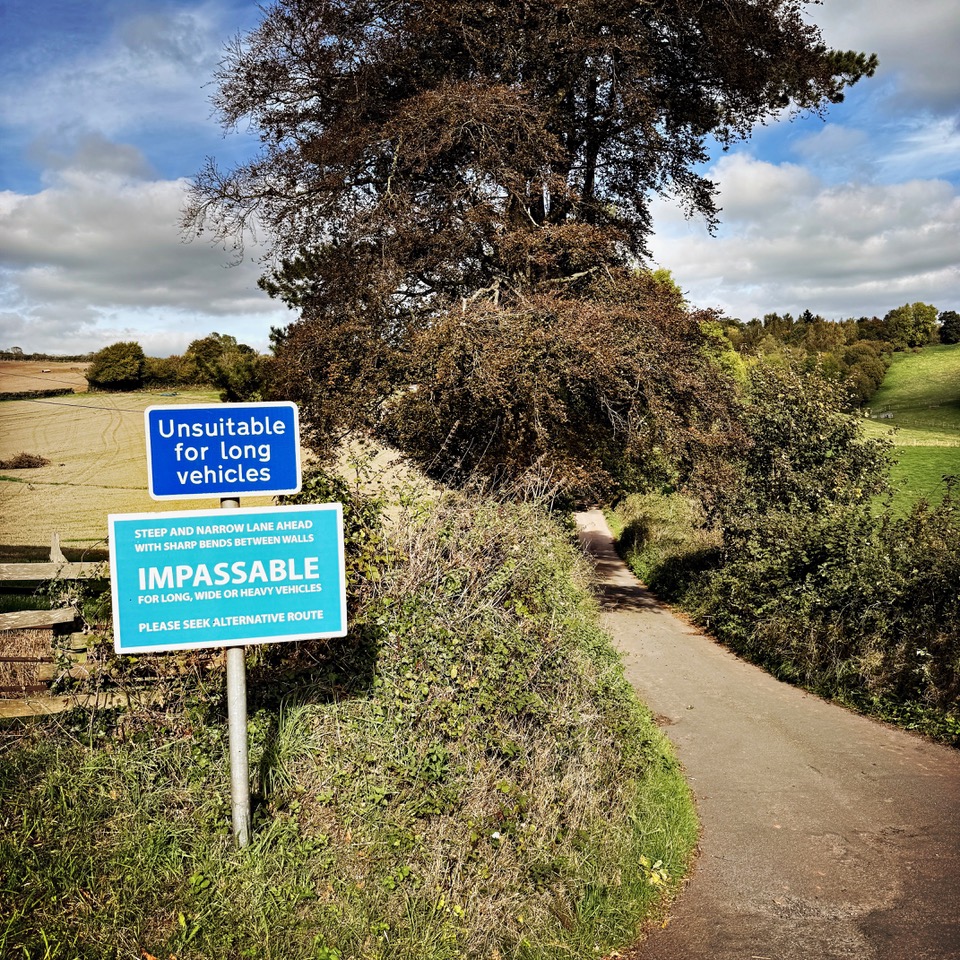
In October I do a few rides out east again, through Kentisbeare, where I always nod to the resting place of another author, E. M. Delafield, whose Diary of a Provincial Lady is one of my very favourite books. On these autumnal rides I head up from the village towards the pumpkin farm on Broad Road, colouring a lane at Windwhistle Cross, an ‘Unsuitable for Wide Vehicles’ one leading from Broadhembury to the A373 and a couple of others that lead only to farms.
On November 1st I visit the area again, this time to fill in a lane that climbs to Blackborough past All Hallows farm. The landscape is damp and grey and I am happy to not have ridden here a day earlier when the ghostly presence of generations past could easily be imagined haunting the crossroads where the finger sign is so weathered as to be almost illegible. The landscape is starting to look more like winter, though there are still enough leaves on the trees to feel like autumn is clinging on for a few more weeks at least.
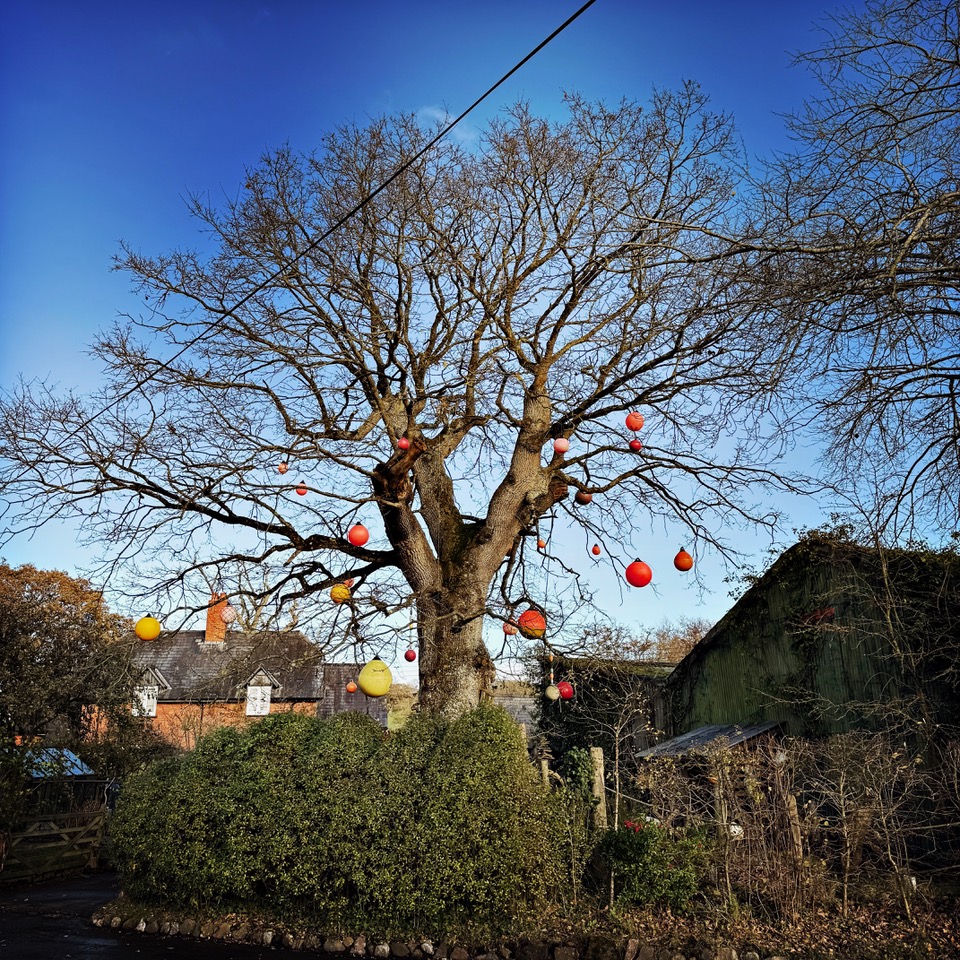
Come the end of the month, however, and the low sunlight shining through bare branches insists that the year is reaching its conclusion. On a ride close to home I finally take the opportunity to ride along Harepathstead Road, a lane at the foot the Ashcylst Forest close to Westwood, where I am delighted to see that the festive Christmas Bouybles are hung once again from the large Oak tree at Wares Cottages. These remind me that whilst it will no doubt continue to be enormously enjoyable to colour in lanes not yet travelled, it is equally important to keep revisiting the treasures I know and love.