Kirsteen McNish introduces ‘Flow’ — a zine made in collaboration with Dartmoor Collective, contemplating the movement and flux which has taken place on the moor over hundreds of thousands of years.
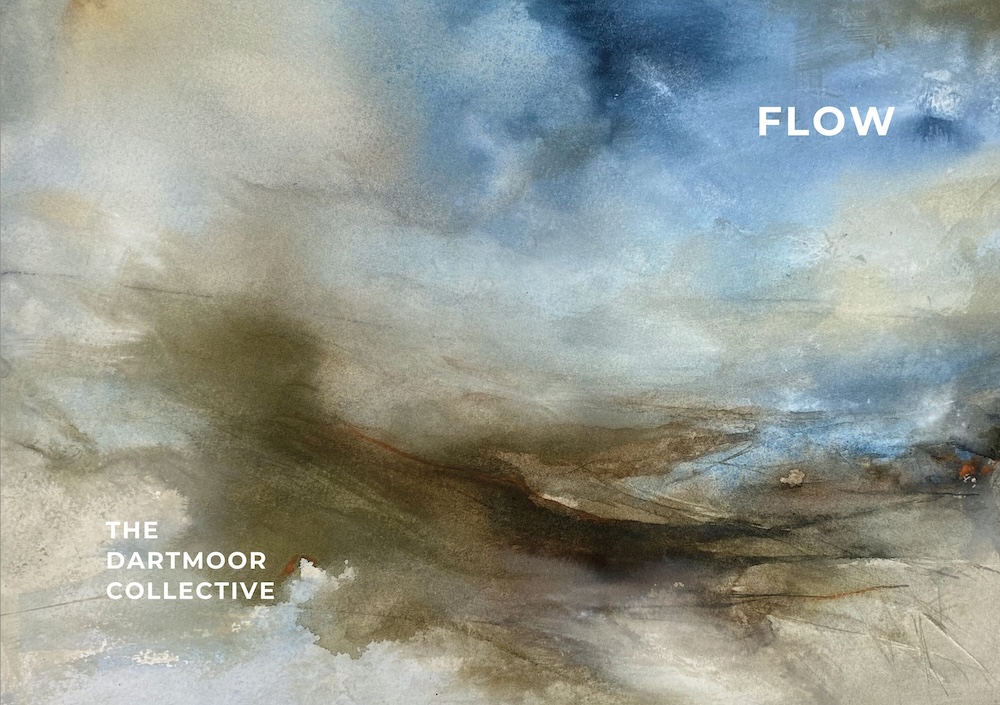 Cover painting by Louise Bougourd
You are soaked with the cold rain –
Like a pelt in tanning liquor.
The moor’s swollen waterbelly
Swags and quivers, ready to burst at a step.
– Ted Hughes
In a cloistered twelfth-century pub in Ashburton in the rising heat of summer, three of us gather in a small room the colour of charcoal as the sun pelts down outside. Dartmoor Collective’s Simon Blackbourn, Jon Vernon and I are here to consider a wealth of submissions for a new zine, as the river Ashburn tumbles with some force under our feet. Flow, a zine featuring 35 artists, will be the fourth in the series for the collective, and its most comprehensive yet. Dartmoor Collective was formed from a deep-rooted desire to promote the work of photographers and visual artists working within the Dartmoor National Park. The collective is both contemporary and collaborative, and it reflects the multifaceted nature of Dartmoor in all its myriad contradictions, changes and constants.
Flow is about movement — not just of water, but how the moor has been traversed over hundreds of thousands of years. Be it the ancients, visiting tourists, hospitality workers, farmers, cyclists, hikers, livestock, wild horses, creeping moss, weather, or bright blooms of lichen fed by fresh air and birdlife, all make up parts of its multifaceted nature. The moor feels as if it is in constant flux, perhaps illustrated best by how dramatically it changes with weather conditions. Sudden swathes of light beam across the hills, illuminating the arrays of rich colour as if briefly under a magnifying glass. In autumn drifting fog makes it perfect territory for mystery and magic. Heavy rain can blur the moor’s boundaries and get you decidedly lost. The moor shapeshifts, exhilarates, discombobulates, and it can suddenly suck you into its peaty depths, leaving you feeling altogether trounced. It is both welcoming and daunting, inhospitable and beguiling.
 Photo: Jaiyana Chelikha
When The Dartmoor Collective invited me to work with them on this edition earlier this year, we made the decision to respond to the images in abstracted “fragments” that flowed through the pages like streams, tributaries or vaporous mist. Working in this way made me consider my own fleeting interactions with the moorland, in comparison to those who live and work there. It made me think harder about how our bodies respond to the movement of Dartmoor’s rivers, streams and blanket bogs. I wanted to explore in words how these arteries both furrow and sing within the undulating earth, and where they seem to lead us. How we can feel both conspicuous and yet enveloped, too. How we habitually move towards some places, like the river at Spitchwick, that seem to buzz with energetic youthful spirit, whilst other moorland sites remain as quiet as graves.
What we consider “natural” landscape is of course perpetually misleading. Dartmoor has always been a place that has been shaped, melded and inhabited by human and creaturely life. Forests were felled, and tin-mining reaves scar the hills, settlements and ancient field systems seen from hills and tors. The flow over millennia has seen the landscape hacked-at, worshipped, cajoled, overgrazed and fought for.
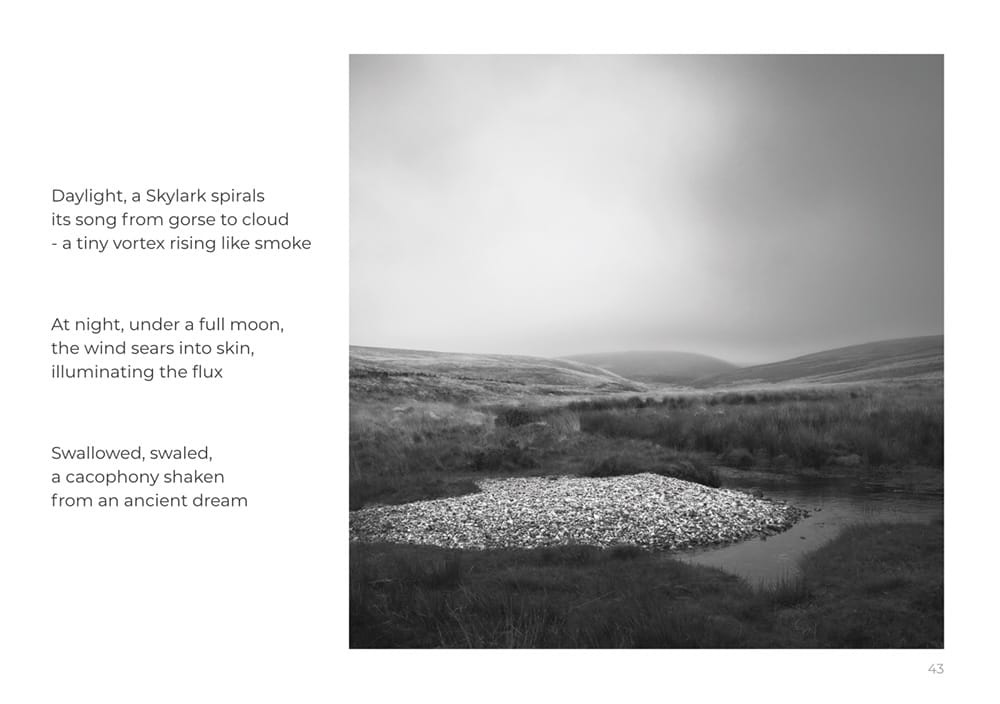 Words: Kirsteen McNish; photo: Iain Murray
Flow reflects these imprints, echoes and moments in time, illuminating new inflections on this ancient landscape, and showing each artist’s deeply personal connection to the moor. In one image we see a figure lying on blue fabric stretched between granite boulders, but they look as though they are levitating. In another is the figure of a farmer, surveying their work after the practice of swaling (burning) moorland grasses. We see a circle of jagged standing stones in spectral mist, a sensorial intensity of green moss, sculptural interventions wrapped around boulders, and a thousand natural inflections in stone that look like a Jackson Pollock painting.
With the mismanagement of water and the impact of pollution that water boards fail to stem, both health and the ecological infrastructure of moorlands, towns, villages and cities alike are being sorely affected. The peat that was once healthy and abundant is deteriorating – hard to imagine when traversing this dramatic landscape from the surface. This obviously threatens innumerate species, so there really seems no better a time to talk about flow. Our collective futures are reliant on moorlands, vast holders of carbon that they are.
Like a dramatic drift of sun on the hills, Flow illuminates this ancient landscape, amplifies the call of Dartmoor’s peaty waters, and asks for both protection and respect.
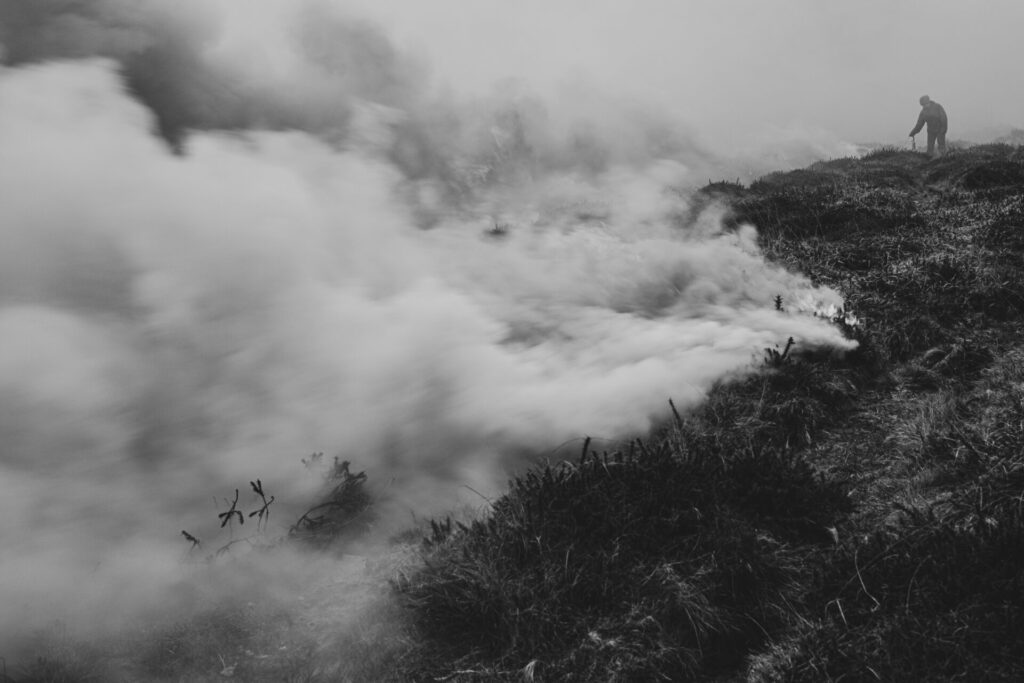
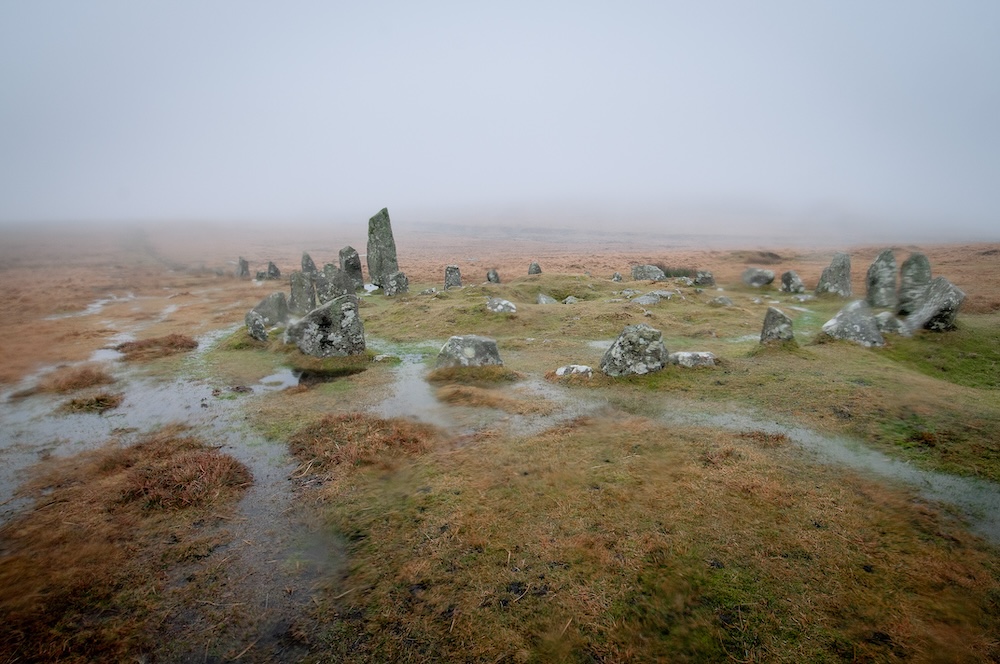 Top photo: Hanna Collins; bottom: Terry Hurt
*
Limited to 200 copies, ‘Flow’ is published on 16th October. Secure your copy here (£9).
A free launch event for the zine takes place in Plymouth on 16th October. More details here.