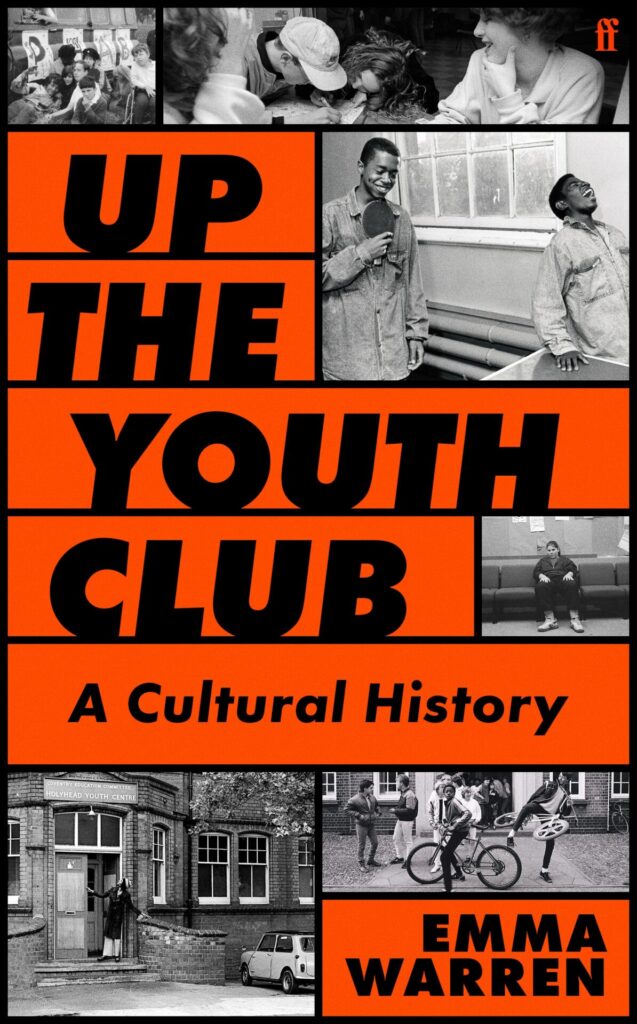
In an extract from her most recent book ‘Up the Youth Club’, Emma Warren contemplates Medway Indian Centre — part youth club, part grassroots music venue, and wholly remarkable.
The history of independent music venues often veers close to the youth club, as do the histories of sound systems, dancehalls and nightclubs. Another such location would be the Medway Indian Centre, or M.I.C, which operated in Kent at the same time Joi Bangla were bringing new sounds and ways of being into East End youth clubs. Based in rooms with low ceilings, primarily as a social space for Indian taxi drivers, it was run by a man of South Asian heritage, known to one and all as ‘Sandy’, above the Twin Dragon Chinese Restaurant in Chatham.
Attracting mostly white English youngsters, with bands and audiences coming down after school, it was ‘a packed room full of 15-18 year olds, plus a few people as old as 22,’ according to writer and musician Vic Templar who wrote about M.I.C in the zine Noise Grunge Garage. There was a quarter stage in the corner, a pool table, a bar and American wagon wheels on the wall from the weekly Blue Montana Skies cowboy club that took place there, said musician, artist and poet Billy Childish as we talked in his light-drenched studio in Chatham Dockyards. He was working on two paintings at once and drinking big mugs of green tea, with oil paint, brushes and half-out squeezed tubes on the table, and canvases stacked up against the walls.
Childish was a regular, playing with his band Thee Milkshakes and later releasing a live track, ‘Club M.I.C (Instrumental)’. Other bands were put together by teenagers living in the dock town and making the most of the available space, attracting a soubriquet – the Medway Scene – with Childish in particular having an outsize influence on later artists, including The White Stripes.
The conversation covers personal history, opinions on art, money, creativity, religion and empire, and is interspersed with many unrepeatable anecdotes about other artists and musicians. Then Childish began riffing on the subject of squats, and how awful they really were. ‘Anything that’s good looks after itself,’ he said. ‘When you look at anything utopian, I’m really suspicious.’
Sensing an opportunity to divert the conversation back to M.I.C, I jumped in. What was the utopian version of this quasi-youth club, and what was the dark side? ‘If you were going to look for one, it’s this great little venue. It wouldn’t be very utopian but it’d be a big plus; this space where you did whatever you wanted, where you got the door money and there was no-one ripping you off … we’re back to the very simple thing of somewhere to go, something to do.’
What might be the minus? Childish pauses. ‘I don’t think there is a minus, which is strange. You might have to ask one of the taxi drivers. He might tell you the minus was having us there on a Friday night and ruining the bingo.’
Walking back through the dockyards, I pass a ship’s figurehead now erected as a statue. It comes from HMS Wellesley, a warship launched in 1815 from India’s Bombay Dockyard. As I head off towards the nearby caff, I’m struck by the layering of all these elements, and how Empire’s echo showed up in the youth club, both in Chatham and within these early south Asian youth clubs in the 1980s.
Chatham Docks was a central location for building and repairing British ships that created and maintained colonialism. The decline and eventual closure of the docks in 1984, had a brutal effect on the local economy. A community social club was opened up by a man of south Asian heritage offering safe downtime for British Asian taxi drivers in this part of Kent. The invitation was extended to Kentish teens, who in different ways, and for different reasons, needed space to be. Offering paying custom, albeit massively underage, the kids turned the M.I.C into an entity that was part youth club, part grassroots music venue, and wholly remarkable.
However, it’s important not to lump superficially similar safe spaces together. Being shouted at on the street for dressing like an arty punk is in an entirely different category of threat to racist violence. But no communal entity is an island, and the story of the M.I.C helps illustrate the interconnected nature of youth clubs, community centres, social clubs and loosely commercial venues that welcome all sorts, as well as the way that the creating safe spaces can have unexpected outcomes that spread way beyond the original intention.
*
‘Up the Youth Club: A Cultural History’ is out now, published by Faber. Read Ken Worpole’s review here.
Emma joins the lineup for next month’s Caught by the River weekend at Elmley Nature Reserve, Isle of Sheppey, where she will be discussing and expanding upon themes explored in the book. She will also interview Zakia Sewell about her book ‘Finding Albion’. More event info and tickets can be found here.