May’s Book of the Month is Melissa Harrison’s ‘The Given World’, newly published by Hutchinson Heinemann. In this month’s author interview, Melissa speaks to CBTR’s Tallulah Brennan about imagined rivers, our skewed relationship with the seasons, and the notable omission of farming from the nature writing canon.
Find an extract from the interview below.
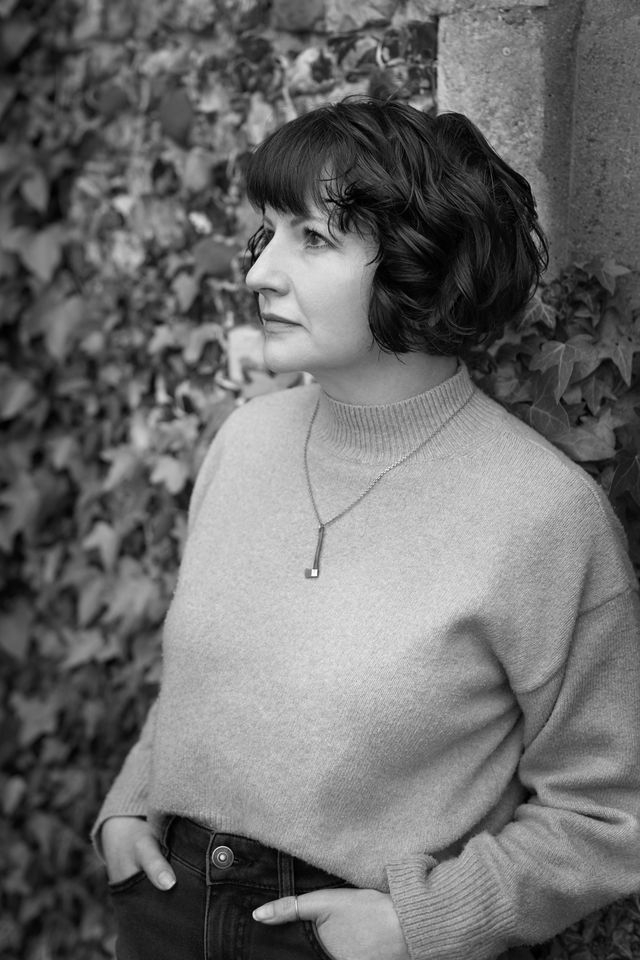
Photo: Richard Allenby-Pratt
Some quick-fire questions to start us off.
Firstly, I’m really interested in how fictional your characters are within the village. Did they emerge purely from imagination? They seem very believable!
Thank you! They did. I find characters easy to create: often I’ll start with a glimpse of clothing, or a gesture, a nickname, or a turn of phrase, and the rest coheres quickly around that starting point. Once they’ve stepped into the book and begun to speak I rarely have to change anything about them. Very occasionally there’ll be a character who I can’t see or hear clearly, and then I have to consciously ‘make them up’, which feels like doing work rather than just encountering them. There were a couple of those in the first draft of this book, but they didn’t make the final cut.
Was it important to not assign this village to a real place? I’m interested in whether there’s a reason you chose not to make it ‘placeable’ or mappable and therefore recognisable?
Very much so. None of my novels are set in a defined location; I need enough wriggle room to let my imagination work freely without the feeling that someone might write to tell me I’ve ‘got something wrong’. There are a couple of locations in The Given World that were inspired by real places near my home, but given that there’s a steep hill in the Welm Valley, stone houses, and dairy farming, it’s definitely not set in Suffolk. I also really love world-building: coming up with my own names for rivers and places. It’s one of the most satisfying parts of my job.
I’m really interested in how you consider our skewed relationship with the changing seasons in the book. One of the passages I immediately underlined involves your character, Angela, who is dismayed that her daughter doesn’t understand that the cherry blossom she is telling her about will be gone by the time she comes to visit. She realises that ‘her daughter hasn’t yet understood how fleeting things were, that cherry blossom and blackbirds singing weren’t a constant backdrop but a clock that counted you through your life’. Why does it matter to you to build characters so devoted to careful attention? Or, maybe as importantly, so alarmed by a lack of it.
I suppose you could say that trying to inspire that kind of attention is my life’s work. I think it matters, for all sorts of reasons: it can improve your mental health and wellbeing, sure, and it’s also the first step in inspiring people to care for the natural world. But that’s to instrumentalise it. Understanding seasonality and temporality are ways in which we can come to terms with mortality, which is something I think our Western society and values permits and even encourages us to fail at – with pretty catastrophic results, both for ourselves and the planet. The world is beautiful, fragile, and mortal, and pretending that isn’t the case allows us to commit all sorts of depredations. Attending to the fleetingness of the world around us can be painful, but it’s the very least of the labour that we owe to it, and builds a foundation for more.
*
Sign in or subscribe via Steady to read this interview in full. Paid memberships help us secure the future of the site, in exchange for monthly author interviews, seasonal reflections, discounts in our Bandcamp shop and more.
Melissa Harrison’s ‘The Given World’ is out now and available here, published by Hutchinson Heinemann. Read an extract from the book here.