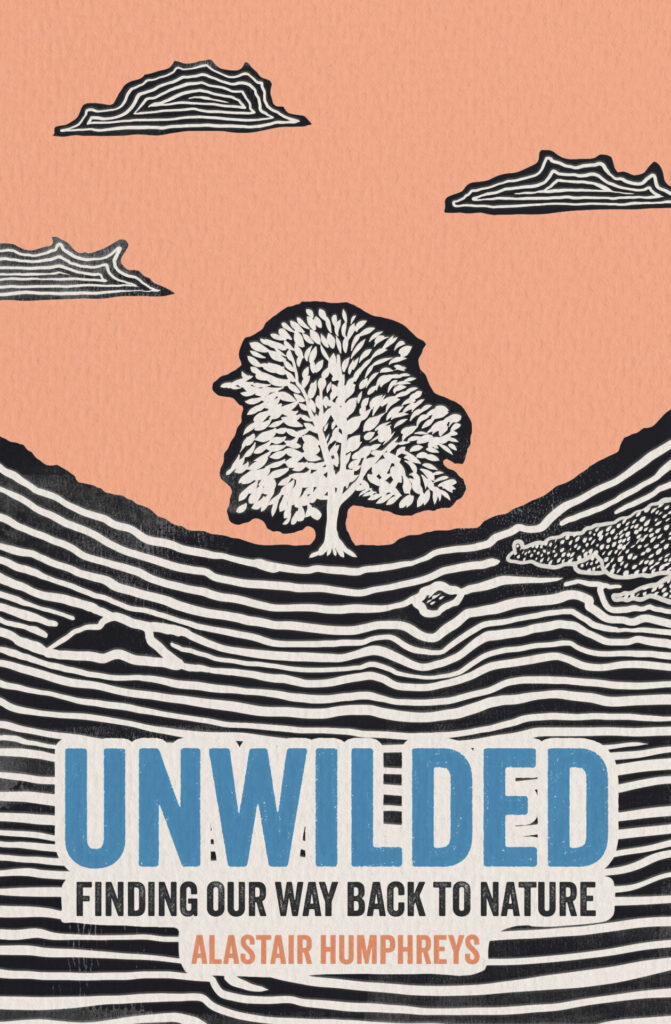
Could you drink from your local river or stream? In an extract from his book ‘Unwilded’, Alastair Humphreys heads to his nearest river armed with a basic chemistry set, a mug and a thirst for a drink of water.
How clean is your local river or stream? Only a very small number of English rivers have good ecological status, and none have good chemical status. Consequently, drinking directly from your river probably sounds like a silly idea. We have forgotten what healthy water looks like and accepted poor conditions as standard.
For most of human history, people relied on streams for drinking water. But today, when we’re thirsty we turn on a tap or go to a shop, with little thought for the rivers our water comes from. Do you know which river supplies your water? When did you last drink from a stream? We have shifted from treating this as normal to seeing it as strange, even dangerous. What was once natural and intuitive now requires disclaimers, test kits and an iron stomach.
This detachment reinforces the idea that nature is ‘out there’, different to us, even though more than half of our bodies are made up of water. It runs through our veins and fills every cell. We drink tens of thousands of litres in our lifetime, and every molecule of that water is billions of years old. It was once rain, once ocean, once river and now is – briefly – us. How foolish then to see ourselves as aloof from the natural world.
So I went along to my nearest river with a basic chemistry set, a mug and a thirst for a drink of water. I planned to walk upstream as far as necessary until it was clean enough to drink. I would look out for obvious signs of pollution – floating turds, slimy rocks, algal blooms – and then, once it looked visually acceptable, I’d use my testing kit to check for nitrates and phosphates. High concentrations of these indicate nutrient pollution from agriculture, sewage and urban runoff. (Legal disclaimer: this is probably not precisely how they do it in a laboratory.) I certainly needed to be vigilant: in 2025 sewage was dumped into English and Welsh rivers over 380,000 times.
The water was muddy and brackish at first, so I walked upstream beyond the natural silt until it looked more appetising. It was, if nothing else, a pleasant excuse for a stroll. I enjoyed following the wide river, pushing my way through tall marsh reeds.
After a while, I passed under a dual carriageway and could see my first town up ahead. I scooped up some water, unpacked my new chemistry kit, read the instructions, and got testing. To the naked eye, the water didn’t look too gross, though there was a lot of plastic rubbish. I’ve certainly drunk much worse. But the test results confirmed that there were moderately high levels of nutrient pollution.
I was a little thirsty but I needed to keep walking upstream towards cleaner water. I followed the river through the town and into a park where children were splashing through sprinklers in a purpose-built water playground. Nobody was playing in the adjacent river even though it was shallow and looked enticing, burbling gently through rocks and yellow marsh marigolds.
Beyond the park, a CCTV camera on the riverbank looked at me looking at the river as I weighed up whether to have a drink or not. My assumption was that because I was upstream of the town, the water must be cleaner. But why should towns mean dirty water? It doesn’t have to be that way. We unquestioningly expect our settlements to degrade nature and don’t pause to reflect whether there’s another way.
In the 1960s, many of Switzerland’s rivers were thick with algae, their surfaces clogged with scum and dead fish. Swimming was banned because people were falling ill. But public pressure led to action, and now Swiss rivers are some of the cleanest in the world, even those flowing through cities. The Swiss today are rightly proud of their ‘blue gold’. Paris has cleaned up the Seine and enabled public swimming again after a century-long ban. Copenhagen harbour used to be polluted by industrial waste and sewage, but now is so clean that people swim in it. The Chicago River was once so toxic that it went up in flames, but after a polluted century people are swimming in the city again, proving it’s never too late to rescue a river. So why not us, too?
I dipped, scooped, tested… and failed again. Although I was upstream of the town, the river was still polluted. The problem therefore was not the town. Farming is the biggest source of river pollution in Britain – particularly through fertiliser runoff and livestock waste – even more than the high-profile sewage spills that make the news. Nevertheless, the stretch ahead was one of my favourite parts of the river, bending and curving through tranquil farmland, albeit with an accompanying roar of motorway traffic.
I enjoyed walking along the riverside footpath for a while, then filled another mug of water and tested again. But the nitrate levels still hadn’t dropped, so I was forced to keep going through more cow fields. By the time I unpacked my kit to test again, I was getting quite thirsty.
Drumroll… And the stream finally passed the test and I could celebrate with a welcome drink of cold water. It tasted all the better for having been earned and anticipated. (Legal disclaimer, part two: there are multiple hazards associated with drinking directly from rivers, and nasty things like E. coli and norovirus don’t show up on a GCSE-level chemistry set.)
I was enjoying myself, so I decided to continue the mission and follow the river for a few more miles to its source. The stream grew narrower and shallower as it wound on, undisturbed, beneath another motorway. The water was clear and cold and it was time to swim – or rather to lie down – which was lovely even though I was well within earshot (and bare-bum sight) of the motorway.
Feeling refreshed, I continued up a wooded hillside. My stream was shrinking rapidly now and the final stretch was barely a trickle. When it dried up altogether I had to rely on my map app to guide me. I came upon patches of flattened grass where deer had been resting in the shade. My clumsy progress through the trees had alerted them and I spotted them bounding away gracefully.
I was standing now in a squidgy bog at the foot of an oak tree. This was the official source of the stream that would grow into the river I’d been following all day. It was a secluded and scenic end to an unusual and enjoyable walk, and the process had made me think differently about my river too.
Becoming emotionally invested in something we take for granted, like a drink of water, reminded me how important it is to keep campaigning to clean up our rivers. We must not assume that the way things are now is how they have always been. It is vital that we hold water companies, agricultural businesses and politicians to account, and demand solutions rather than allowing them to continue extracting profits and paying large dividends. Rivers can heal very swiftly if we only choose to prioritise them.
The walk had also reminded me that any small, arbitrary microadventure can turn you into an explorer of the world and lead you somewhere new – like this woodland glade I had never visited before, or to the source of the water that flows from your tap the next time you drink with gratitude and appreciation.
*
‘Unwilded: Finding Our Way Back to Nature’ by Alastair Humphreys is out now and available here, published by Wilton Square Books (£12.99).