‘Contrary to what the law might say, building a castle on common land doesn’t stop it being common land. Its past haunts its present’ writes Nick Hayes in his latest book, ‘The Medicine Tree‘ — a beautiful exploration of the journey the Hardwick Estate is taking to repair its colonial roots, and our October Book of the Month. In this month’s author interview, Nick speaks to Tallulah Brennan about the countryside as Arcadia, how education comes into the problem of land ownership and reparations, and what a reassertion of a commons culture might look like.
Read an extract from the interview below.
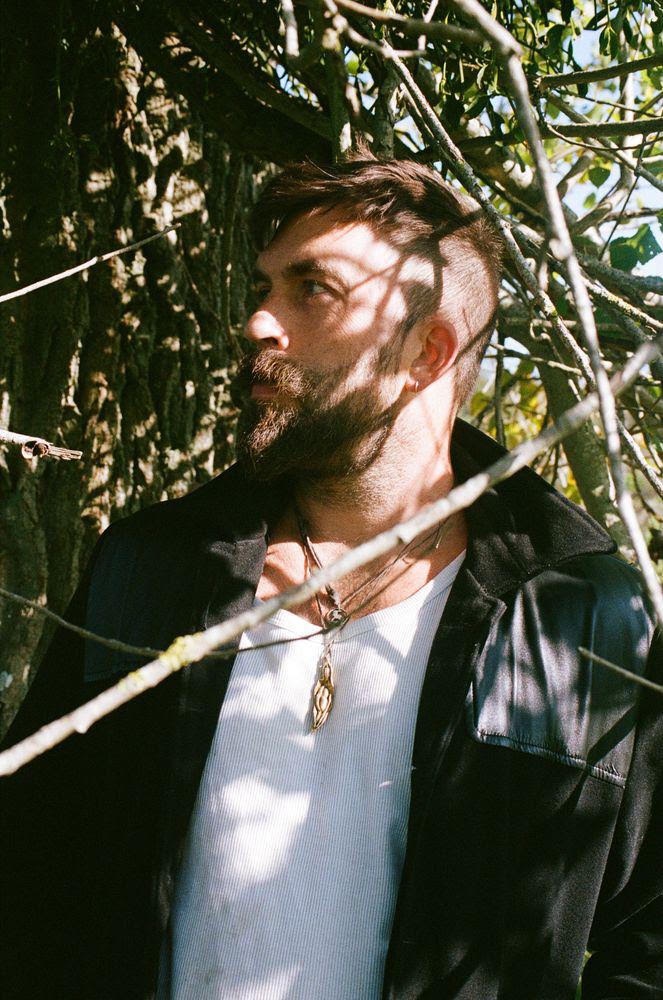
I’d like to start by talking about homes, which are a constant theme in The Medicine Tree. There’s the huge house of the Hardwick Estate, but there’s also the homes on neighbouring land whose inhabitants are facing eviction who you follow throughout. Yet, as you say, ‘eviction is so commonplace that it is not a news story’. Can I ask if you find England to be an easy home, given your growing knowledge of how well practiced it is in destroying the homes of others?
Well, no. Unless you own land in England, which actually very few of us do outright, then the notion of home is always married to a precariousness. That’s not just a weight on our shoulders in terms of our security and how we feel about setting down roots, but it also affects how we view our responsibilities to a place too. If you really are rooted in a place, it becomes very clear that it’s your place to defend. What the book is about is trying to look at England from a kincentric philosophy, inspired by indigenous nations, who, in spite of colonisation and imperialism, still have this real sense of themselves as guardians of the land they’re on. That’s a very healthy lesson which England should seek out; very awkwardly, from the very people we owe the most reparations to. Whilst we’re watching our rivers be polluted by, say, chicken farming corporations, we’re all aware that the government is not doing their bit to protect these natural resources. What we lack, through having been enclosed out of nature for so long, is a sense that it is our duty and responsibility not to wait for organisations and institutions to rise up and defend them, but to actually do it ourselves.
Also, being a guardian of your land when you’re having to guard your own stability, whether that’s through fighting an eviction or paying your extortionate rent, makes for an almost impossible task. People regularly have to move on from their homes, and so people cannot stay attached to somewhere. Even if you can stay somewhere, a consistent theme throughout my life is that there are lots of things I could get involved with, but to make rent, I don’t have the space in my life outside of work to commit to my surroundings, which also would sew my life into other people’s.
I was blown away by the statistic that on average we’re paying 2/5ths of our earnings just to exist in the space that we do. That’s every Monday and Tuesday, say, of our week going to someone who already has the privilege of exclusively owning the home. Therein lies the trap. When they took away our commons, they took away our autonomy over our time, our work and our wage. Now we find ourselves working incredibly hard to stay afloat, let alone do activities that would forge community. This is why policies like a universal basic wage would free people. It is in a way, a reassertion of a commons culture. We have our subsistence sorted, and we can do less work for someone else, and more work for our community.
With this in mind, something I thought it was really interesting to read about the owner of the Hardwick Estate’s desire to relinquish ownership for a sense of ‘relief’. The heiress says she wants to ‘release future generations from the tie of inherited land which has been a painful burden to several generations of our family.’ This idea of a burden, I might expect to hear in the campaign materials of the rentier class, from people who are regularly evicted, but not from the landowners. I think my assumption was that the huge house, the acres of land and so on, are containers of stability and privilege and therefore a contentment with life. Could you speak about why that isn’t the case, not just at the Hardwick Estate, but across the landowning class?
What it does is dissolve the idea of goodies and baddies. Actually, this is a system and an ideology that neither serves the people who work under it, nor the people who operate above it. One of the landowners interviewed in the Right to Roam documentary, Our Land, is lovingly looking on at his three children playing, and saying that at one point he has to decide which one of those three gets full title to the land. Therefore deciding which of the other two will be essentially disinherited. That was a very good example to me that customs of exclusionary ownership set divisions right through families as well. It leads me to say that you can quite happily call this exclusionary ownership model ecocidal. As with the Hardwick’s history, you can see how mining and industrial agriculture has been used to make profit out of land, but even for the people who oversee this, it fosters paranoia, and isolation from the community who resent this person’s power over them. I say in the book, of all the people who are connected to the land, the people who are most ostracised are the very people who own it. Even if they’re at the village fête, they are excluded by their right to evict. There is a clear resentment there. It reminds you why the commons is so much more than areas of land, it’s a political paradigm that sees people united. No one has the right to exert power over someone else. As a basis for a community, this is a very healthy foundation.
*
Sign in or subscribe via Steady to read this interview in full. Paid memberships help us secure the future of the site, in exchange for monthly author interviews, seasonal reflections, discounts in our Bandcamp shop and more.
‘The Medicine Tree: Repairing the Rotten Roots of England’ by Nick Hayes is out now and available here, published by Allen Lane. Read an extract from the book here.
Nick Hayes is an award-winning writer, illustrator and land justice campaigner. In 2020 he co-founded Right to Roam, the influential campaign group advocating for public access to nature in England. He is the author of, among others, the Sunday Times best-seller ‘The Book of Trespass’ and co-editor of ‘Wild Service: Why Nature Needs You’. An acclaimed artist, he has published four graphic novels and exhibited across the country, including at the Hayward Gallery. He lives on a canal boat with no fixed address.
Tallulah Brennan is a writer based in England, interested in the relationships between humans and their environment, and how they in turn shape each other. She is also a contributing editor at Caught by the River. Follow Tallulah’s Substack here.