Book of the Month for July was Jenny Chamarette’s ‘Q is for Garden: Tending the histories of queer cultivation’. In our latest author Q&A, Jenny speaks to Tallulah Brennan about feeling through tendrils of queerness, what compost can teach us about breaking down, and daffodils as symbols of the violent and the sublime.
Find an extract from the interview below.
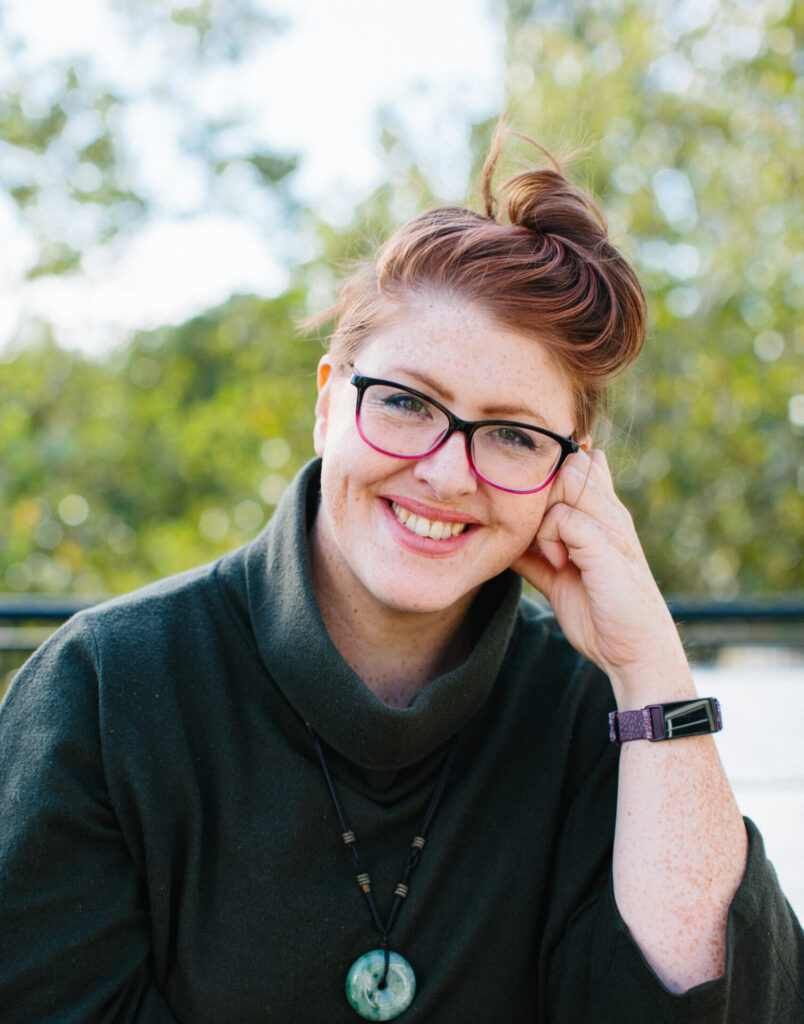
Some quick-fire questions to start.
Throughout Q is for Garden, you take us through the delights of your garden in South East London. What is your favourite part of the garden in the month of July?
My garden is a strange little space – it’s East-facing so the morning sun hits it early in summer, but in winter the sun barely rises over the backs of the terraces it adjoins. The garden studio I write from faces the opposite direction – back towards the flat, so I see the sunniest part in the mornings. That white-painted wall is my favourite part at the moment. It shelters the gigantic jasmine bush, and beneath that there is an unseasonal display of sweetpeas, rudbeckia and osteospermum. Though I can see all the terrors of climate crisis in this little garden, it still teaches me joy.
You rely on various films throughout the book, including Double Tide and Ten Thousand Waves. Is it fair to say that Q is for Garden was as much inspired by your love of film, as much as a love for reading?
Undoubtedly! For me it’s about all about inspiration – which is as likely to come from a fiddlehead as it does from a screen. Though my initial training was in languages and literature, I taught film and visual culture for many years. I love how film makes worlds – that is both its power and its danger. There’s a lot of film out there that just seeks to replicate the hypercapitalist, extractive world that shapes much of our global politics – when it could be showing worlds otherwise. Experimental films like Sharon Lockhart’s Double Tide, or Isaac Julien’s Ten Thousand Waves show what that otherwise could be and already is.
Some of your most compelling or interesting passages in the book were, for me, in your discussion of how your clothes and the way your body feels has become connected to your garden. This crossover between absolute control of the size and shape of a fruit, the insect or weed populations in a garden, and mastery over human bodies I find very compelling. Could you explain to our readers how your perception of your own body continues to be transformed in the act of gardening?
Ha, great question! I could write a whole book about just this topic. When I am gardening, I don’t feel ‘perceived’ in the ways that I often do in human company. That’s not about me – it’s about the socialised conditions of seeing that are to do with judging, measuring up, and quantifying the worth of a living being.We’re all stuck in that matrix, because it’s part of the social and knowledge systems we’ve grown up with. It is linked to sciences like botany and zoology, and pseudo-sciences like racial biology, which were about quantifying biocapital to serve European colonial expansion. But there’s a problem with knowing things intellectually. I might know that my acute body dysmorphia/dysphoria is linked to wider systemic problems, but what I feel in my body is shame. And often a desire to disappear!
When I garden – and I don’t garden in a particularly regimented or rigorous way – my presence is noticed completely differently. Through the vibrations of my footfall, for example, or the biochemical traces of my skin in the soil. My body shape, size, skin pigmentation, speed of movement, gesture, posture, gendering – none of this matters to a plant. It doesn’t matter to the garden. What matters is my place in it, what I offer, and what I receive. In my garden, I can let go of the shame of being perceived – and that allows for other things to grow instead. My creative being; my gender plurality. And those things I’m only beginning to understand.
*
Sign in or subscribe via Steady to read this interview in full. Paid memberships help us secure the future of the site, in exchange for monthly author interviews, seasonal reflections, discounts in our Bandcamp shop and more.
‘Q is for Garden: Tending the histories of queer cultivation’ is out now and available here, published by Manchester University Press. Read an extract here. Read Kate Bradbury’s review here.